Have you noticed how hard it can be to reach people who need help most? Across the U.S., there are communities where people go days or weeks without support for things like food, housing, mental health, or basic medical care. If your outreach program serves those folks, you know the struggle. Long drives, missed visits, and limited staff make it tough to keep up.
A Mobile Outreach Van changes that. It brings your team and services right where people are on the streets, in rural towns, or in city neighborhoods. Without it, programs remain stagnant, and people continue to fall through the cracks.
At AVAN Mobility, we’ve seen that struggle up close. For over 10 years, we’ve built more than 150 mobile medical and outreach vehicles that help connect people to care and dignity. Groups like CalOptima, Pacific Clinics, and the Community Clinic of Southwest Missouri trust us because we listen first and build around each program’s goals. And while we know we’re not the only ones doing this work, we’re proud to stand beside organizations like yours that are making change happen.
Here’s what you’ll learn in this article:
- What programs use a Mobile Outreach Van
- How these vans support different outreach goals
- What features make them so effective in the field
Five programs that can use a Mobile Outreach Van
Let’s be real. Getting help to people who need it isn’t easy. Whether your program focuses on housing, health, or mental wellness, the same problem comes up again and again: Reaching people where they are. That’s where a Mobile Outreach Van comes in. It gives outreach teams a way to bring compassion, care, and supplies right to the streets, neighborhoods, and rural areas that often get overlooked.
Keep reading to learn about five types of programs that can make the biggest impact with a Mobile Outreach Van. Each one looks a little different, but they all share one goal: Breaking barriers to care.
1. Homeless outreach and housing support programs
When your work revolves around helping people without stable homes, your biggest challenge is access. People sleeping in rough conditions or living in temporary shelters can’t always travel for help. A mobile homeless outreach van solves that problem by putting your team on wheels.
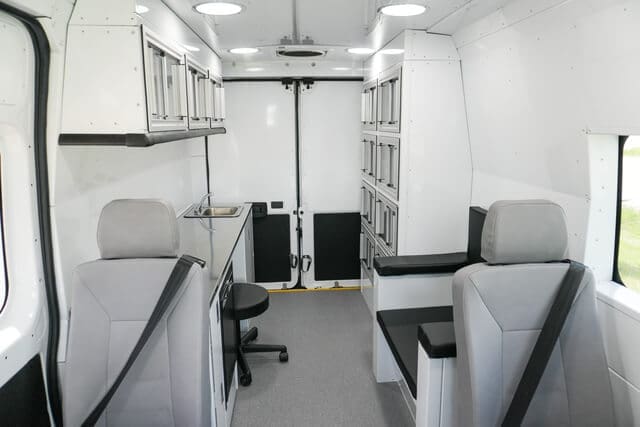
These programs often run on tight budgets and rely on small teams of staff and volunteers. Having a Mobile Outreach Van helps you cover more ground without adding more people. The van can serve as both your transportation and your base of operations. Inside, you’ve got secure aluminum storage for supplies, a sink for hygiene, a fridge for food or medicine, and removable seats that let you customize the layout depending on your day’s mission.
How the van supports outreach goals:
- Builds trust by meeting people where they are instead of expecting them to come to you.
- Makes it easier to deliver essentials like hygiene kits, water, or blankets directly from the van.
- Provides a safe, private space for conversations or quick assessments.
- Keeps your outreach organized with locked storage for documents or supplies.
Imagine a team in Phoenix, Arizona, heading out early before the desert heat kicks in. They stop at a known encampment area near downtown. Instead of juggling supplies in multiple cars, everything is in one place.
One outreach worker chats with a man who has been sleeping outside for weeks, while another helps him fill out housing paperwork inside the van. By the end of the visit, they had connected him with a local shelter that had space. Without the van, that opportunity might have been lost.
2. Mobile crisis outreach teams
When someone’s having a mental health or substance use crisis, help can’t wait. That’s where mobile crisis outreach teams come in. These teams are often the first point of contact when a person is in distress, helping to stabilize situations and connect people to ongoing care.
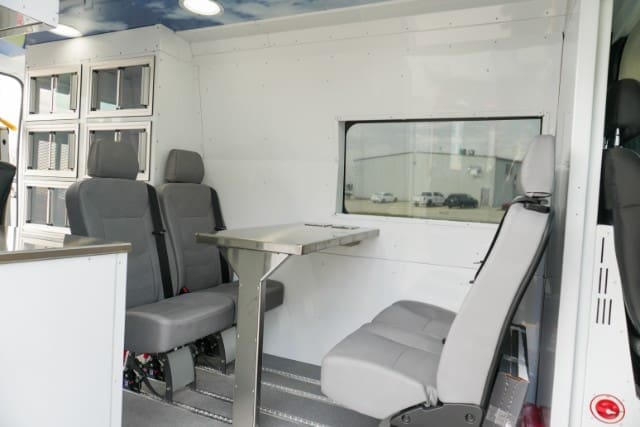
Your program can utilize a Mobile Outreach Van, providing your team with a controlled and private space to work in unpredictable settings. Instead of trying to manage conversations on a sidewalk or in a noisy parking lot, they can invite the person inside, away from chaos. The van’s interior design includes adjustable seating, power outlets for laptops, climate control for comfort, and safe storage for medical or crisis response supplies.
How the van supports outreach goals:
- Provides privacy for de-escalation and counseling.
- Keeps sensitive materials and tools secure.
- Makes it easier to travel between crisis calls efficiently.
- Helps build trust through a comfortable, calm space that doesn’t feel institutional.
Think about a team in Los Angeles responding to a call from a public park. A young man is having a breakdown, surrounded by worried friends. Instead of bringing police or taking him to an ER, the crisis team arrives in their van. One counselor sits with him inside, offering water and a quiet space, while another uses a laptop to schedule a follow-up appointment. The van becomes the first step in a recovery journey that feels safe and human.
3. Mobile health outreach clinics
For many communities, especially in rural or low-income areas, regular healthcare can feel out of reach. A mobile health outreach clinic changes that. These programs bring doctors, nurses, or community health workers directly to people who might otherwise skip care.
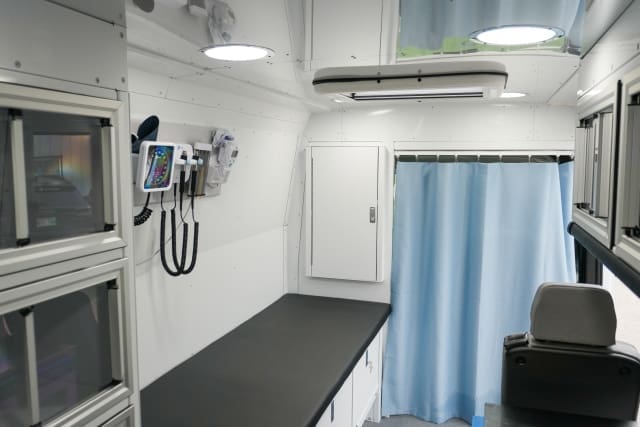
Inside a Mobile Outreach Van, you’ll find all the essentials for basic healthcare: A fridge for vaccines, a sink for handwashing, desk space for paperwork, and outlets for medical equipment. It’s not a full-sized hospital, but it’s enough to handle screenings, basic treatment, and preventive care.
How the van supports outreach goals:
- Increases access to health screenings, immunizations, and checkups.
- Helps identify health problems early.
- Builds partnerships with local clinics and hospitals for referrals.
- Creates a visible, approachable presence in the community.
Picture a small-town health department in Ohio. They park their mobile clinic outside a food pantry once a week. People come for groceries and end up getting a free blood pressure check or a flu shot. One woman learns her blood sugar is dangerously high and gets connected to a local doctor. That one visit may have saved her from a trip to the emergency room.
4. Harm reduction and substance use outreach
Harm reduction teams often work with people who are afraid to seek help because of stigma or past experiences. Their goal isn’t to judge but to keep people alive and healthy until they’re ready for recovery.
A Mobile Outreach Van gives harm reduction teams a private, safe, and clean space to do their work. It allows them to go directly into neighborhoods where overdoses or infections are common. With onboard storage, they can carry naloxone, safe injection supplies, and testing kits without worrying about running out or losing track of materials.
How the van supports outreach goals:
- Brings supplies and wound care directly to people in need.
- Allows for confidential conversations about treatment and recovery.
- Offers a safe, climate-controlled space to rest, hydrate, or receive basic care.
- Reduces the risk of overdose deaths by ensuring naloxone and first aid are always nearby.
Imagine your outreach team in Seattle, Washington, setting up near a community shelter. People recognize the van and know it’s a safe place to stop by. One visitor comes in asking for naloxone for a friend. Another needs wound care. Later that afternoon, a man decides to talk about entering treatment. The van becomes a trusted connection point in a community that often feels forgotten.
5. Youth and community outreach programs
Youth outreach programs aim to build trust early, offering guidance and support before problems escalate. Whether it’s mental health check-ins, mentorship, or connecting families with resources, a Mobile Outreach Van helps your team stay visible and accessible.
These programs often travel to schools, sports events, or community fairs. Instead of asking kids or parents to come to an office, you bring the office to them. With removable seating, power for devices, and a comfortable environment, the van can serve as both a counseling space and an information hub.
How the van supports outreach goals:
- Makes your services approachable and easy to access.
- Creates private, welcoming areas for youth to open up.
- Helps families get support right where they already are.
- Builds a stronger community presence without the need for a fixed office.
Picture a suburban school district in Minnesota. During a “back-to-school” event, your outreach van parks near the gym. Teens stop by to chat, pick up resources, or even take part in a short mental health screening. One student who’s been struggling quietly asks for counseling help. Without that van parked outside, they might never have reached out.
A Mobile Outreach Van is a bridge between the street and the clinic, between crisis and stability, between isolation and care. Whether you’re serving the homeless, responding to mental health emergencies, offering medical care, reducing harm, or reaching out to youth, this van helps your program meet people exactly where they are. And that’s where change begins.
Take your outreach program further with a Mobile Outreach Van
You came here because your team wants to reach more people with less hassle. Maybe you’ve struggled with limited access, staffing challenges, or communities that are hard to serve. You know the gap between your current reach and the impact you want is frustrating, and every day that gap exists, people miss out on care and support.
Here’s what you learned from this article:
- The five types of programs that can benefit from a Mobile Outreach Van.
- How features like mobile office space, storage, and onboard equipment help your team work safely and efficiently.
- Realistic ways a Mobile Outreach Van can remove barriers and extend your outreach services across the U.S.
At AVAN Mobility, we listen to your goals and challenges first, then create a vehicle that’s built around what your team really needs. We’re proud to help outreach teams expand services, connect with more people, and make a real difference in their communities. If you have questions or want to talk to a mobility expert, click the button below and reach out.
If you’re not ready to talk to a mobility expert yet, check out these resources to learn more:
- What Are the Top 5 Benefits of a Mobile Outreach Van in the U.S.? Discover the biggest advantages that directly impact outreach teams and the people they serve.
- Top 5 Areas to Deploy a Mobile Outreach Van in the U.S.: Learn where your van could make the greatest difference and serve the communities that need it most.
The video below is also a good watch for learning how you can use a Mobile Outreach Van to reach people without homes.