Have you watched drug overdoses rise across the U.S. and felt like the crisis keeps speeding up? The CDC reports over 107,000 drug overdose deaths in 2023. You see these numbers reflected in the streets, shelters, clinics, and encampments you visit each week. You meet people who use the most commonly used drugs in your region and feel the pressure of each accidental drug overdose that could have been stopped with earlier support.
It’s hard when overdosing on drugs happens so fast, and you’re trying to reach people who move from place to place or avoid traditional care. You want a better way to prevent drug overdoses in the U.S. and give your team a path that lowers deaths, supports dignity, and brings hope back into your work.
AVAN Mobility has supported teams like yours for more than 10 years. We’ve built over 150 mobile medical units across the country for teams like CalOptima, Pacific Clinics, and the Community Clinic of Southwest Missouri. These partners face the same fears and challenges you face today, and our team takes the time to understand each community before we build anything. We also know you have choices between other manufacturers in the U.S. Our goal is to guide, not push.
In this article, you’ll learn how important mobile outreach is and how you can use a Mobile Overdose Prevention Unit to bring a safe space, trained staff, and life-saving tools directly to communities in need.
You’ll also learn:
- Causes of drug overdoses
- Risks
- Solutions
What are the biggest causes of drug overdoses in the U.S.?
When you look at drug overdoses in the U.S., it can feel like you’re trying to put out fires in every direction. The numbers keep climbing, and the reasons behind them are layered. You see these problems every day as you meet people who struggle with mental health, unstable housing, and dangerous drug supplies. This section walks you through five causes in a way that helps you see the full picture so you can plan stronger outreach.
1. Mental health and co-occurring conditions
Mental health plays a huge part in drug overdoses across the country. Many people use substances to cope with pain, trauma, or stress. This creates a cycle that’s hard to break.
Here are the key points:
- High mental health needs: The CDC lists mental health disorders as a major factor linked to overdose risk. You can read more in this report from SAMHSA.
- Mixing drugs: Many overdose cases involve more than one drug. Studies show people often combine opioids with stimulants or other medications. This mix increases the chance of an accidental drug overdose. Research published in the JAMA Network highlights this pattern.
- Few places to turn: In many areas, mental health support is limited. When people can’t get help, substance use becomes a quick way to cope.
2. Homelessness and unstable housing

Homelessness makes the risk of overdosing on drugs much higher. The link is strong across the U.S., especially in large cities and warm-weather states.
Here’s what the data shows:
- Overdose is a leading cause of death: Among people experiencing homelessness, about 1 in 4 deaths are from drug overdoses. This comes from a national study published in JAMA Network.
- Much higher risk: Research shows homeless individuals can face up to a 30 times higher chance of a fatal overdose compared to the general population.
- Direct connection to overdose rates: A study reported in PubMed Central found that states with higher homelessness rates also have higher overdose death rates.
- Why this happens: When someone sleeps outside or moves around often, it becomes harder to access care, safe places, or help during an emergency.
3. Changes in the drug supply
The drug supply in the U.S. has shifted frequently over the years. Many overdoses today involve synthetic opioids like fentanyl.
Important things to know:
- Stronger drugs: Most overdose deaths now involve synthetic opioids. The University of Texas Moritz Center reports that fentanyl is involved in a large share of cases.
- Unpredictable batches: People may think they are using one drug and end up with something far stronger. This is common with pills and powders made outside regulated systems.
4. Gaps in care and support
Many people who use drugs want help but have trouble reaching it.
Common gaps you may see:
- Few local services: Some counties have limited or no harm reduction programs.
- Long travel times: Rural regions may have one clinic serving huge distances.
- Fear and stigma: Many avoid care because they feel judged or unsafe.
- Long waits: People often wait days or weeks for treatment openings.
5. Social and economic stress
Stress plays a bigger role than many people realize.
Here are the main drivers:
- Job loss and money pressure: These push many toward substance use as a coping tool.
- Isolation and loneliness: Studies show a higher overdose risk in communities with weak social connections. One example is research summarized on arXiv.
- Rural challenges: In many smaller towns, support systems are limited, and emergency help is far away.
Quick snapshot of key causes
| Cause | Data | Why it matters to your team |
| Mental health needs | Linked to higher overdose risk | You may need mental health support built into outreach. |
| Homelessness | 1 in 4 deaths among homeless people are overdoses | Mobile services reach people who stay outside or move often. |
| Fentanyl in the drug supply | Leading cause of overdose deaths | Outreach needs safety tools like testing supplies and education. |
| Care gaps | Fewer local services and long waits | Bringing care to the community fills this gap fast. |
| Social stress | Higher risk in stressed communities | Outreach can build trust, connection, and safety. |
When you look at these causes together, the picture becomes clear. People are facing a mix of mental strain, unstable living situations, dangerous drugs, and few places to turn. This is where programs like yours can step in and make a real difference.
What problems do communities face when trying to prevent drug overdoses in the U.S.?
When your community is trying to prevent drug overdoses in the U.S., it can feel like you’re trying to build a bridge while the water keeps rising. You want to support people before accidental drug overdose events happen, but the system around you sometimes makes the work harder than it should be. You see gaps every day, such as long lines in the ER, long drives, limited staff, and people who feel scared to ask for help. It’s a lot to hold, and it leaves many teams feeling overworked.
This section walks through eight of the biggest problems communities face when trying to reduce drug overdoses in the U.S. These are the issues you often deal with long before someone overdoses on drugs. When you understand these barriers, you can see the gap between where people are now and what safe, reachable care could look like.
1. Long wait times for care
One of the biggest challenges is long wait times in traditional healthcare. When someone is dealing with addiction or the most commonly used drugs in their area, they need help fast. They need someone who can talk to them that day, not in two weeks.
Many communities report:
- Waiting days or weeks just to see a counselor.
- Backed-up clinics with limited walk-in slots.
- Emergency rooms get crowded the moment a crisis hits.
Long waits increase the chance of an accidental drug overdose because people return to unsafe use while they wait. They lose hope, and the window for support closes fast.
2. Transportation barriers
Transportation plays a huge role in drug overdoses in the U.S. If someone can’t easily get to care, they end up going without care. This shows up in every state, from big cities to small towns.
Common issues include:
- No reliable public transit in rural counties.
- Long bus rides with multiple transfers.
- Cost of rides being too high.
- Weather issues that make travel unsafe.
You’ve likely met people who wanted treatment but simply couldn’t get there. They miss appointments, fall through the cracks, and face a higher risk of overdosing on drugs because they don’t have easy access to help.
3. Rural distance challenges
Rural areas feel the overdose crisis in a very different way. The distance between towns can be huge, and services may be hours apart. When someone overdoses, response times can be much slower.
Here are the challenges you probably see:
- One clinic serving several counties.
- Long drives for basic care.
- Few harm reduction sites within reach.
- EMS delays due to distance.
These gaps leave people without support, and drug overdoses become more likely because help simply can’t get to them in time.
4. Stigma and fear around asking for help
Stigma is one of the most painful barriers of all. Many people feel judged the moment they walk into a clinic. They think staff will treat them differently because they use drugs. This fear pushes people away from services that could save their lives.
Stigma shows up in many ways:
- Shame about asking for help.
- Fear of running into someone they know.
- Bad past experiences with judgment or rejection.
- Worry about being labeled or reported.
When stigma is strong in a community, drug overdoses in the U.S. rise because fewer people feel safe opening up.
5. Staffing shortages
Many communities struggle with staffing. You may be doing the work of several people at once. It becomes harder to follow up with everyone, harder to run support programs, and harder to respond quickly when someone needs help.
Staffing shortages often include:
- Too few nurses for addiction care.
- Burnout among outreach workers.
- Limited behavioral health staff who can screen for mental health concerns.
- High turnover that makes continuity tough.
This makes it harder to keep up with demand and easier for someone to fall through the cracks and overdose.
6. Lack of trust in health systems
A lot of people who use drugs carry deep mistrust toward healthcare systems. Some have had bad past experiences. Some fear legal trouble, and some don’t feel understood. This mistrust delays care until the risk of overdosing on drugs becomes very high.
You have probably seen this firsthand:
- People avoid hospitals even when they feel sick.
- People refuse treatment because they expect judgment.
- People choose to stay outside because it feels safer than going inside.
Trust gaps make prevention hard because care never begins.
7. Limited harm reduction access
Some regions have very few harm reduction services. Some have none at all. Without these services, people don’t have access to basic safety tools or safe spaces.
You may notice:
- Few naloxone distribution sites.
- No drug checking tools like fentanyl test strips.
- No supervised spaces where people can be monitored.
- Few outreach teams, especially overnight or early morning.
When these supports are missing, the risk of accidental drug overdose increases.
8. Social and economic pressure
People facing tough life situations often feel pushed toward drug use to cope. These pressures make overdose events more likely over time.
Key stressors include:
- Job loss or unstable work.
- High cost of living with little support.
- Isolation, especially in rural or aging areas.
- Family conflict or unsafe home settings.
These challenges pile up and make recovery feel out of reach.
How do you overcome these barriers to preventing drug overdoses in the U.S.?
Preventing drug overdoses in the U.S. takes more than one single tool. You encounter barriers that accumulate quickly.
- Long wait times
- Transportation problems
- Stigma
- Staff shortages
- Rural distance
- A drug supply that keeps changing
Before discussing mobile overdose prevention solutions, it is helpful to explore a few ways communities can already start improving support without purchasing anything just yet.
First steps that don’t involve a vehicle
Here are helpful actions communities use right now:
- Train more people to use naloxone: Teaching staff, volunteers, and even community members to use naloxone gives people a better chance of surviving an accidental drug overdose.
- Offer more low-barrier counseling: Drop-in support, telehealth check-ins, and peer-led groups help people feel safe reaching out.
- Create judgment-free spaces: When people feel respected, they are more likely to talk about their drug use, ask for help, and avoid overdosing on drugs.
- Bring outreach staff into high-need areas: Even small pop-up stations or street teams help you reach people who struggle with the most commonly used drugs in your region.
- Partner with shelters and food programs: These programs meet people where they already go, which reduces the fear of stepping into formal care.
These actions help, but they still leave big gaps. A person might want help but can’t travel. A clinic might be full. A staff member might not have the tools they need on the street. People who use drugs need support in real time, where they are.
This is where a Mobile Overdose Prevention Unit, sometimes called a Mobile Mitigation Unit, fills the gap and supports your team in ways a fixed building can’t.
How does a Mobile Overdose Prevention Unit help you overcome these barriers?

A Mobile Overdose Prevention Unit brings safe spaces, harm reduction tools, and trained staff directly into your community. It gives you a private, respectful environment to prevent drug overdoses in the U.S. while also supporting mental health, housing help, and counseling.
Below is a clear walk-through of the main features and how each one helps your team support people before another overdose happens.
1. Client privacy pods

The unit includes three individual privacy pods. These pods are designed for safe substance use, counseling, or conversations that people may feel too nervous to have in a clinic.
Each pod includes:
- Desk space with privacy panels: Gives clients a sense of safety and dignity.
- Comfort for private moments: Many people avoid care because they fear being judged. A private pod lowers that fear and brings people back into care sooner.
These pods directly support overdose prevention because people can use substances in a monitored space instead of unsafe locations where no one can respond quickly.
2. Mobile office space for your staff
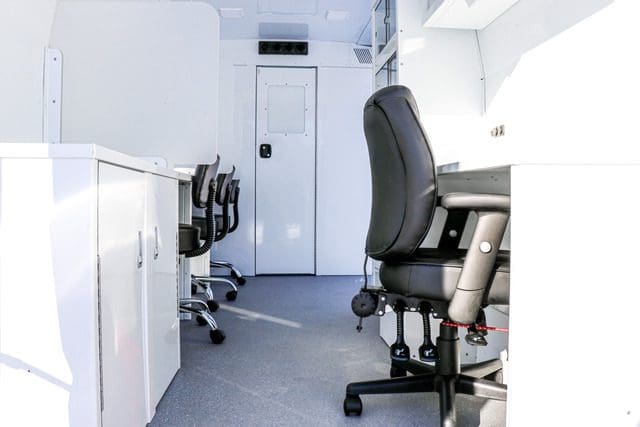
Your team needs a space that works on the move. The unit gives you a mobile office space where staff can check records, complete assessments, meet clients, and plan next steps.
The office space includes:
- Desk space: Helpful for reviewing charts or intake forms on the spot.
- Secured rolling chair: Keeps staff comfortable during long outreach days.
- Storage for equipment and records: Makes it easier to keep your supplies organized as you respond to drug overdoses or mental health needs in different locations.
This setup supports your workflow so you don’t lose time driving back and forth to a clinic.
3. Medical storage cabinets

The unit includes aluminum storage cabinets and floor-to-ceiling slide-open cabinets. These give you space for medical supplies, sterile equipment, naloxone kits, testing tools, PPE, and more.
How this helps:
- Supplies stay organized: No searching through bags during a crisis.
- Quick access to harm reduction tools: Lets you respond fast to someone at risk of overdosing on drugs.
- Clean, safe storage: Reduces cross-contamination and supports sterile practices.
This creates a cleaner, safer environment for both staff and clients.
4. Clean, simple interior
The inside of the unit is designed to feel calm and easy to manage.
Features include:
- Easy-to-clean counters and cabinets: Speeds up cleaning and keeps the unit sanitary.
- Bright LED lighting: Makes it easier to see clients clearly, check supplies, and respond during nighttime work.
- Clear layout: Reduces clutter so staff can move quickly in emergencies.
These touches support your team’s comfort and safety while serving people who are using the most commonly used drugs in your area.
5. Reliable heating and cooling

The unit includes rear heat and air conditioning. People using drugs are often exposed to harsh weather, especially if they’re outdoors or unstably housed.
Benefits include:
- Comfort for clients: A cool or warm environment helps people stay longer and accept help.
- Safe space during extreme weather: Reduces risk for people who sleep outside or walk long distances.
- Better working conditions for staff: Helps your team stay focused on care, not temperatures.
6. Power supply for equipment

Each unit can include extra outlets and charging options in both the office area and pods.
Available options include:
- Conventional outlets
- 12V plugs
- USB ports
These help your team:
- Charge phones for telehealth or referrals
- Power laptops or medical equipment
- Support clients who need to charge devices to stay connected with case workers
7. Custom options for your community
Every outreach program needs something different.
You can add features like:
- A sink for handwashing or wound care
- An awning for outside shade during summer outreach
- Extra power supply for longer days
- A cab divider for added privacy and safety
Together, these features help your team break down barriers like long travel distances, stigma, unsafe environments, and limited access to care. A Mobile Overdose Prevention Unit gives people a safer place to go during moments that carry the highest risk of drug overdoses in the U.S.
Ready to prevent drug overdoses in the U.S.?
You came here because drug overdoses in the U.S. keep rising in your community, and it feels like you’re trying to help people faster than the system can respond. You needed clear information, real numbers, and practical ideas that help you reach people before another accidental drug overdose happens.
After reading this guide, you learned:
- What causes overdose risk: Mental health needs, unstable housing, long distances, stigma, and gaps in care.
- How to overcome these barriers: Community programs, harm reduction tools, outreach strategies, and how a Mobile Overdose Prevention Unit supports your work in the field.
AVAN Mobility has worked with programs across the country that face the same challenges you’re working through today. Over the years, we’ve helped teams move from feeling stuck to feeling supported by building mobile spaces that match real situations on the ground. Our approach is simple.
We listen first, learn what your community is facing, and help you design a mobile solution that gives people safety, dignity, and a better chance at staying alive. If you have questions or want to explore your options, click the button below to talk to a mobility expert who cares about the people you serve.
If you’re not ready to talk to a mobility expert yet, here are a few resources that can guide your planning:
1. What Is a Mobile Overdose Prevention Van? A helpful next step if you want a deeper look at how you can use these units for overdose prevention.
2. What are supervised consumption sites, and are they effective? Great for understanding the impact of supervised spaces so you can compare fixed sites to mobile units.
3. How can your organization make use of opioid settlement funds? Useful next read if you’re exploring funding options that support overdose prevention, harm reduction, or community outreach programs.