Healthcare is finally changing in 2026, driven by patient demand, federal funding, and new delivery models. Amazon-style convenience, mobile clinics, and telehealth are no longer experiments but core infrastructure reshaping how care is accessed. In this article, we break down five key predictions that explain why healthcare is becoming faster, more proactive, and centered around the patient.
Learn how to start a Mobile project:
Key Moments in this Video
1
What Is the Amazon-Style Model of Healthcare in 2026?
Healthcare in 2026 is adopting the Amazon mindset. Not flashy technology, but frictionless results. Patients no longer tolerate multiple stops, paperwork, and waiting rooms just to get basic care. The Amazon style model removes the second stop. You see a provider, your prescription is filled immediately, and you leave with what you need. No extra drive. No second line. The logistics disappear. That expectation now extends everywhere. Whether it is delivery, mobile clinics, or instant virtual visits, care is expected to come to the patient. Convenience is no longer a bonus. It is the baseline.
108
How Is Proactive Care Helping Hospitals Reduce ER Overload?
Emergency rooms are overloaded, but not because of sudden accidents. They are filled with chronic conditions that went unmanaged for too long. Hospitals cannot afford to wait anymore. Mobile clinics that screen for issues like hypertension and diabetes can save millions by preventing emergency admissions before they happen. New payment models now tie hospital revenue to outcomes, not visits. If providers do not keep patients healthy, they lose money. That is why prevention is moving into neighborhoods instead of waiting inside the ER.
170
Why Has Telehealth Become a Healthcare Utility in 2026?
Telehealth did not fade after the pandemic. It became infrastructure. In 2026, it is less about video technology and more about eliminating the drive. For many patients, especially in rural areas, distance is the real barrier to care. Telehealth removes that penalty, which is why people are willing to pay out of pocket to keep access. Mental and behavioral health benefit the most. With fewer restrictions and no travel required, telehealth removes stigma and friction at the same time. For millions, it is the only realistic way to get care.
265
Why Is Federal Funding Now Tied to Mobile Healthcare?
The biggest force behind healthcare change is not consumer demand. It is federal funding. Programs now require providers to prove they can move care to patients, not just build new facilities. Mobile units and transportation strategies are no longer optional if organizations want grant money. This has flipped infrastructure planning on its head. Instead of adding beds, health systems are adding wheels. Access, not buildings, is what gets funded in 2026.
305
How Are Mobile Clinics Being Used to Plan Healthcare Expansion?
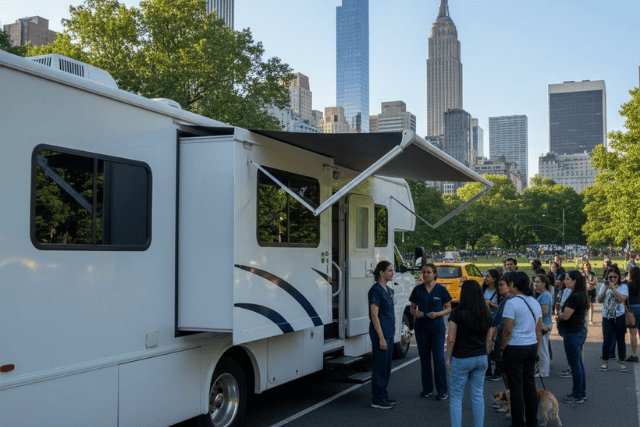
Mobile clinics are no longer just outreach tools. They are being used as real world testing labs. Health systems park mobile units in neighborhoods and operate them like full clinics for months or years. During that time, they collect real data on demand, insurance mix, and patient behavior. If the data supports it, a permanent clinic gets built. If not, the unit moves on. Expansion is no longer guesswork. It is tested, measured, and reversible.
Russ Evans

Russ
Frequently Asked Questions:
1. What does Amazon have to do with healthcare?
Amazon influences healthcare by setting new expectations for speed, convenience, and ease of use. Healthcare organizations are copying this model by reducing wait times, eliminating extra steps, and making care easier to access through integrated clinics, delivery, and virtual visits.
2. Do mobile clinics replace hospitals?
No, mobile clinics do not replace hospitals. They handle prevention, screening, and routine care so hospitals can focus on emergencies and complex medical cases.
3. Is telehealth still available after the pandemic?
Yes, telehealth is still widely available in 2026. While some rules changed, demand remains high, and many patients pay out of pocket or use memberships to keep virtual access to care.
4. Why are hospitals investing in mobile clinics now?
Hospitals are investing in mobile clinics to reduce emergency room costs and meet new funding requirements. Mobile care helps detect health issues earlier and improves access in underserved communities.
5. Who benefits most from mobile and telehealth healthcare?
Rural patients, people with chronic conditions, and those with limited transportation benefit the most. These models reduce travel time, missed work, and delays in care.
Share:
Facebook
LinkedIn
Email