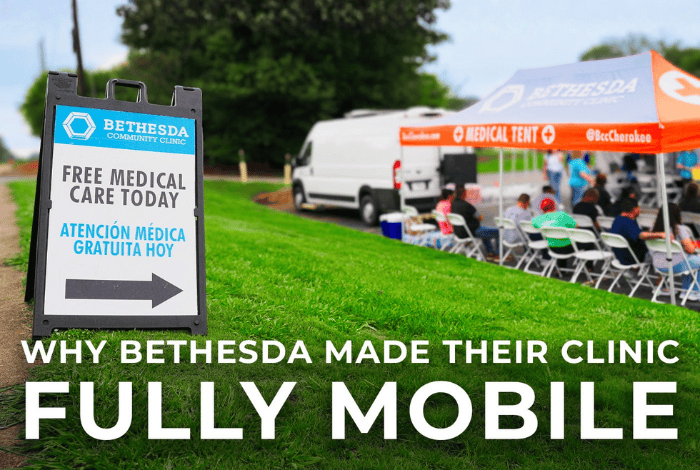
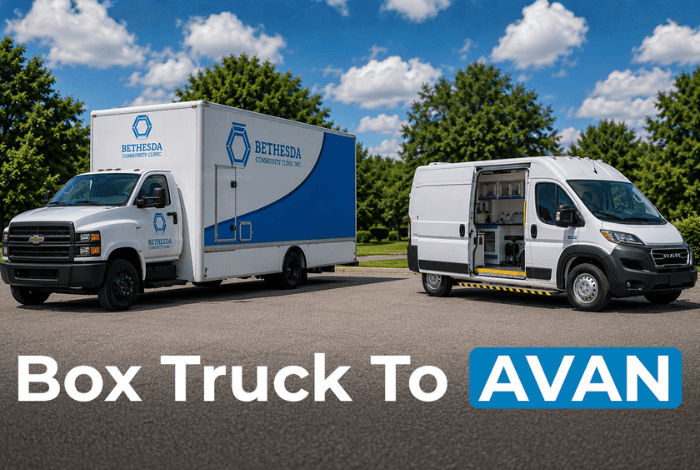
For healthcare teams researching mobile clinic options, vehicle size can shape how easily care reaches the people who need it. In this video, Bethesda Community Clinic shares why moving from a box truck to a Sprinter Type Mobile Clinic made their work easier, more flexible, and more accessible.
Key Moments in this Video
1
The Vehicle Shapes How Mobile Care Reaches People
“Bethesda Community Clinic is a nonprofit clinic providing free healthcare to anyone in need,” Melissa explains. For Bethesda, mobile healthcare is central to how they serve their community. “We want to be a healthcare home, and we are fully mobile, meaning we go to where the people are, where they live, work, play, and worship.” For healthcare organizations researching mobile clinics, the vehicle is not just transportation. It becomes part of how care reaches people who may not otherwise have access.
15
Why Poor Construction Can Create Long-Term Problems For Mobile Clinics
“Our first mobile unit, Big Beth, who we love dearly, she was acquired during COVID,” Melissa shares. “We knew that having a mobile clinic could be a game changer for so many individuals, but we didn’t even know what we were looking for in a vehicle.” That first experience taught Bethesda how important construction quality can be. “Unfortunately, the quality of construction was done with low-quality materials,” Melissa says. “The cabinetry is chipboard and the floors are vinyl.” Over time, the wear and tear became clear. “We weren’t even thinking how many people would walk across that floor or how many times that cabinet door would be open.” Melissa describes the ongoing repairs as “building and rebuilding, rerouting plumbing,” and even dealing with “a generator that fell off.” One incident made the risk especially serious. “A vehicle pulled up next to me and was blowing the horn and waving,” she recalls. “They were yelling, get over, get over, get to the side of the road.” “Our gas tank for our generator was strapped with metal straps to the bottom of the truck,” Melissa explains. “The strap had broken loose and was dangling on the side of the truck, sparking while I was discharging about 28 gallons of fuel.” “So I nearly lost my life that day,” she says. “And as much as I love Bethesda, I did not want to die serving the community in my mobile unit.” For organizations comparing mobile clinic options, Bethesda’s experience shows why build quality, safety, warranties, and manufacturer accountability matter from the beginning.
102
A Sprinter Type Mobile Clinic Can Be Easier to Drive and Deploy
After their experience with the first unit, Bethesda knew they needed a different kind of mobile clinic partner. “We really found that we needed somebody not only with a reputable company, but someone who stood behind their work with warranties and was proud enough to put their name on the side of our vehicle,” Melissa says. One of the biggest reasons Melissa chose a Sprinter Type Mobile Clinic was drivability. “I was interested in a vehicle that is easy to drive,” she explains. “Our current vehicle is a 28-foot box truck, and most people that are my employees or volunteers do not feel comfortable driving such a large machine.” The terrain also mattered. “We live in Georgia, which is full of hills,” Melissa says. “It doesn’t make sense to have a vehicle that you can’t pull in and out of a driveway because it’s so low to the ground or it wasn’t built to be on the hills.” That led Bethesda toward a Sprinter-style van. “I knew that a Sprinter van was going to be my next purchase,” Melissa shares. “I love the idea of a Sprinter van because, again, people can drive,” she says. “And also you can get into places that you can’t with a bigger unit.” For teams looking to grow their mobile clinic program, Melissa also points to the flexibility of adding more units. “You can add as many Sprinter vans to your fleet as you need and break them up accordingly, kind of like little Lego blocks.”
174
Commercial-Grade Materials That Support Daily Clinic Use
“Another reason that I chose AVAN was the high quality of construction,” Melissa says. For Bethesda, that quality showed up throughout the vehicle. “Everything inside of the van is commercial grade from the floor to the ceiling to the walls, the cabinetry. Everything is solid metal, well made.” That matters because a mobile clinic is used again and again in real conditions. “That is very important, especially when you have thousands of patient visits every year, people walking in and out, opening and closing doors.” Melissa also highlights one feature that may seem simple but became one of the most important parts of the van. “My favorite feature of my van is the sidestep and handrails to get in and out of the vehicle,” she says. “You might think that that sounds like a small detail, but when you are working with people who are going in and out of a vehicle multiple days, weather conditions or physical limitations, having a very sturdy sidestep with rails that are secured into the vehicle is very important.” She even tested the entrance in different shoes. “I wore a different pair of shoes three days in a row and was very happy whether I was wearing flip flops, sneakers, or even dress shoes with a low heel.” “I had no problem getting in and out of the vehicle,” Melissa says. “For me, that was a game changer.”
254
How The Right Builder Supports the Mission Behind the Vehicle
For Bethesda, choosing a Sprinter Type Mobile Clinic was not only about the vehicle. It was also about the experience of working with the builder. “When I went and toured the vehicle, the person that was working and showing the van that day was interested in what I was looking for,” Melissa says. “Took the time to learn about me.” Before she had even committed to purchasing, Melissa says the experience felt personal. “There was already an attitude of, we want to make this special for you. We want to outfit this vehicle for exactly what you need.” She describes spending time “talking and getting ideas and comparing notes and sharing horror stories” about her previous vehicle. Throughout that process, she felt reassured that those concerns were being addressed. “My journey with AVAN began almost two years prior to my purchase,” Melissa says, “and the customer service has been incredible from the beginning.” That support continued through grant funding conversations, manufacturing updates, delivery, and follow-up calls after the van arrived. “Even phone calls following up after delivery with my random questions were always met with professionalism and friendliness,” Melissa says. For organizations researching mobile clinic builders, Bethesda’s experience shows the importance of a partner who listens, understands the mission, pays attention to detail, and supports the team through every step. “I’m very thankful for the staff at AVAN and the way that they pay attention to detail,” Melissa says, “and really do care about what you’re trying to accomplish with your vehicle and walking you through every step of the way.”
Our Experts

Our Experts
Frequently Asked Questions:
- Is a Sprinter Type Mobile Clinic better than a box truck?
A Sprinter Type Mobile Clinic may be a better fit for healthcare teams that need a vehicle that is easier to drive, park, and bring into smaller or harder-to-reach locations. Bethesda moved away from a 28-foot box truck because many employees and volunteers were not comfortable driving something that large. - What should I look for in a mobile clinic vehicle?
Look for a vehicle that fits your team’s daily use, local terrain, patient needs, and service model. For Bethesda, important factors included drivability, durable construction, safe entry and exit, commercial-grade materials, and the ability to reach places a larger unit could not. - Why does construction quality matter in a mobile clinic?
Construction quality matters because mobile clinics go through frequent patient visits, repeated use, changing weather, and regular travel. Bethesda’s first mobile unit had low-quality materials and ongoing repair issues, which showed them the importance of choosing a builder that stands behind its work. - Can a smaller mobile clinic still work for patient care?
Yes. A smaller mobile clinic can still support patient care when the space is designed well. Bethesda’s Sprinter-style van gave their team a more flexible option while still supporting the clinical environment they needed. - How do I choose the right mobile clinic builder?
Choose a builder that listens to your goals, understands how the vehicle will be used, communicates clearly, and supports you before and after delivery. Bethesda valued working with a team that paid attention to detail and helped outfit the vehicle around their specific needs.
Share:
Facebook
LinkedIn
Email
Related Resources
Quinn Springett
July 27, 2026