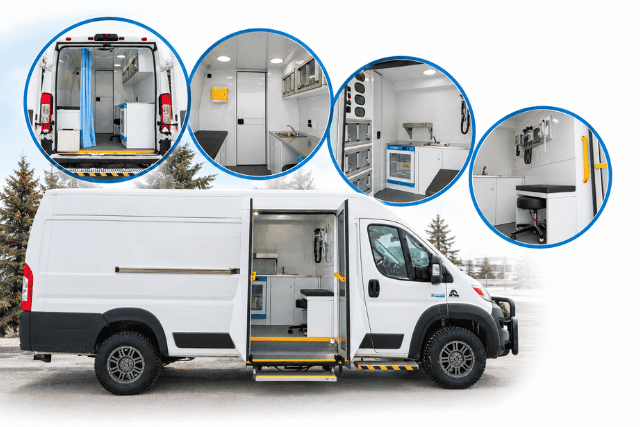
It’s heartbreaking to know that many Americans can’t reach a doctor, right? Studies show that about 30 million people in the U.S. don’t have health insurance, and many others struggle with transportation barriers. You feel that heavy burden about folks missing check-ups in places like rural Texas or underserved city areas. Thinking about getting a mobile medical clinic is exciting, but it might also feel stressful. You want to bring health, dignity, and freedom to your community, but it’s a big investment, and you worry about making the wrong call.
We get it. Your mission drives you, and ours is to support it. For over 10 years, AVAN Mobility has worked with organizations like yours, CalOptima, and the Community Clinic of Southwest Missouri. We’ve manufactured over 150 life-saving mobile medical units. We’re a certified Ford Upfitter and hold the Stellantis QPro certification. We know we’re the experts, but we also want you to choose the best option, even if it’s not us.
To help you feel more confident, we’re going to break down 3 vital things to consider before you buy your mobile medical clinic.
You’ll learn about:
- Understanding your patients: What services will you offer and to whom?
- Choosing the right vehicle: Which size and setup will work best?
- Planning for the future: How can you make sure this investment lasts?
Let’s dive in and clear up any confusion you might have.
1. Understanding your patients: What services will your mobile medical clinic offer?
Before you purchase a mobile medical clinic, it’s worth slowing down and getting very clear on one thing first: who you’re serving and what kind of care they need from you. This isn’t a paperwork step or a checkbox. It’s the foundation that shapes every decision that comes next. When this part is clear, mobile programs tend to succeed. When it’s rushed or assumed, even the best-built mobile clinic can fall short.
You’re likely here because you see a few care gasp:
- People are missing appointments
- Certain communities aren’t being reached
- Fixed clinics aren’t enough anymore
A mobile clinic feels like the right answer, but it’s normal to feel unsure about how to start. That hesitation usually comes from one question: “Will this actually work for the people we serve?” The best way to answer that is by understanding your patients deeply, before thinking about layouts or equipment.
Who will walk into your mobile medical clinic each day?
Start with the people, not the program. Different patient groups experience healthcare very differently, and those experiences should guide how your mobile clinic supports them.
Ask yourself:
- Who are we seeing most often?
- Where do they live and how far do they travel?
- What barriers keep them from care today?
In the U.S., mobile clinics often serve rural residents, Native communities, seniors, families with limited transportation, and people managing chronic conditions. Rural residents face longer travel times and fewer provider options than urban populations, which directly affects health outcomes. For many of these patients, your mobile clinic may be the most reliable point of care they have access to.
Understanding this changes how you think about the experience inside the mobile medical unit. Comfort, trust, and simplicity matter just as much as clinical function.
What services will your mobile clinic provide most often?
Once you’re clear on who you’re serving, the next question is what care you’ll deliver regularly. A mobile medical clinic built for vaccinations has very different needs than one focused on primary care, screenings, or behavioral health.
For example, mobile vaccine programs require strict temperature control. The CDC outlines specific storage requirements to keep vaccines safe and effective. That means your mobile medical unit may need refrigeration, temperature monitoring, and power redundancy. Those needs come directly from the service, not the vehicle itself.
A mobile health clinic focused on preventive care or chronic disease management brings different priorities. Appointments may last longer. Patients may need privacy for conversations or exams. Space to sit, talk, and feel at ease becomes critical.
Clarify early:
- Which services will we offer weekly?
- Which services are seasonal or occasional?
- What equipment is non-negotiable for safe care?
These answers keep your mobile clinic vehicle aligned with your care goals, instead of forcing your team to adapt around limitations.
How often will patients use the mobile medical clinic?
Frequency matters more than many teams expect. A mobile clinic that sees patients daily has different demands than one used a few days each month.
High-volume programs, such as vaccination drives or community screenings, may prioritize efficiency and flow. Lower-volume programs, like mental health outreach or follow-up care, may prioritize calm spaces and flexibility. The way patients use your mobile medical clinic should guide how it supports them.
This also affects staffing. Will patients move through quickly, or will visits be slower and more personal? According to the National Association of Community Health Centers, trust and continuity play a major role in patient engagement, especially in underserved populations. Your mobile clinic should support those relationships, not rush them.
What barriers do your patients face today?
Understanding patients means listening to what’s getting in their way now. Transportation gaps, mobility challenges, language barriers, and past healthcare experiences all shape how patients engage with care.
Consider accessibility. The CDC reports that one in four U.S. adults lives with a disability. If your patients include seniors or people with limited mobility, ease of entry, seating comfort, and interior layout affect dignity and trust.
Common patient barriers include:
- Distance: Long travel times to fixed clinics.
- Mobility: Difficulty standing, climbing, or waiting.
- Trust: Hesitation due to past experiences.
- Time: Appointments competing with work or caregiving.
When your mobile medical clinic addresses these barriers directly, care becomes accessible instead of intimidating.
Why does this step matter more than people expect?
Skipping this patient-first step often leads to programs that feel misaligned. Teams work hard, but the clinic doesn’t quite fit the need. Retrofitting becomes expensive. Staff adapt constantly. Patients disengage.
When you understand your patients first, the mobile medical unit becomes a tool that supports real care, not a compromise. It reflects the people you serve and the respect you have for them.
Once this clarity is in place, the next big decision becomes much easier. You’re no longer guessing what you need. You’re choosing it with purpose.
2. Choosing the right vehicle: Which mobile medical clinic setup actually fits how you operate?
Once you understand who you’re serving, the next big decision comes into focus: what type of vehicle will your mobile medical clinic live in? This step trips up many organizations because the options feel endless, and the stakes feel high. Pick the wrong platform, and even the best care model can feel cramped, slow, or hard to deploy. Pick the right one, and your mobile clinic becomes a tool your team trusts and wants to use.
There’s no single “best” mobile clinic vehicle. There is only what fits your reality.
What types of vehicles can become a mobile medical clinic?
A mobile medical clinic can be built on several platforms, each serving a different purpose. The most common options across the U.S. include:
- RVs
- Buses
- Trailers
- Box trucks
- Vans
Each option comes with tradeoffs tied to space, mobility, cost, and where you plan to operate.
For example, large RV-style mobile medical units offer generous space. They can support multiple exam rooms and high patient volume. But size brings limits. If your program serves remote northern communities on narrow, uneven roads, maneuvering a 40-foot RV may create stress for drivers and delays for care.
On the flip side, a bus-based mobile health clinic may work well for scheduled urban programs with dedicated parking. In places like New York City or Boston, though, finding parking for a long vehicle can eat up valuable clinic time. Staff may spend more energy navigating traffic than focusing on patients.
This is where many teams pause and ask, “What do we actually need, day to day?”
Why do vans often hit the sweet spot for mobile clinics?
For many healthcare organizations, vans become the practical middle ground. A mobile medical clinic built on a van platform balances flexibility, cost, and ease of use.
Vans are:
- Nimble: Easier to drive in tight streets and rural roads.
- Accessible: Simpler parking and setup in neighborhoods and community sites.
- Cost-conscious: Many programs stay under $500,000, even with custom medical interiors.
- Versatile: Suitable for vaccines, screenings, primary care, and outreach.
According to the U.S. mobile clinics market, van-based units represent a large share of active programs due to their flexibility and affordability. That flexibility matters when programs evolve or expand to new locations.
A mobile healthcare unit should help your staff feel confident driving it. If a vehicle feels intimidating, it often sits unused. Vans remove that barrier.
How location affects the right mobile clinic vehicle
Where you operate should heavily influence vehicle choice. Geography shapes everything from maintenance to staff comfort.
Think about a program serving northern states with snow, ice, and rough terrain. Narrow roads, long distances, and limited service access are common. In these regions, a smaller, well-equipped van often performs better than a larger vehicle that struggles with traction or clearance.
Now compare that to dense urban environments. Heavy traffic, tight parking, and time pressure define the day. A long bus or trailer can slow down operations. A van-based mobile medical clinic can move quickly between sites and fit into standard parking spaces.
Ask yourself:
- Are roads paved or unpredictable?
- How far do teams travel between stops?
- How easy is parking where care happens?
These answers guide you toward a vehicle that supports care, instead of getting in the way.
How many patients do you need to see each day?
Patient volume is another deciding factor. Larger vehicles handle high-throughput programs well. Smaller vehicles support consistent, focused care.
If your mobile clinic sees dozens of patients in a short time window, space and flow matter. If visits are longer and relationship-based, a compact layout can feel more personal and less clinical.
Many mobile medical units fail not because they’re too small, but because they’re too big for the mission. Extra space that isn’t used still costs money, fuel, and maintenance.
The National Association of Community Health Centers reports that mobile programs often succeed when they align size with actual service demand. Bigger isn’t always better.
Comparing common vehicle options at a glance
Here’s a simple way to think about common mobile clinic vehicle choices:
| Vehicle type | Best for | Common challenges |
| RV | High-volume, fixed routes | Size, fuel cost, maneuverability |
| Bus | Urban programs with parking | Traffic, parking, driver comfort |
| Trailer | Stationary clinics | Requires tow vehicle, setup time |
| Box truck | Moderate space needs | Larger footprint |
| Van | Most mobile medical clinics | Limited space if poorly planned |
Why does vehicle choice shape staff confidence and patient trust?
A mobile medical clinic doesn’t serve patients if staff feel overwhelmed operating it. Ease of driving, setup time, and reliability all affect morale.
When teams can arrive, park easily, and focus on care, patients feel that calm. The vehicle fades into the background, which is exactly where it should be. Care stays front and center.
Choosing the right mobile clinic vehicle brings alignment. It supports your patients, your staff, and your budget. Once that alignment is in place, the final question naturally follows: how do you make sure this investment keeps working for years to come?
3. Planning for the future: How can you make sure your mobile medical clinic investment lasts?
After choosing the right vehicle, the final consideration is often the easiest to overlook and the most expensive to fix later.
How will your mobile medical clinic hold up over time? This isn’t just about durability. It’s about flexibility, growth, and peace of mind for the years ahead.
Most organizations don’t buy a mobile clinic for a single year or a single grant cycle. You’re thinking long term. You want a mobile medical unit that still fits your mission as programs grow, funding shifts, and patient needs change. Planning for that future now protects your investment and your team.
Will your mobile medical clinic adapt as your program grows?
Programs evolve. A mobile clinic that starts with vaccines may expand into screenings, follow-up care, or education. A mental health outreach program may add telehealth or case management. The question is whether your mobile clinic vehicle can adapt with you.
Flexibility starts with design. Exam and office setup, adjustable cabinetry, and scalable power systems make change easier. A mobile healthcare unit that can shift layouts without a full rebuild saves time and money down the road.
Think ahead and ask:
- Could our services expand in the next three to five years?
- Will we add new equipment or technology?
- Can the interior support change without major downtime?
Planning for growth doesn’t mean overbuilding. It means leaving room to adjust when the time is right.
How long will the vehicle realistically stay on the road?
Longevity matters. A mobile medical clinic that’s easy to maintain stays in service longer. This often comes down to the vehicle platform and how it’s supported.
Platforms like vans are widely serviced across the U.S. Parts are easier to source. Technicians are familiar with them. That means less downtime and fewer surprises. Fleet vehicles with accessible service networks often remain operational longer and cost less to maintain over time.
Ask about:
- Service availability in your operating regions
- Warranty coverage for both vehicle and medical components
- How maintenance affects clinic scheduling
A mobile health clinic should support care, not compete with it for attention.
Is your mobile medical unit built for real-world use?
Mobile clinics live tough lives. They travel long distances. Doors open and close all day. Equipment runs constantly. Weather takes a toll.
Planning for the future means asking how the unit holds up under daily use.
A well-planned mobile medical unit considers:
- Interior materials: Surfaces that clean easily and stand up to wear.
- Electrical systems: Designed for medical equipment, not basic accessories.
- Climate control: Stable temperatures for staff, patients, and supplies.
- Storage: Enough space so items aren’t stacked or damaged.
These details affect how long your mobile clinic stays functional and welcoming.
What happens when funding or leadership changes?
Mobile programs often outlive leadership teams, grants, and priorities. That’s a good thing. Planning for longevity means building a mobile clinic vehicle that still makes sense even when things shift.
A flexible mobile medical clinic:
- Supports multiple care types
- Appeals to different stakeholders
- Holds value if programs adjust
Mobile programs that align with long-term strategy are more likely to sustain operations beyond initial funding cycles. A vehicle that works across programs protects continuity of care.
How does resale and repurposing protect your investment?
Even with strong planning, needs change. A mobile clinic that can be repurposed or resold holds value beyond its first use.
Van-based mobile medical units often repurpose more easily than oversized vehicles. Their footprint fits more programs. Their operating costs are easier to justify. That flexibility matters if you pivot services or redeploy assets.
This isn’t about an exit strategy. It’s about confidence. Knowing your investment won’t become stranded equipment lets teams move forward with clarity.
Why does long-term thinking reduce stress for your team?
Staff feel the effects of planning every day. When a mobile clinic works smoothly year after year, teams trust it. They don’t worry about breakdowns, layout limits, or growing pains.
That trust shows up in care. Patients sense when a space is designed to last. It feels stable. It feels intentional.
Planning for the future helps a mobile medical clinic stay what it’s meant to be: a reliable bridge between care and community.
Understanding your patients sets the direction. Choosing the right vehicle supports daily work. Planning for the future protects everything you build.
A mobile medical clinic is more than a purchase. It’s a long-term commitment to access, dignity, and care that meets people where they are. Thoughtful planning turns that commitment into lasting impact.
Ready to plan a mobile medical clinic that lasts?
You came here because you’re trying to solve a real problem. People need care, but fixed clinics, long drives, and limited access are getting in the way. You’re exploring a mobile medical clinic because you want a smarter, more human way to reach patients without creating new headaches for your team.
Here’s what you took away from this guide:
- You learned why understanding your patients comes first, since their needs shape every decision that follows.
- You saw how the right vehicle choice supports daily care, instead of slowing programs down.
- You explored how planning ahead protects your investment, so your mobile clinic grows with your mission.
At AVAN Mobility, we’ve spent over a decade helping healthcare organizations across the U.S. turn good intentions into mobile programs that actually work. Every mobile medical unit we build starts with listening, understanding your challenges, and designing around real-world use.
We’re proud to manufacture mobile healthcare solutions that reduce barriers, protect dignity, and help teams deliver care where it matters most. If you have questions or want to talk through your next step, click the button below and connect with a mobility expert who knows this space inside and out.
If you’re not ready to talk to a mobility expert yet, we have a few other resources you should check out to keep learning.
Recommended next reads
- Top 5 pitfalls to avoid when purchasing a mobile health clinic: This article helps you avoid common mistakes organizations make after the planning stage.
- How much does a mobile medical unit cost in the U.S.? Get clear, realistic cost expectations so budgeting feels less uncertain.
- How to choose a mobile medical van: What you need to know: Go deeper into vehicle selection once you’re ready to narrow your options.