Did you know suicide is one of the leading causes of death for young people in the United States? The CDC reports it is the second leading cause of death for ages 10 to 14 and 20 to 34.
When you think about youth suicide prevention, that statistic feels personal. You’re working hard on suicide prevention for youth in your schools, counties, or tribal communities. You see the waitlists, hear from parents who cannot find help nearby. You know preventing youth suicide takes more than a crisis line. If access stays limited, teens slip through the cracks. That gap between warning signs and support can cost lives.
You want to prevent youth suicide earlier. In rural Georgia towns, with no local therapists. On tribal lands in the Southwest where transportation is a barrier. In large school districts in California, where stigma keeps teens quiet. You’re building stronger youth suicide awareness prevention and postvention plans, but access still stands in the way.
We’ve spent over 10 years helping organizations like yours and Pacific Clinics close gaps like this. AVAN Mobility has built more than 180 mobile medical units that are either Ford Pro Upfitter or Stellantis QPro certified. Your mission drives you. Ours is to support it with practical solutions shaped around real communities.
In this article, you’ll learn what youth suicide prevention involves, five common barriers, and how mobile counseling units help.
What is youth suicide prevention?
Youth suicide prevention is the work you do to stop a young person from reaching a crisis point where suicide feels like the only option. It’s about spotting warning signs early, offering real support, and building systems that protect teens before, during, and after a mental health emergency.
At its core, suicide prevention for youth focuses on three key areas:
- Early identification: Training staff, teachers, and peers to recognize warning signs like withdrawal, mood shifts, or talk of hopelessness.
- Access to care: Making counseling and crisis services easy to reach, especially for teens who lack transportation or insurance.
- Postvention support: Providing care after a suicide attempt or loss to reduce trauma and prevent future risk.
Preventing youth suicide is not one program or one event. It’s an ongoing effort that blends awareness, prevention, and postvention into daily life. Strong youth suicide awareness prevention and postvention plans help schools, counties, and health systems respond quickly and calmly when concerns arise.
Picture a 15-year-old in rural Oklahoma. She starts missing school. Her grades drop. Her mom works two jobs and cannot drive her an hour to the nearest therapist. Without local support, that gap grows wider. Youth suicide prevention means stepping in before that gap turns into tragedy. It means bringing care closer, building trust, and removing barriers that keep teens silent.
Most organizations understand the goal. The challenge comes in the gaps that block suicide prevention youth efforts from reaching every teen who needs help. Let’s talk about those next.
What barriers make youth suicide prevention harder than it should be?
Your organization cares about preventing youth suicides. You’ve put plans in place. You’ve trained your team. Still, gaps show up. Suicide prevention for youth often breaks down in everyday realities. Here are five barriers that commonly stand in the way of preventing youth suicide across the U.S.
1. Limited access to mental health care
Access is one of the biggest barriers in suicide prevention in youth. In rural Montana or West Texas, there may be only a few youth providers for entire regions. In cities like Los Angeles, waitlists stretch for months.
Picture a 15-year-old in rural Kentucky. She asks for help. The nearest therapist is two hours away.
The gap often looks like this:
- Provider shortages: Too few child and teen specialists.
- Long waitlists: Weeks pass before the first appointment.
- Cost barriers: Insurance gaps or high out-of-pocket fees.
Suicide prevention youth programs depend on speed. When care is delayed, risk can grow. Prevention of youth suicide efforts need access that is close and timely. Without it, strong youth suicide awareness prevention and postvention plans stall.
2. Stigma and fear of speaking up
Stigma still shapes how teens talk about mental health. In small towns or tight-knit communities, asking for help can feel risky.
Imagine a high school athlete in suburban Ohio. He feels hopeless but says nothing.
Common fears include:
- Being judged: Worry about labels or gossip.
- Letting family down: Pressure to appear strong.
- School consequences: Fear of being removed from activities.
Suicide prevention for youth relies on trust. When stigma keeps teens silent, warning signs stay hidden. Preventing youth suicide means creating spaces where teens feel safe to speak.
3. Transportation and geographic isolation
Geography plays a bigger role than many realize. In tribal communities in Arizona or remote Alaska, services may exist but feel out of reach.
Consider a teen living 40 miles from the nearest clinic.
Barriers often include:
- No public transit: Families share one vehicle.
- High travel costs: Gas and time add up.
- Missed school or work: Appointments disrupt daily life.
Suicide prevention youth efforts weaken when getting help feels impossible. Prevent youth suicide plans must account for distance.
4. Overloaded schools and community systems
Schools often carry the weight of youth suicide prevention. Counselors are stretched thin. Ratios can exceed 400 students to one counselor in many states.
A middle school counselor in Florida may handle:
- Crisis response: Immediate safety concerns.
- Academic planning: Graduation requirements.
- Family meetings: Parent coordination.
Suicide prevention for youth needs time and attention. When systems are overloaded, follow-up can fall through. Preventing youth suicide requires capacity, not just good intentions.
5. Lack of culturally responsive care
Teens want support that reflects their world. In Native communities, Black communities, or immigrant families, cultural context matters deeply.
Imagine a teen in South Dakota on tribal land. A provider unfamiliar with tribal history may miss key stressors.
Gaps often show up as:
- Cultural disconnect: Teens feel misunderstood.
- Language barriers: Families struggle to engage.
- Mistrust of systems: Past harm affects present care.
Youth suicide awareness prevention and postvention plans must feel personal and respectful. Suicide prevention youth strategies work best when teens see themselves reflected in the support around them.
Now that we’ve looked at the barriers, let’s talk about how mobile counseling units can help close these gaps in youth suicide prevention.
How can a mobile counseling unit strengthen youth suicide prevention and close these gaps?
When you look at the barriers we just covered, a few themes stand out in youth suicide prevention. Access. Distance. Silence. Overloaded systems. Cultural disconnect.
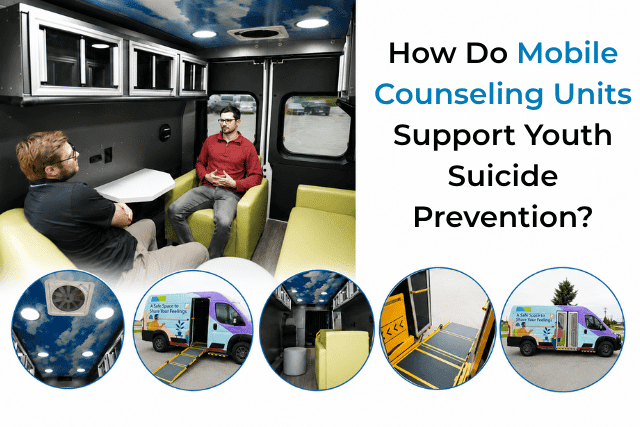
A mobile counseling unit addresses those head-on. Instead of waiting for teens to come to you, you bring suicide prevention for youth directly to their schools, neighborhoods, and community centers. That shift alone changes everything.
Let’s break down how it helps you prevent youth suicide in real, practical ways.
1. You remove the access barrier in youth suicide prevention
First and foremost, you overcome limited access with a mobile counseling unit.
You can park outside a rural high school in Arkansas, rotate through tribal communities in Arizona, or set up at a Boys and Girls Club in South Central Los Angeles.
That means:
- Faster response: Teens get help within days, not months.
- No transportation stress: Families do not need to travel long distances.
- More touchpoints: You can schedule regular visits that build trust.
Suicide prevention youth programs become visible and reachable. Preventing youth suicide becomes proactive instead of reactive.
When care shows up in a parking lot, students already walk past every day, so it feels less intimidating. That lowers the first big hurdle in youth suicide awareness, prevention, and postvention efforts.
2. You create a safe space that reduces stigma
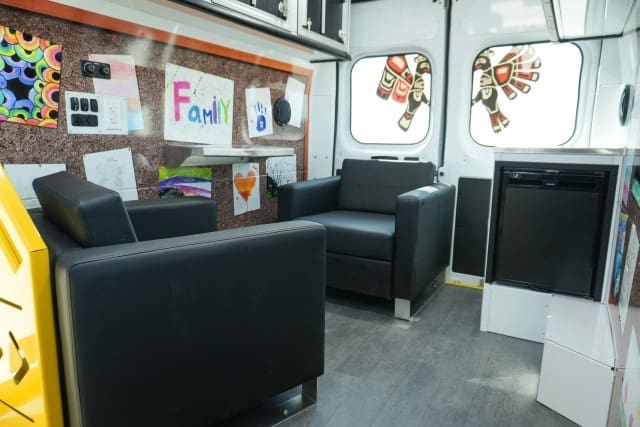
Stigma shrinks when the environment feels warm and human.
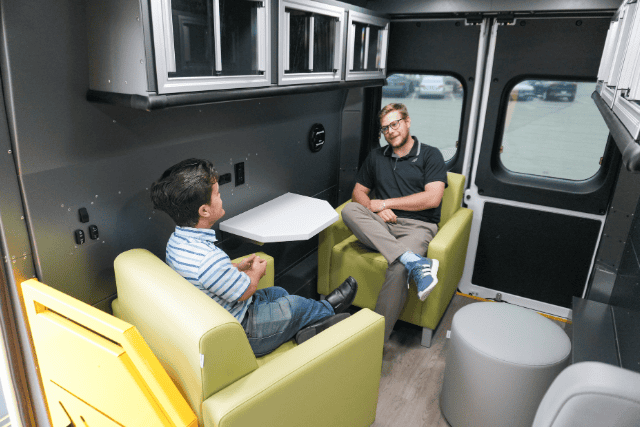
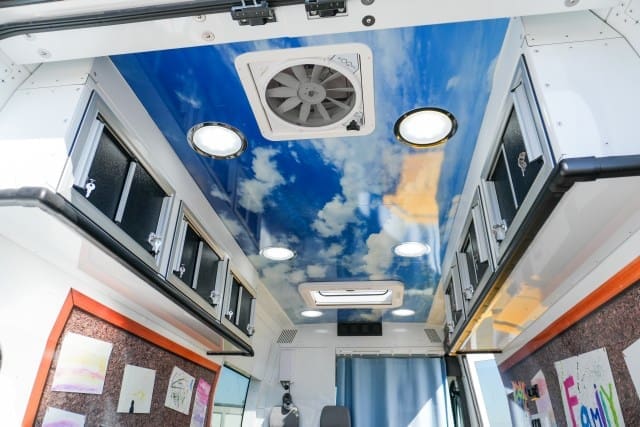
Inside the mobile counseling van, the space feels like a living room. Cozy couches. A small table for conversation. Soft wood grain flooring. Natural light from windows and a skylight.
That matters more than you think.
A teen stepping into a bright, comfortable space is less likely to feel they are entering a busy, public clinic where 20 other people are in the waiting room. They’re stepping into a calm, private setting designed for conversation.
Key elements that support suicide prevention for youth include:
- Home-like seating: Comfortable couches encourage open dialogue instead of clinical tension.
- Natural light: Bright spaces often feel safer and less sterile.
- Conversation table: Makes it easier to sit face-to-face as equals.
Preventing youth suicide depends on trust. When teens feel at ease, they talk. When they talk, you can act earlier.
3. You protect privacy and build confidence
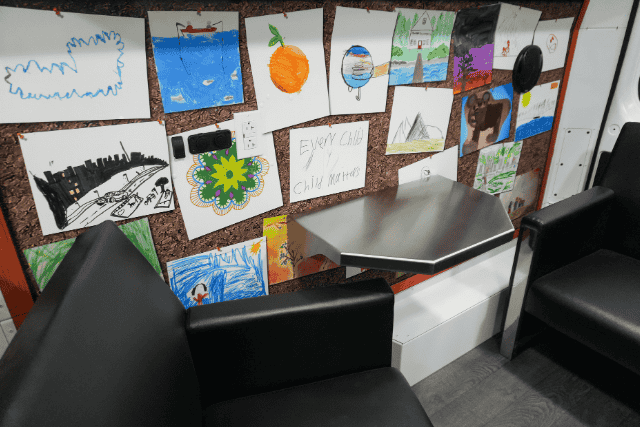
Privacy is critical in your youth behavioral health efforts. Teens often fear being seen walking into a counseling office.
Mobile counseling units help solve that in subtle ways:
- Tinted windows: People inside can see out, but others cannot see in.
- Sound insulation: Conversations stay private.
- Temperature control: The space stays comfortable year-round.
Imagine a teen in suburban Georgia who is afraid classmates will notice. Meeting in a discreet mobile unit parked near campus reduces that fear.
Confidentiality supports suicide prevention youth programs because teens need to feel safe before they open up. Youth suicide awareness prevention and postvention plans work best when privacy is protected.
4. You reach remote and underserved areas
Geography should not decide who receives care.
The Trail Kit option on your Mobile Counseling Van improves durability and off-road access. That can make a difference in rural Colorado or on tribal land in South Dakota, where paved roads are not always available.
Reaching teens in isolated areas supports preventing youth suicide by:
- Closing distance gaps: Services travel across counties.
- Serving rotating communities: You can build a predictable schedule.
- Reducing missed appointments: Care meets teens where they already are.
Suicide prevention for youth becomes flexible and community-based rather than building bound.
5. You support culturally responsive suicide prevention youth programs
Culturally relevant care strengthens youth suicide prevention.
Mobile units can include optional ventilation systems that allow traditional practices like smudging. That may be important in Native communities where ceremony is part of healing.
Customization also allows you to:
- Design welcoming interiors: Reflect local culture and values.
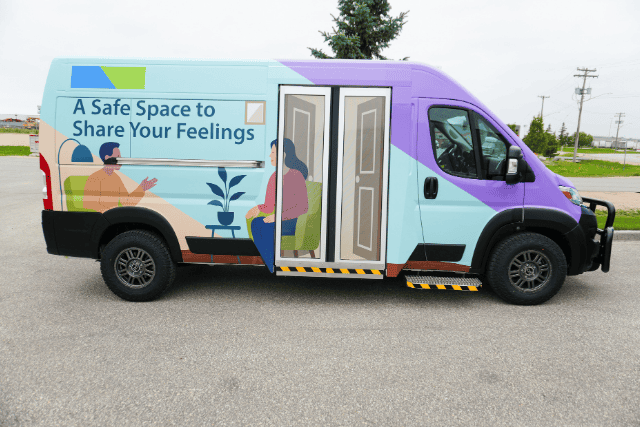
- Wrap the exterior in hopeful messaging: Shift away from clinical imagery.
- Create recognizable symbols of support: Make the van a trusted presence.
When teens see their culture respected, trust grows. Youth suicide awareness prevention and postvention efforts feel grounded in community, not imposed from outside.
6. You extend the reach of overwhelmed systems
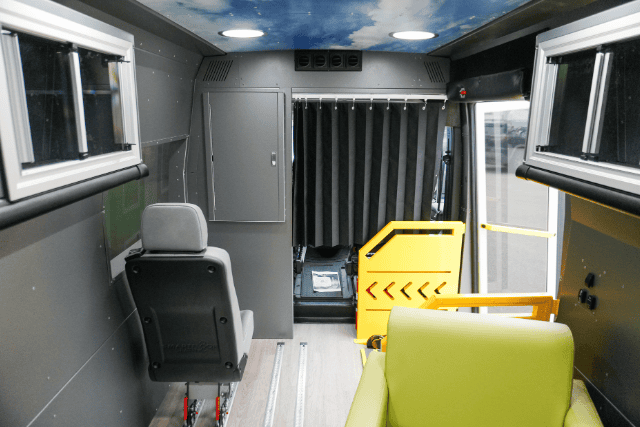
Schools and community clinics are stretched thin. A mobile counseling unit adds capacity without building a new facility.
With built-in WiFi, your counselors can:
- Access telehealth tools: Connect with remote specialists.
- Complete assessments securely: Use digital screening tools.
- Coordinate care: Share updates with care teams in real time.
Storage cabinets keep supplies organized. Removable seating allows flexibility. You might use the space for one-on-one sessions during the week and small group discussions on Fridays.
That flexibility strengthens suicide prevention youth efforts. You are not locked into one format. You adapt as needs shift.
7. You show up consistently, and that builds trust
Consistency saves lives in youth suicide prevention.
When teens see the same mobile unit arrive every Tuesday, it becomes familiar. Familiar turns into trusted. Trusted turns into used.
Preventing youth suicide is about connection. A mobile counseling unit becomes a symbol of care that travels with you. It shows young people that help is not far away. It is here.
And when access, privacy, culture, and comfort align, suicide prevention for youth becomes real in everyday spaces.
Ready to strengthen youth suicide prevention in your community?
You came here because youth suicide prevention feels urgent, and you might see the warning signs. You feel the strain on your team. Suicide prevention for youth cannot wait, and the gaps in access, trust, and capacity are real.
Now you have a clearer path forward:
- You identified the barriers: Access, stigma, distance, overloaded systems, and cultural disconnect.
- You saw the opportunity: Bringing care directly to teens changes how suicide prevention youth programs function.
- You imagined the outcome: Preventing youth suicide becomes proactive, visible, and rooted in community.
At AVAN Mobility, we’ve spent over two decades helping organizations rethink how care reaches people across the U.S. We work closely with community health teams, tribal leaders, and crisis response programs to design vehicles that remove barriers and expand behavioral health access.
Our approach is practical, transparent, and grounded in real-world experience. We listen carefully, build intentionally, and stay involved long after delivery. That long-term partnership mindset is why many organizations trust us when lives are on the line. If you have questions, click the button below to talk to a mobility expert.
If you’re not ready to talk yet, here are a few mental and behavioral health resources to keep learning.
Recommended next reads
- Mobile mental health clinics: What are they and what do they do? Take a deeper dive into the world of mental health.
- What is the cost of a mobile counseling unit? Learn what you can expect to pay for a mobile counseling unit.
- How to become a certified community behavioral health clinic: Find out how to become a CCBHC.