Did you know nearly 2,900 people in Atlanta were counted as experiencing homelessness in 2025? Many were living in shelters, encampments, cars, or moving between places to stay. Atlanta’s homeless population continues to grow in areas like Downtown, South Atlanta, Bankhead, and parts of DeKalb County.
For outreach teams like yours, that creates a hard gap. You want to help more people, but fixed locations, long travel times, and limited staff can make that difficult. A Mobile Outreach Van can help you reach people where they are before health issues, mental health crises, or substance use challenges become even harder to manage.
At AVAN Mobility, we’ve spent more than 10 years helping healthcare teams, nonprofits, and outreach groups bring services closer to the people who need them. We’re a trusted partner for organizations across the U.S., with both Ford Pro Upfitter and Stellantis QPro certifications. Our team listens first and builds second because every community has different challenges. We know we’re not the only manufacturer out there, so our goal is to help you understand what makes the most sense for your outreach program.
In this article, you’ll learn:
- What’s happening with Atlanta’s homeless population
- Why Mobile Outreach Vans make sense in Atlanta
- Where a mobile crisis outreach team can make the biggest impact in the city
What’s happening with Atlanta’s homeless population?
Atlanta’s homeless population has changed a lot over the past few years. While some groups have seen progress, many outreach teams are still seeing more people living outside, moving between shelters, or staying in places that were never meant for housing.
In early 2025, Atlanta counted 2,894 people experiencing homelessness across the city. That was a small increase from the year before. Still, it shows that the problem remains serious in many parts of Atlanta, especially Downtown, South Atlanta, Old Fourth Ward, Bankhead, and near major transit routes. Partners for HOME reported that unsheltered homelessness grew sharply in 2024, with more people living in tents, cars, abandoned buildings, and encampments.
A lot of people picture homelessness as one type of person. In reality, Atlanta’s homeless population includes:
- Families with children
- Older adults over age 55
- Veterans
- Young adults aging out of foster care
- People living with disabilities
- People facing mental health or substance use challenges
Atlanta Mission found that 48% of adults experiencing homelessness in Atlanta live with a serious mental illness. Another 40% are dealing with a substance use disorder. Those numbers matter because many people need more than a meal or a bed. They may also need counseling, medication, wound care, transportation, or help getting connected to long-term services.
Why are Atlanta outreach teams feeling stretched?
For every one person who gets housed in Atlanta, about 2.5 more people fall into homelessness. That’s one reason many homeless outreach teams feel like they are always playing catch-up. The National Alliance to End Homelessness says Atlanta has limited housing openings each month, which creates long waits for support.
At the same time, family homelessness in Atlanta increased by 14% in 2025. Axios Atlanta reported that many of those families are staying in emergency shelters or moving between friends’ homes, hotels, and temporary spaces.
Imagine you’re running a mobile outreach program in Atlanta. Your team may visit an encampment near Downtown one day, a MARTA station the next, and a shelter in South Fulton later that week. Each stop brings different needs, different people, and different barriers.
That’s why many organizations are starting to rethink how homeless outreach works. Fixed offices and traditional clinic spaces can only reach so many people. A mobile outreach unit can help bridge that gap, especially when your team needs to bring support directly into the community. Atlanta’s homeless population is spread across a large area, and that means outreach often has to move too.
Why do Mobile Outreach Vans make sense for Atlanta?
Atlanta’s homeless population is spread across a wide area. One day, your mobile crisis outreach team may be near Downtown Atlanta. The next day, you could be in East Point, South Fulton, Decatur, or along Buford Highway.
That creates a challenge for homeless outreach programs. You need a way to bring support directly to people without relying on them to find your office, get bus fare, or make it across the city in the middle of a crisis.
That’s where mobile outreach vans can make a real difference.
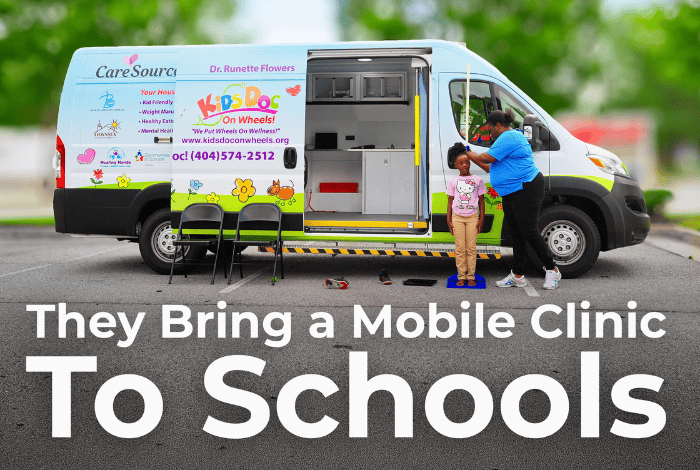
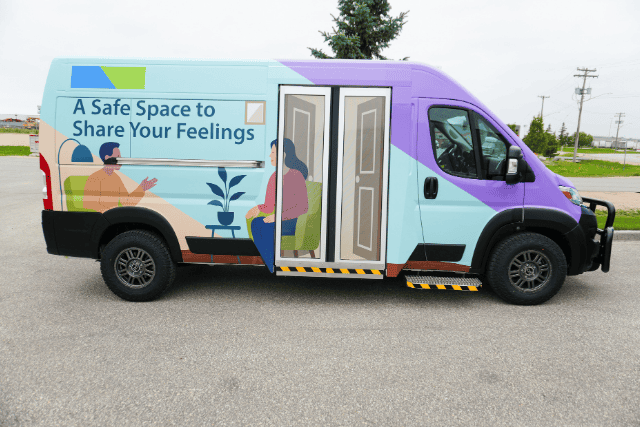
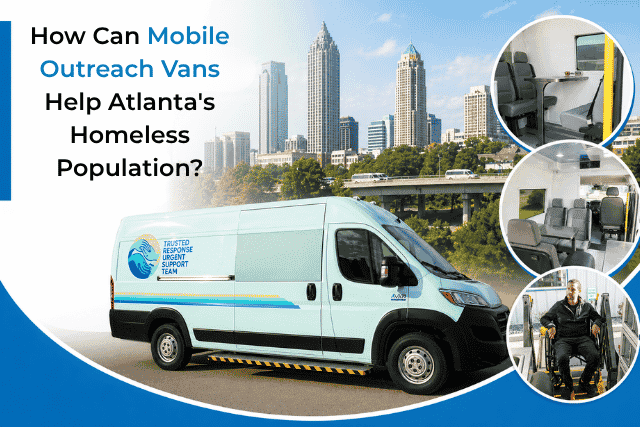
A mobile outreach van gives your team a place to meet people where they are. It gives you a safe, private, climate-controlled space to talk, complete paperwork, hand out supplies, and connect people with services.
For Atlanta outreach teams, that matters because the city is large, busy, and hard to navigate when someone is already in crisis.
1. Mobile outreach vans help you bring services closer
When someone is living outside, transportation becomes a major barrier.
A person staying near a MARTA station in Downtown Atlanta may need to travel to a shelter in South Fulton, a clinic in Midtown, or a social services office in DeKalb County. That can take hours. It can also mean missed appointments, missed meals, and missed opportunities to get help.
A mobile outreach unit helps remove some of that travel barrier.
Instead of asking people to come to you, your team can go directly into neighborhoods where support is needed most.
That could include:
- Encampments near Downtown Atlanta
- Areas around MARTA stations
- Parks and trail systems
- Community centers
- Temporary shelter sites
- Areas near hospitals or emergency departments
- Places where mobile crisis outreach teams already respond regularly
For many people, getting into a clean, quiet space for even 20 minutes can completely change the conversation.
2. A clean and comfortable space builds trust
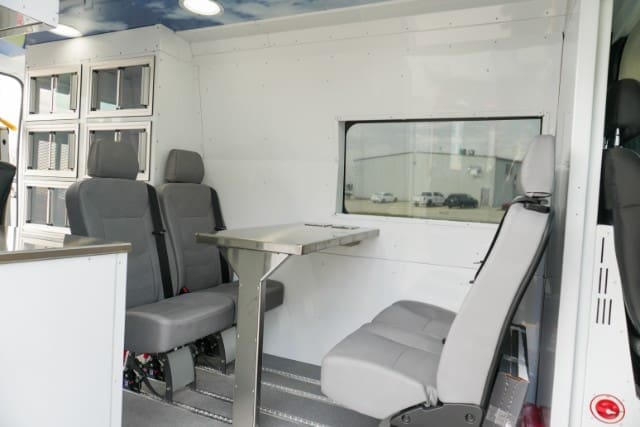
People are more likely to open up when they feel safe.
If you’re talking with someone on a sidewalk, beside a busy road, or in the middle of a crowded shelter, it can be hard to have a private conversation. Noise, weather, stress, and fear can all get in the way.
A mobile outreach van gives your team a clean, comfortable environment where people can sit down, breathe, and talk without feeling exposed.
Rear heat and air conditioning options are especially important in Atlanta. Summers are hot and humid. Winters can still bring cold mornings and overnight temperatures that make outdoor outreach difficult.
A climate-controlled space can help with:
- Substance use counseling
- Intake paperwork
- Basic wound care
- Case management meetings
That kind of environment can help a mobile crisis outreach team build trust faster. Sometimes trust starts with something simple, like a cool place to sit and a bottle of water.
3. Storage and workspaces help teams stay organized

Outreach teams often carry a surprising amount of equipment.
You may need hygiene kits, blankets, food, forms, laptops, water bottles, first aid supplies, overdose prevention kits, clothing, and paperwork. Without enough storage, things can quickly become messy.
That’s why floor-to-ceiling aluminum storage cabinets and overhead storage can make such a big difference.
They help keep your mobile outreach program organized and ready for the day ahead.
A mobile office desk space can also give staff a place to:
- Fill out forms
- Complete housing applications
- Register people for services
- Use laptops and tablets
- Hold virtual meetings with healthcare providers
Imagine your team is helping someone apply for benefits near a shelter in Midtown. Instead of balancing forms on your lap or trying to use a folding chair in a parking lot, you have a real workspace inside the van.
That may sound simple, but it can save time and reduce stress for both staff and clients.
4. Power and connectivity help you do more on the road

Many homeless outreach teams rely on phones, laptops, tablets, printers, and medical equipment every day.
Conventional outlets, 12V plugs, USB ports, and onboard power supply systems help keep everything charged and ready.
That matters when you’re:
- Running telehealth appointments
- Charging staff devices
- Powering a printer or scanner
- Using Wi-Fi equipment
- Running a refrigerator for medication or snacks
- Using advanced medical equipment
A sink and fridge can also make a mobile outreach unit more practical.
The sink gives staff a place to wash their hands and clean up between appointments. The fridge can hold bottled water, snacks, medication, or temperature-sensitive supplies.
For a mobile crisis outreach team responding to people with health concerns, that extra functionality can make a major difference.
Customization helps your van match your program

No two Atlanta outreach organizations are exactly alike.
Some teams focus on mental health. Others support youth homelessness, veterans, women fleeing domestic violence, or people living with substance use disorders.
That’s why customization matters.
Some outreach programs may want removable passenger seats so they can carry more people or create more room for supplies. Others may prefer tables for intake paperwork or grab handles to help people safely get in and out of the van.
A cab divider can add privacy and security between staff and clients. Advanced medical equipment can help organizations that provide health screenings, wound care, or basic treatment in the field.
Even winter tires can matter for Atlanta. Ice storms are rare, but when they happen, they can shut the city down quickly. Outreach does not stop when the weather changes.
A mobile outreach van helps your team stay flexible, organized, and ready to respond wherever Atlanta’s homeless population needs help most.
Where can mobile outreach teams make the biggest impact in Atlanta?
Even though the homeless population in Atlanta is widely spread across the city, there are certain areas where a mobile outreach program can have a greater impact more quickly.
These are often places where people already gather, sleep, travel, or look for help. For a mobile crisis outreach team, these locations can become regular touchpoints where trust grows over time.
Downtown Atlanta and South Downtown
Downtown Atlanta remains one of the most visible areas for homelessness in the city.
Encampments have been reported around Pryor Street, the I-20 corridor, Old Wheat Street, and areas near shelters and service providers. In 2025, the city cleared a large encampment near Pryor Street under the Downtown Connector. Outreach teams worked with dozens of people before the clearing began, helping connect some to housing, shelters, transportation, and support services.
South Downtown also continues to be a major area for homeless outreach because it is close to shelters, food programs, transit, and support agencies. The area around Garnett Station has become a key location for rapid housing projects and supportive housing programs.
A mobile outreach unit can help in these areas by offering:
- Mental health support
- Substance use counseling
- Housing paperwork
- Hygiene supplies
- Basic medical care
- Water, food, and cooling relief during hot weather
MARTA stations and transit corridors
Many people experiencing homelessness in Atlanta spend time near MARTA stations because transit hubs provide shelter, bathrooms, air conditioning, and access to different parts of the city.
Stations like Five Points, Garnett, Civic Center, North Avenue, and Airport Station often become gathering points for people looking for a safe place to rest or travel.
MARTA’s own outreach program has helped more than 6,000 people since 2020. Another report found that MARTA HOPE has engaged more than 40,000 people, with over 5,300 accepting services and 1,600 moving into temporary shelter.
A mobile crisis outreach team can park near transit stations and meet people where they already are. That creates a chance to connect before someone ends up in the emergency room, jail, or another crisis situation.
For example, a mobile outreach van near Garnett Station could help someone replace lost ID documents, apply for housing, charge their phone, or connect with a telehealth provider inside the van.
Old Fourth Ward and areas near encampments
Old Fourth Ward has become another important area for homeless outreach because of encampments that have formed near highway corridors, wooded areas, and vacant lots.
The Old Wheat Street encampment became one of the most talked-about examples after the death of Cornelius Taylor during a clearing operation in early 2025. Since then, local leaders and outreach organizations have pushed for a stronger focus on connecting people to housing and services before camps are removed.
For mobile outreach teams, this area can benefit from regular visits that build trust over time.
Someone may refuse help the first time your team visits. They may say no again the second time. By the fourth or fifth visit, they may finally be ready to talk.
That’s why consistency is so important.
South Fulton, DeKalb County, and outer areas
Homelessness in Atlanta doesn’t stop at the city line.
South Fulton, DeKalb County, Clayton County, and parts of southwest Atlanta often have fewer services available nearby. People in these areas may have even more trouble reaching clinics, shelters, or social service offices.
Transit can also be harder outside the city core. A bus ride to a service provider may take over an hour. That means people are more likely to miss appointments or give up before they get help.
More than 40% of people experiencing homelessness in Fulton County are unsheltered, which means many are living outside and may never connect with traditional office-based services.
A mobile outreach van can help fill that gap by bringing care, case management, and crisis response directly into neighborhoods that are often overlooked.
Atlanta is a large city with a wide homeless population. The organizations making the biggest difference are often the ones willing to meet people where they are first.
Ready to support Atlanta’s homeless population with mobile outreach vans
You came to this article because Atlanta’s homeless population continues to grow, while your team may be feeling stretched, under-resourced, and limited by fixed locations. You want to reach more people, respond faster, and make a greater impact without adding more barriers for the people you serve.
After reading this article, you’ve seen:
- Where Atlanta’s homeless population is growing most
- Why mobile outreach vans make sense for homeless outreach
- How a mobile outreach unit can support your staff and clients
- Which parts of Atlanta can benefit most from a mobile crisis outreach team
Our hardworking team at AVAN Mobility builds vehicles that align with the real work your team does every day. That means listening to your goals, understanding the challenges your staff face in the field, and helping you create a setup that supports your outreach model. Some organizations need a quiet place for counseling. Others need room for medical supplies, telehealth, food distribution, or crisis response. We help you think through those details so your mobile outreach program works in the real world, not just on paper.
At the end of the day, you’re trying to help people feel seen, supported, and connected to care. We’re proud to help organizations across the U.S. do exactly that. If you have questions, click the button below to talk to a mobility expert.
Recommended next reads
- What is a Mobile Outreach Van? This article gives you a deeper look at what a mobile outreach van is, how it works, and which programs use it most often.
- What programs can utilize a Mobile Outreach Van? This article can help you decide if your organization, outreach team, or community program is the right fit for a mobile outreach unit.
- How do you reach out to homeless shelters with a Mobile Outreach Van? This article helps you take the next step by showing how mobile outreach vans can work alongside shelters and local service providers.