Did you know that over 100,000 people in the U.S. died from drug overdoses in one year, making harm reduction more important than ever? If you work in outreach, you likely feel the weight of this number every day. You see the faces behind the stats. You probably feel frustrated because you can’t reach everyone. Maybe your clinic is too far for people in rural areas. It hurts to know people suffer because they can’t get to you. If this gap stays open, more lives are at risk. You want to offer a path to health and dignity.
AVAN Mobility understands this struggle. We’ve built more than 150 mobile medical units to save lives and have worked with organizations like Janus of Santa Cruz to make medication assisted treatment mobile. We hold Ford Pro and Stellantis QPro certifications, and our team takes the time to understand your goals while knowing every community is different. We also know we are not the only ones building these vehicles.
In this article, you’ll learn about five harm reduction strategies:
- Syringe service programs (SSPs)
- Overdose prevention and naloxone distribution
- Safe consumption sites
- Drug checking services
- Medication assisted treatment (MAT)
We realize there are many perspectives on these strategies, so we’re sharing a balanced look at this information to help you learn about the different tools available for outreach.
What are the top five harm reduction strategies?
You’re about to see how these five harm reduction strategies can change lives in your area. Going mobile with these harm reduction tools helps you overcome hurdles like a lack of buses or long drives that deter people from seeking help. Let’s dive in.
1. Syringe service programs
Syringe service programs are community-based clinics that provide people with sterile needles and syringes. These programs are a top harm reduction strategy because they help stop the spread of dangerous diseases like HIV and hepatitis C. According to the Centers for Disease Control and Prevention, people who use these programs are more likely to enter treatment for drug use. These sites do more than just hand out supplies. They offer a safe place where people can get vaccines, testing, and a kind word from someone who cares.
Think about a person named Sarah living in a rural part of West Virginia. Sarah wants to be safe, but the nearest clinic is a two-hour walk away. She doesn’t have a car, and there are no buses in her town.
Every day, she has to make a hard choice. Should she risk using an old needle, or should she walk for hours and miss work? This is a heavy burden for anyone to carry. It feels lonely and scary. When you offer a syringe program, you’re telling Sarah that her health matters. You’re giving her a way to stay safe while she figures out her next steps in life.
How can a mobile medical unit improve your outreach with syringe service programs?
Bringing these harm reduction strategies directly to people like Sarah changes everything. A mobile medical unit is a clinic on wheels that goes exactly where the need is greatest. It removes the wall of distance that keeps people away from help.
Here is how going mobile makes your work easier:
- Privacy and comfort: People often feel shy or judged when walking into a big building. A mobile unit provides a private, cozy space where they feel safe to talk.
- Trust building: When you show up in a neighborhood every week, people start to recognize you. This builds a bond that is hard to create in a cold office.
- Flexible locations: If a new area needs help, you can just drive there. You aren’t stuck in one spot while the problem moves somewhere else.
- Cocaine harm reduction: You can provide education for cocaine harm reduction to help people avoid burns or infections.
Using a mobile unit helps you bridge the gap between your organization and the people who feel forgotten. It’s about bringing dignity to a parking lot or a park bench. You get to be the light that travels to the darkest corners of your city. This approach makes your program faster and more helpful for everyone involved.
2. Overdose prevention and naloxone distribution
Overdose prevention is a way to keep people alive during an emergency. The main tool here is naloxone, which is a medicine that can flip the switch on an opioid overdose. It works fast to help someone breathe again. This is one of the most vital harm reduction strategies because it buys time. You can’t help someone find a path to recovery if they are no longer with us. When you put this life-saving tool in the hands of friends, family, and neighbors, you create a safety net across your whole city.
Imagine a group of friends in a small apartment in Ohio. One friend suddenly stops breathing and turns blue. In the past, this might have been the end of their story. But because your group handed out naloxone kits at a local park last week, one of those friends has a kit in their bag. They use the nasal spray, and their friend starts breathing again before the ambulance even arrives. That moment of relief is huge. It turns a tragedy into a second chance. Providing these tools gives people the power to face a scary situation.
Why is a mobile unit a good way to hand out naloxone?
Distributing naloxone from a mobile outreach unit helps you reach people who might never step foot in a hospital. It turns a vehicle into a hub of safety that moves with the heartbeat of the community.
Here are some ways a mobile setup helps your team:
- Instant education: You have a warm, dry place to show someone how to use a kit right then and there.
- Visible support: A friendly van in a neighborhood tells people that help is nearby and they don’t have to be afraid.
- Resource hub: You can carry thousands of kits and educational flyers about harm reduction to hand out at festivals or street corners.
- Rapid response: Your team can move to hot spots where overdoses are spiking according to local EMS data.
Going mobile means you aren’t waiting for a crisis to come to you. You’re out there stopping the crisis before it happens. It gives your staff a professional space to work while staying right on the front lines. This setup protects the dignity of the person receiving help because they can step inside and talk away from prying eyes. It turns your outreach into a reliable lifeline that people can count on.
3. Safe consumption sites (where legal)

Safe consumption sites are supervised spaces where people can use pre-obtained drugs under the watch of trained staff. These locations focus on preventing deaths and connecting people to health services. If someone overdoses, medical pros are right there to help immediately. These sites also offer clean supplies and basic healthcare. These programs help reduce the spread of infectious diseases and keep public spaces safer for everyone.
The goal is to keep people alive and healthy until they are ready to seek further help. It is a very direct form of harm reduction that prioritizes human life above all else. Staff members often provide wound care and can talk to visitors about options for treatment. This strategy is used in many places around the world to lower the number of people dying alone. It creates a bridge to medical care for a population that often feels cast aside by traditional clinics.
How does a mobile unit remove barriers to safe consumption?
Opening a stationary site can be challenging due to local rules or neighborhood concerns. A mobile medical unit solves many of these problems by being flexible and discreet. It allows your team to provide a safe space without being tied to one single building. Here is how a mobile setup helps:
- Lowering stigma: Some people are afraid to be seen walking into a permanent safe consumption building. A mobile overdose prevention unit is private and looks like any other professional medical van, which protects a person’s privacy.
- Solving transportation: Many folks don’t have a way to travel across town. You can drive the unit to the specific streets where help is most needed.
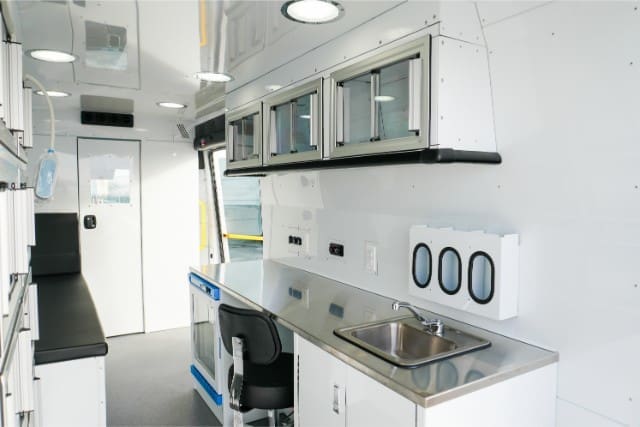
- Dignified environment: The inside of a mobile unit is clean, bright, and modern. It feels like a real doctor’s office, which helps people feel respected and valued.
- Community safety: Moving the service to different areas can prevent a large crowd from gathering in one spot, which keeps the local community happy.
- Broad support: You can offer educational sessions and check vitals in a calm, quiet setting.
Using a mobile unit means you eliminate the gap. You’re providing a dignified, life-saving service right at the curb. It empowers your team to be where the crisis is happening in real-time. This approach turns a vehicle into a safe space of health and connection for people who have nowhere else to go.
4. Drug checking services
Drug checking is a smart way for people to know exactly what is in their supply before they use it. In the past, people just had to hope for the best, but today the drug supply is much more dangerous. Many drugs are now mixed with fentanyl or xylazine, which are very strong and can lead to a quick overdose. Fentanyl is a powerful opioid, while xylazine is a sedative for animals that can cause severe skin wounds. According to the Centers for Disease Control and Prevention, using simple test strips is one of the easiest ways to spot these hidden dangers.
You might feel a lot of stress when you think about your clients facing these hidden risks. It’s scary to know that a tiny mistake in a drug batch could take a life. Imagine a young person in a city like Philadelphia or Chicago who thinks they’re using a regular stimulant but doesn’t know it’s laced with fentanyl. If they have a test strip, they can check their sample and decide not to use it. This small piece of paper gives them the power to make a safe choice. It turns a moment of fear into a moment of control and dignity.
How can a mobile unit make drug checking more effective?
A mobile medical unit acts as a lab on wheels that can zip right to the people who need these tools. It makes the whole process faster and more private.
Here is how a mobile unit helps your team provide better drug checking:
- Instant results: You can hand out fentanyl and xylazine test strips and show people how to use them right inside the van.
- Professional equipment: Some mobile units carry machines called spectrometers that can identify almost any chemical in a sample.
- Cocaine harm reduction: Your team can help people who use stimulants check for unexpected opioids, which is a major part of cocaine harm reduction.
- Comfortable space: Checking drugs can be a tense moment, but a warm and quiet van helps people feel relaxed while they wait for their results.
- Reliable data: You can track what kinds of dangerous mixtures are showing up in different neighborhoods and warn the community in real-time.
Going mobile allows you to provide these life-saving harm reduction strategies without making people walk miles to a stationary office. It removes the barrier of distance and the fear of being judged in public. You are offering a professional service that honors the person’s right to know what is going into their body. This approach doesn’t judge; it empowers people to stay alive and healthy.
5. Medication assisted treatment
Medication assisted treatment, or MAT, is often called the gold standard for treating opioid use disorder. It involves using medicines like methadone or buprenorphine to help people stop using dangerous drugs. These medications work by lowering cravings and stopping the painful feelings of withdrawal. This is considered an effective harm reduction strategy because it helps people stabilize their lives. According to SAMHSA, MAT is proven to help people stay in treatment and lower their risk of a fatal overdose.
Think about a father in a city like Seattle who wants to be there for his kids but is stuck in a cycle of drug use. Every morning, he wakes up feeling sick and desperate. He wants to change, but the physical pain makes it feel impossible to focus on anything else. When he starts MAT, that constant noise in his brain finally gets quiet. He can think clearly, keep a job, and play with his children again. This treatment provides the floor that allows him to stand up. It offers a sense of freedom and a return to the person he used to be.
How does a mobile medical unit bring MAT to those in need?
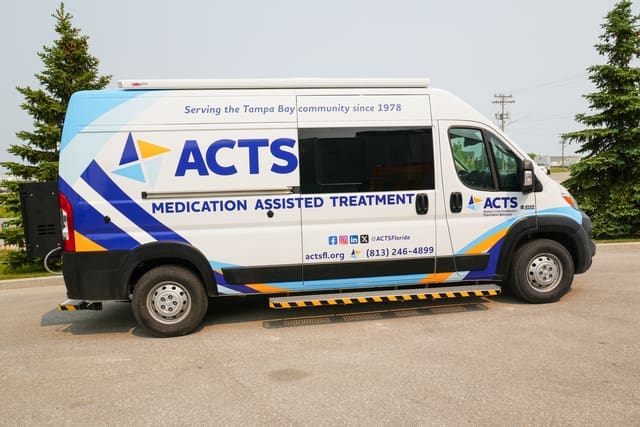
The biggest problem with MAT is that people often have to visit a clinic every single day. If you don’t have a car or a bus pass, getting your medicine is nearly impossible. A mobile medication assisted treatment unit acts as a bridge that brings the clinic to the person’s front door. It removes the stress of travel and makes it easier for people to stick with their program.
Here is a look at how a medication assisted treatment unit changes the game for your organization:
- Private consultations: These units offer a private space where a doctor can talk to a patient and write prescriptions in a quiet, respectful space.
- On-site dispensing: Some mobile units are set up to give out medicine right there, so the patient doesn’t have to go to a separate pharmacy.
- Integrated care: While someone is receiving their medication, your team can also provide harm reduction advice or assess their general health.
- Reaching the unhoused: You can drive to shelters or encampments to reach people who might feel too overwhelmed to visit a traditional hospital.
- Consistent support: Showing up at the same time and place every week builds a routine that helps people feel secure in their recovery.
Going mobile allows you to tell your community that their health is worth the trip. You’re taking away the barriers that keep people stuck in a hard place. It transforms a vehicle into a place of empowerment, where people receive the tools they need to rebuild their lives. This approach shows that you care enough to meet them exactly where they are.
Curious how to provide harm reduction strategies in a mobile medical unit?
You probably found this article because you feel the pain of seeing people in your community struggle without help. It’s hard to watch the gap between your office and those in need get wider every day. You want to stop the cycle of loss and bring hope back to the streets.
After reading this, you now understand:
- How five core harm reduction strategies work to keep people alive and safe.
- Why going mobile helps you beat obstacles like travel, shame, and fear.
At AVAN Mobility, we focus on more than just the nuts and bolts of a vehicle. We are dedicated to building mobile environments where your team can offer dignity and life-changing care to people who have felt invisible for too long. After manufacturing over 150 units, we’ve seen firsthand how the right setup empowers providers to save lives in every corner of the country. We put your mission and your patients first, and if you have any questions, click the button below to talk to a mobility expert.
If you aren’t ready to talk to a mobility expert yet, we have a few other resources you should check out to learn more.
Recommended next reads
- What is the hidden cost of untreated opioid use disorder? Learn about the potential consequences that can result from untreated opioid use disorder.
- How can your organization make use of opioid settlement funds? This article explains how to turn available funds into real-world tools for your harm reduction mission.
- Laws and regulations you need to know about medication assisted treatment: Read this to get a better idea about the regulations associated with medication assisted treatment.