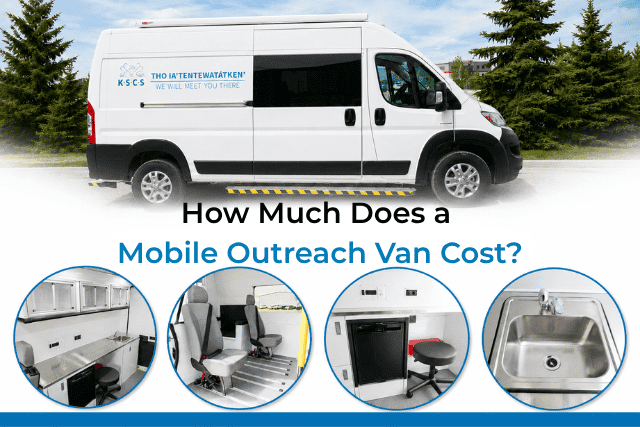
You can expect the cost of the Mobile Outreach Van to range from $185,000 to $250,000. You might be wondering why that range is so wide. Fair question. When your team is trying to reach people facing homelessness, addiction, mental health challenges, rural isolation, or limited access to care, the wrong vehicle choice can create real gaps. Staff may struggle to work safely. Clients may avoid support because the space feels cramped or cold. Your program may outgrow the van before it even gets rolling. That’s a costly “oops,” and nobody wants that parked in the budget.
At AVAN Mobility, we’ve spent over 10 years building vehicles that remove barriers to healthcare and help save lives. We’ve manufactured more than 180 mobile medical units and worked with organizations like CalOptima, Pacific Clinics, Siskiyou County, and the Community Clinic of Southwest Missouri. Our Ford Pro Upfitter and Stellantis QPro certifications help guide the quality behind each build. We also know we’re not the only manufacturer out there, so this article is built to help you compare clearly.
After reading this article, you’ll have a clearer idea about:
- What affects the price of your Mobile Outreach Van
- How to plan your budget
- Other expenses to keep in mind
*Keep in mind that all prices are just estimates and subject to change without notice.
What affects the Mobile Outreach Van cost?
Now that you know Mobile Outreach Van cost usually ranges from $185,000 to $250,000, you’re probably asking the next smart question: what affects that price?
The short answer is this: The more your van needs to do, the more planning, equipment, labor, and materials go into the build.
A basic Mobile Outreach Van may work well for many outreach programs. It gives your team a clean, private, and comfortable place to meet people where they are. That could be a downtown shelter area in Los Angeles, a rural town in Missouri, or a community health event in Arizona where indoor space isn’t always easy to find.
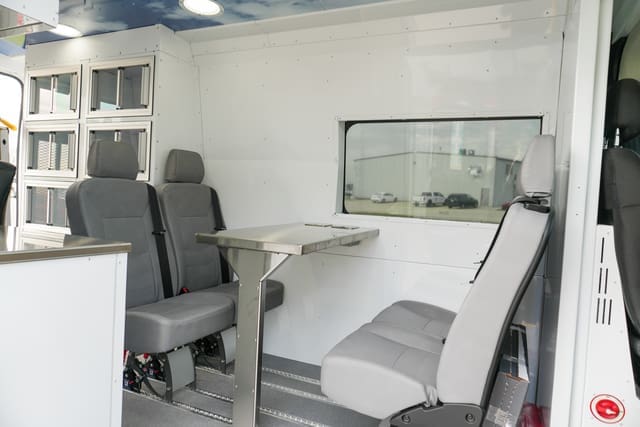
A standard Mobile Outreach Van build often includes:
- Floor-to-ceiling storage cabinets: Gives your team space for supplies, paperwork, PPE, outreach kits, and daily program items.
- Mobile office desk space: Helps staff complete intake forms, case notes, referrals, and follow-up work inside the vehicle.
- Overhead storage: Keeps smaller items organized and off the floor.
- Removable passenger seats: Gives your team more flexibility when your program changes.
- Power supply: Helps run lights, devices, outlets, and key onboard systems.
- Clean, comfortable environment: Gives clients a calm space to talk, receive support, or get connected to services.
- Basic HVAC: Helps keep the van usable in changing weather.
For many organizations, this setup checks the right boxes. It gives staff a better work area than a folding table in a parking lot. It gives clients more privacy than a sidewalk conversation, and also helps your program look more prepared, more trusted, and more approachable.
Still, outreach work isn’t the same everywhere. A behavioral health team in downtown San Diego may need a different setup than a public health team serving rural communities in Montana. That’s where customization starts to shape the final price.
How do customization options affect the final price?
Customization affects the Mobile Outreach Van cost because each added feature changes the time, materials, layout, and systems needed to build the vehicle.
Some upgrades make the van safer. Some help staff work longer hours. Others help your team reach places where a standard van may struggle. None of these features are “nice little extras” when they solve a real field problem. They can be the difference between a van that looks good on paper and one your team can count on every day.
Here are a few common options that can increase the cost:
- Fridge: Helpful if your team provides vaccines, lab samples, medications, water, or temperature-sensitive supplies.
- Sink: Supports handwashing, basic infection control, and a cleaner care space.
- Cab divider: Creates separation between the driver area and care area for privacy, safety, and cleaner workflow.
- Grab handles: Help clients and staff move in and out of the van with more stability.
- Tables: Give your team space for paperwork, supplies, testing items, or client support materials.
- High-capacity air conditioning: Important in hot states like Texas, Arizona, Nevada, and Florida. Nobody does their best work in a rolling sauna.
- Ramp: Helps improve access for people using mobility devices or anyone who has trouble stepping into the van.
- Starlink WiFi: Supports online forms, telehealth, reporting, mapping, and real-time communication in areas with weak service.
- Skylight: Adds natural light, which can make the space feel less clinical and more welcoming.
- Advanced medical equipment: May be needed for testing, treatment, exams, or more specialized care.
- Trail Edition upgrade: Helpful for rural outreach, gravel roads, seasonal weather, uneven terrain, and hard-to-reach communities.
Why is a customized Mobile Outreach Van important?
These choices should tie back to your program goals. If your team provides street outreach in a large city, storage, privacy, lighting, power, and WiFi may rise to the top. If your team works across rural counties, the Trail Edition upgrade, stronger HVAC, and reliable connectivity may carry more weight.
That’s why prices can vary so much from one outreach vehicle to another.
A Mobile Outreach Van should fit your people, your clients, and your daily work. If it doesn’t, the savings up front may turn into stress later. Staff may run out of storage. Clients may feel uncomfortable. Equipment may need to be added after delivery (more on that later) which can cost more than planning it into the build from the start.
A lower-cost van can be the right choice when it matches your program. A higher-cost van can also be the right choice when it removes barriers your team faces every day.
The goal isn’t to buy the most expensive vehicle. The goal is to build the right tool for the people depending on you.
How should you plan your Mobile Outreach Van budget?
Planning your Mobile Outreach Van cost budget starts with one simple question: What does your team need this van to do every day?
That sounds basic, but it can save you from a lot of budget pain later. A Mobile Outreach Van used for street outreach in Philadelphia may need WiFi, a fridge, ample storage, and an office desk. A van serving rural counties in Texas may need stronger HVAC, better traction, and better suspension. Same type of vehicle. Very different daily job.
Start with the work first. Then build the budget around it.
What should you include in your starting budget?
Your starting budget should include more than the vehicle itself. The van is the big line item, but it’s rarely the only one.
A good Mobile Outreach Van budget should include:
- Vehicle build: The base chassis, conversion, cabinetry, power, HVAC, seating, and installed features.
- Customization: Items like a ramp, Starlink WiFi, medical equipment, extra storage, tables, or Trail Edition upgrades.
- Wrap and branding: Your van should be easy to recognize in the community. A professional wrap also helps build trust.
- Delivery: Costs can vary based on where your organization is located.
- Maintenance: Oil changes, tire care, lift or ramp servicing, HVAC checks, and regular inspections.
- Insurance and registration: Costs vary by state and how the vehicle is titled, plated, and used.
This is where some teams get surprised. They plan for the purchase price, then realize they also need funds for setup, launch, and long-term care. That’s like buying the phone but forgetting the charger. Technically possible, but not ideal.
How can you avoid underbudgeting your Mobile Outreach Van?
The best way to avoid underbudgeting is to map your real outreach day from start to finish.
Think through questions like:
- Where will your team park?
- How many staff will work inside the van?
- Will clients come inside for private support?
- Do you need refrigeration for vaccines or supplies?
- Will you need internet in rural areas?
- Do you need wheelchair or mobility access?
- Will the van operate in extreme heat, cold, or uneven terrain?
These answers help separate “nice to have” features from tools your team may rely on every day.
For example, if your team is running outreach in Phoenix, high-capacity air conditioning may be a must. If you’re working across rural Appalachia, Starlink WiFi and the Trail Edition upgrade may be smart budget items. If you’re meeting people who use mobility devices, a ramp may support safer and more dignified access.
A well-planned budget helps your team launch with confidence. It also protects your program from paying twice for the same problem later.
The goal is simple: Build a Mobile Outreach Van that fits your budget today and still works for your community tomorrow.
What extra costs should you include in your Mobile Outreach Van cost?
When planning your Mobile Outreach Van cost, don’t stop at the build price. You’ll also want to plan for taxes, delivery, administration fees, and your deposit.
Taxes are the big one to check first. Vehicle tax rules change from state to state, and sometimes by county or city. Some nonprofits, government agencies, or healthcare programs may qualify for tax exemptions, but that depends on your state and your paperwork. Before you lock in your budget, check with your state DMV, finance team, or tax advisor. A quick check now can save a lot of “wait, where did that number come from?” later.
Here’s a simple example based on a $220,000 Mobile Outreach Van:
| Cost item | Example amount |
| Mobile Outreach Van | $220,000 |
| Estimated tax at 6% | $13,200 |
| Delivery fee | $6,500 |
| Administration fee | $1,000 |
| Estimated total before deposit | $240,700 |
| Deposit | $50,000 |
| Estimated remaining balance | $190,700 |
This example uses a 6% tax rate to keep the math simple. Your real tax amount may be higher, lower, or possibly exempt depending on your location.
Delivery fees are also important to include. A typical delivery estimate is around $6,500, though it can vary based on distance, timing, and delivery details.
The administration fee is usually around $1,000. This helps cover order processing, documentation, coordination, and other behind-the-scenes work that keeps your project moving.
A $50,000 deposit is also required. It helps secure your build and move your Mobile Outreach Van into the production schedule.
Ready to plan your Mobile Outreach Van?
There’s a good chance you landed on this article because you needed a clear answer on the cost of a Mobile Outreach Van. After reading this article, you now have a better idea of what you can expect to pay, what affects the price, and other costs to keep in mind.
Our team at AVAN Mobility builds vehicles that help organizations bring care, support, and connection closer to the people they serve. We work with community programs, healthcare providers, non-profits, and government teams that need practical vehicles built for real work, not showroom daydreams. We help you think through the fine details before your vehicle reaches production. That’s why organizations trust us as leaders in this space. If you have questions, click the button below to talk to a mobility expert.