Did you know that nearly 1 in 5 adults in New Mexico struggles with mental illness? For people in Albuquerque, Santa Fe, Las Cruces, or small towns like Gallup and Hobbs, the problem often isn’t finding care, it’s getting to it. Distance and lack of transportation keep many from showing up. If you run a behavioral health program, you’ve likely seen clients miss appointments for this reason.
This gap puts lives at risk. Without access to behavioral health services, families face more crises, and conditions like depression or substance use can worsen. It’s hard when you want to help but can’t reach the people who need you. Now, imagine taking care to them, in schools, neighborhoods, and rural communities. That’s the promise of a Mobile Counseling Van built to bring behavioral health services across New Mexico.
For over 10 years, AVAN Mobility has partnered with organizations like yours and CalOptima across the U.S. to remove barriers to care. With Ford QVM and Stellantis QPro certifications, our vehicles are safe, durable, and designed around your mission. While we know we’re not the only manufacturer, our goal is to share what works so you can make the best choice for your program.
In this article, you’ll learn:
- Barriers that behavioral health organizations face in New Mexico
- How Mobile Counseling Vans close those gaps
- Services you can deliver on the road
5 barriers behavioral health services organizations face in New Mexico
If you’re running a behavioral health services organization in New Mexico, you’re probably familiar with some of the barriers we’ll talk about. Let’s take a look at the top five.
1. Long travel distances block access to behavioral health services
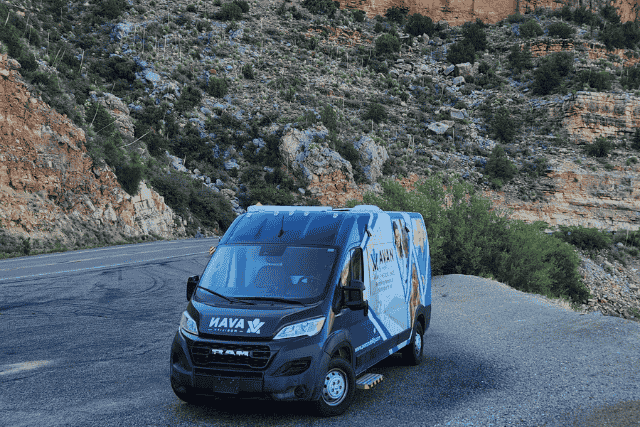
The geography of New Mexico creates a large barrier for those seeking behavioral health support. With wide stretches of desert, long mountain highways, and towns spread far apart, many people face long drives just to see a counselor.
For example, someone living in rural McKinley County might have to travel hours to reach Albuquerque or Gallup for care. That’s exhausting for clients who may already feel overwhelmed, and many simply give up on making the trip.
Here’s the reality:
- Sparse access points: New Mexico ranks 16th in behavioral health access despite more appointments per 1,000 residents in recent years.
- Lost opportunities: When people miss care, problems like depression or substance use can spiral.
- Rural isolation: Families in smaller communities, such as Silver City or Raton, often lack any nearby services.
It’s hard to see clients struggle because of something as simple as transportation. For many, missing one appointment means they may not come back at all. A mobile behavioral health van changes that story. Instead of waiting for people to travel to you, you can bring counseling, screenings, and support right to their town square, school parking lot, or community center.
2. Shortage of providers limits behavioral health services
Even if someone in New Mexico is ready to get help, finding a provider can feel like searching for water in the desert. There simply aren’t enough counselors, therapists, or psychiatrists to meet the demand.
Let’s look at the numbers:
- 4.5% of residents live with a serious mental illness.
- 40,000 adolescents face a major depressive episode each year.
- There is only one psychologist for every 16,056 students, while the national recommendation is closer to one for every 500 – 700 students.
When you combine those numbers with the fact that 22,000 teens in the state have serious suicidal thoughts each year, the gap becomes very clear. Families might call for help, only to be told the next appointment is weeks or even months away. That wait can feel endless for someone in crisis.
A mobile mental health van can’t fix the shortage completely, but it helps soften the blow. You can lower wait times and connect with people faster by bringing licensed counselors or trained behavioral health staff directly into neighborhoods, schools, and rural communities. Sometimes, quick access to a caring face is the first step toward saving a life.
3. High suicide rates increase the need for behavioral health services
New Mexico is ranked fourth for the highest suicide rates in the country, and that puts huge pressure on behavioral health programs like yours. In 2022, 525 New Mexicans died by suicide, and every year, about 90,000 adults seriously consider it. For teens, the picture is just as troubling. 1 in 9 youth between 12 – 17 in the state think about suicide annually.
The state’s 988 Suicide & Crisis Line also shows how serious this issue is. In 2023 alone, 26,917 calls came in from people in crisis. Behind each of those calls is a person who felt like they had nowhere else to turn.
Here’s the tough part:
- Limited local help: In smaller towns like Taos or Deming, immediate support may not be available.
- Long waits: Even if someone reaches out, they may not get an appointment soon enough.
- High risk: Without timely care, suicidal thoughts can escalate quickly.
It’s heartbreaking to know that some people never get the help they need in time. This is where a mobile behavioral health van can step in. With these vans, you can provide on-the-spot counseling and crisis intervention by traveling directly to schools, community centers, or rural towns. Sometimes, being able to talk to someone face-to-face right away is what keeps hope alive.
4. Homelessness creates unique challenges for behavioral health services in New Mexico
Another barrier behavioral health services face in New Mexico is reaching people who don’t have stable housing. On any given night, more than 3,500 people in the state experience homelessness. For providers, that creates a tough challenge: How do you keep consistent contact with someone who doesn’t have a phone, an address, or a way to travel to your office?
This puts you in a constant uphill battle:
- Hard to follow up: Without a stable location, clients can easily fall out of touch.
- High relapse risk: Gaps in care often lead to untreated mental health and substance use struggles.
- Safety concerns: Meeting clients in unsafe environments can put your staff at risk.
These challenges weigh heavily on behavioral health teams, especially in urban areas like Albuquerque, where homelessness is most visible, and in smaller towns where resources are sparse.
A Mobile Counseling Van helps bridge this gap. Instead of waiting for unhoused individuals to come to you, your team can drive directly to shelters, encampments, or community hubs. This gives people consistent access to counseling, medication support, and case management in a safe, private space.
5. Limited funding makes behavioral health services hard to sustain in New Mexico
One of the biggest barriers behavioral health services face in New Mexico is simply keeping the lights on. Even though the demand for care keeps rising, funding for programs doesn’t always keep pace. Many organizations rely on grants, state funding, or donations, and those streams can run dry without warning.
Here’s how that plays out for your team:
- Unstable budgets: It’s hard to plan long-term when funding comes year-to-year.
- Staffing challenges: Tight budgets mean you may not be able to hire enough counselors or retain experienced ones.
- Program cuts: Services like outreach, crisis counseling, or school-based programs are often the first to go when money is tight.
This leaves you stretched thin, trying to serve more people with fewer resources. In rural areas like Lea or Luna County, that often means whole communities are left without regular access to behavioral health services.
A mobile mental health van can help stretch limited budgets further. Instead of paying for multiple offices, you can operate one flexible unit that serves several communities. That means less overhead, more reach, and more consistent care for the people counting on you.
What makes the Mobile Counseling Van such a smart solution for behavioral health services in New Mexico?
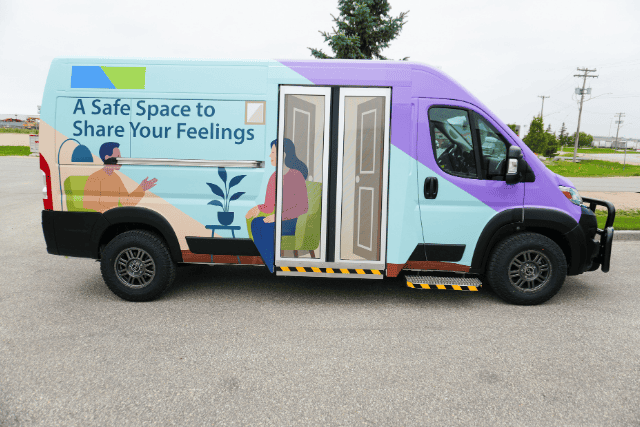
We talked about some of the barriers your organization faces in providing behavioral health services across New Mexico, and we touched briefly on how going mobile can help solve some of those gaps. Now, let’s take a closer look at the features of a Mobile Counseling Van and why it makes sense for your team.
| Issue | How the mobile counseling van addresses it |
| Long travel distances in rural areas |
|
| Shortage of providers and high demand |
|
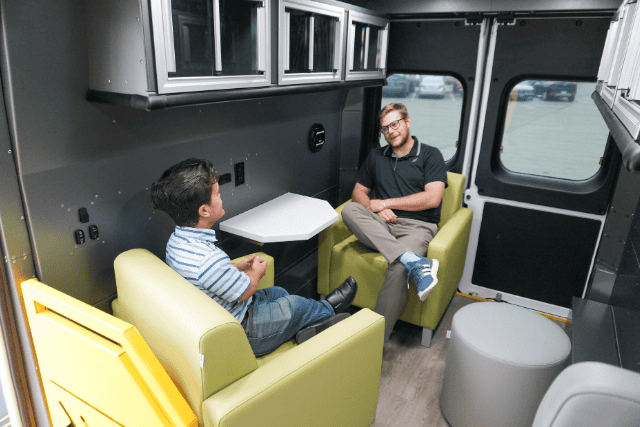
| Creating a calming environment for clients |
|
| Privacy concerns during sessions |
|
| Limited program funding & resources |
|
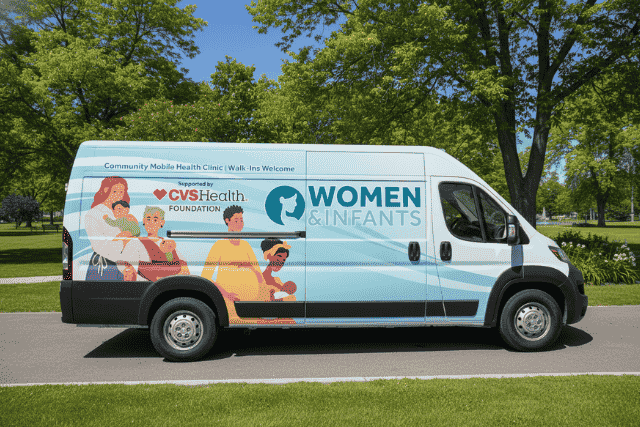
| Need for branding and community recognition |
|
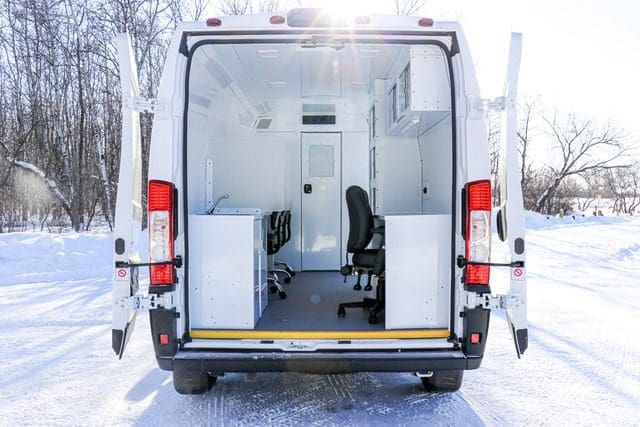
| Accessibility for clients with mobility challenges |
|
Each feature is designed to directly address the gaps behavioral health services face in New Mexico, making it easier for your team to reach more people, provide care in a safe and comfortable space, and reduce stress for both clients and staff.
Ready to bridge behavioral health gaps in New Mexico?
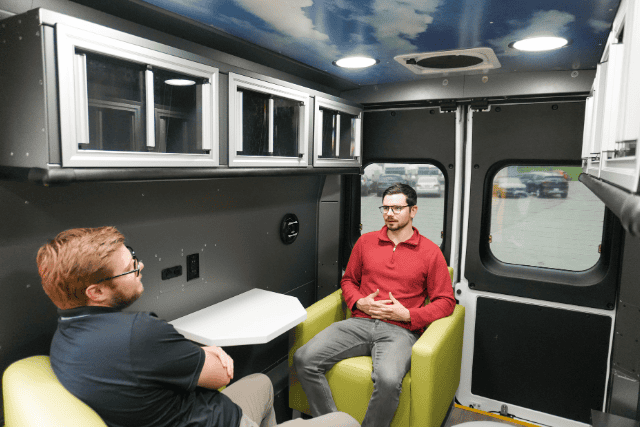
You’re here because your organization faces challenges in providing behavioral health services across New Mexico. Whether it’s reaching remote communities, offering privacy, or creating a welcoming environment, these barriers can hinder your mission. But there’s a solution: the Mobile Counseling Van.
- Overcoming access barriers: Mobile units bring services directly to underserved areas.
- Enhancing client comfort: Features like comfortable seating and natural light create a welcoming space.
At AVAN Mobility, we specialize in crafting mobile solutions tailored to your needs. With over a decade of experience, we’ve partnered with organizations nationwide to deliver high-quality, customizable mobile medical units. Our commitment goes beyond providing vehicles; we aim to empower your team to extend care to those who need it.
If you have questions or want to explore how a Mobile Counseling Van can transform your services, click the button below to talk to a mobility expert.
Not ready to speak yet? We have a few resources to guide you further:
Start by checking out our article on the cost of a Mobile Counseling Van. Knowing this cost range will help guide you and your budget more effectively.
After that, read our guide on securing grants for your mobile medical unit. This is especially helpful if you haven’t received any funding yet.
FAQ: Behavioral health services with a Mobile Counseling Van in New Mexico
Q: Can these vans handle extreme weather conditions in New Mexico?
A: Yes. Mobile Counseling Vans can be equipped with advanced climate control systems, insulation, and optional off-road packages to handle hot desert summers, chilly mountain winters, and rough terrain in rural areas.
Q: Are Mobile Counseling Vans suitable for telehealth services?
A: Absolutely. Many vans come with WiFi, Starlink, and power outlets, making it easy to connect clients with remote behavioral health providers, run virtual sessions, or access digital health records on the spot.
Q: How secure are Mobile Counseling Vans when parked in public areas?
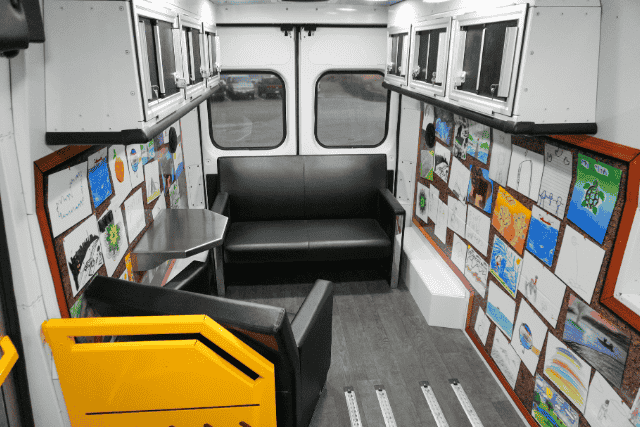
A: Vans can include tinted windows, optional security systems, and lockable storage cabinets to keep clients, staff, and equipment safe, even when stationed in high-traffic or remote areas.
Q: Can the van be branded to reflect my organization?
A: Yes. Both interior and exterior decaling options allow your van to carry your organization’s branding. This helps increase community recognition while making the van feel welcoming and approachable rather than clinical.