Patient transfer may sound straightforward. Move someone from one place to another. But for you, it carries weight.
Every year, about 3.6 million Americans miss medical care due to transportation barriers.
That gap shows up in your world as delayed discharges, crowded ERs, and rising transport costs.
Maybe you run a hospital in Florida trying to free up beds. Maybe you manage a tribal health program in Arizona, helping elders travel safely across state lines. Or you coordinate patient transfer between rural clinics in the Midwest. You feel the strain. When transport is late or poorly coordinated, care slows down. Risk goes up. Families worry. Staff burn out.
You want a better system.
- Safe movement: Patients handled with dignity.
- Clear steps: Staff who know exactly what to do.
- Lower risk: Fewer preventable incidents.
- Better flow: Care that keeps moving.
At AVAN Mobility, we’ve spent over 10 years building more than 180 mobile medical units across the U.S. We’ve supported organizations like CalOptima and Pacific Clinics, helping teams reduce barriers to care. As a Ford Pro Upfitter and Stellantis QPro certified manufacturer, we design solutions around real-world needs. You have options in the market. Our goal is to share practical insight from what we’ve seen work.
In this article, you’ll learn what patient transfer is, how it works, how to transfer a patient from one state to another, and what patient transfer aids are used.
What is patient transfer, and how does it work?
Patient transfer is the organized movement of a patient from one location to another for medical care. That’s the simple definition.
In real life, it’s much bigger than that.
- It’s how a stable patient moves from a small rural hospital in Kansas to a larger trauma center in Denver.
- It’s how an elderly patient in Phoenix gets transported from a rehab facility back to a skilled nursing home.
- It’s how a clinic in rural Mississippi refers a patient to a specialty center two hours away.
Patient transfer keeps the healthcare system flowing.
Without it, hospitals back up. ER wait times grow. Families sit in limbo. Staff scramble to coordinate rides. And patients feel like cargo instead of people.
At its core, patient transfer is about moving someone safely, legally, and respectfully between care settings.
Let’s break it down a little further.
What counts as patient transfer?
Patient transfer happens anytime a patient is moved between medical environments for continued care.
That includes:
- Hospital to hospital: For higher-level care like trauma, cardiac, or stroke treatment.
- Hospital to rehab: After surgery or acute illness.
- Facility to home: For stable patients who need medical transport.
- Across state lines: When specialty care is only available elsewhere.
It doesn’t always mean an emergency. In fact, most patient transfer situations are non-emergency.
That’s where many organizations get confused.
Emergency transport involves unstable patients who need lights, sirens, and advanced life support. Patient transfer often involves stable patients who still require supervision, a stretcher, or medical oversight during transport.
Think of it like this.
An ambulance saves a life in crisis.
Patient transfer protects care continuity once the crisis has passed.
Both matter. They serve different roles.
How does patient transfer work step by step?
If you’ve ever wondered how patient transfer actually works behind the scenes, here’s the clear process.
Step 1: Clinical assessment
Before any movement happens, medical staff evaluate the patient.
They determine:
- Stability: Is the patient medically stable?
- Level of care needed during transport: Basic monitoring or advanced support?
- Equipment required: Oxygen, stretcher, transfer aids?
This step protects everyone involved.
If the patient is unstable, they require an ambulance with advanced life support. If stable, they may qualify for non-emergency patient transfer.
Step 2: Transfer authorization and documentation
Next comes paperwork. And yes, there’s always paperwork.
Healthcare teams complete:
- Physician orders
- Transfer consent forms
- Insurance verification
- Receiving facility acceptance confirmation
For Medicare and Medicaid patients, documentation must show medical necessity. The Centers for Medicare & Medicaid Services outlines these requirements.
Without proper documentation, reimbursement can be denied. That creates financial gaps for your organization.
Step 3: Preparing the patient for transport
Once approved, the patient is prepared physically and emotionally.
This may include:
- Securing IV lines
- Stabilizing oxygen
- Using patient transfer aids like slide boards or transfer sheets
- Providing discharge instructions
Patient transfer aids are important here. These tools reduce injury risk for both staff and patients.
Proper equipment protects your team.
Step 4: The physical transport
Now the actual movement happens.
Depending on the situation, patient transfer can involve:
- A stretcher transport vehicle
- An ambulance
- Air medical transport for long distances
Inside the vehicle, the patient is secured safely. Monitoring continues if needed. A trained attendant may ride along.
Let’s imagine a scenario.
You manage a hospital in Northern California. A stable cardiac patient needs follow-up care in Sacramento. They don’t need lights and sirens. They need supervision and safe transport. A dedicated patient transfer vehicle handles the move. The ER bed opens faster. The receiving facility prepares ahead of arrival. The patient arrives calm, not rushed.
That’s system efficiency.
How do you transfer a patient from one state to another?
Interstate patient transfer adds another layer.
If you’re transferring from Oklahoma to Texas or from Nevada to California, several factors apply:
- Licensing requirements: The transport provider must comply with state regulations in both states
- Insurance coverage: Medicare and private insurers have specific interstate rules.
- Medical documentation: Must follow federal guidelines.
- Continuity of care: The receiving facility must formally accept the patient.
Some states have unique transport regulations, so confirming compliance is critical before departure.
For example, Texas EMS rules differ from Arizona regulations. That affects equipment requirements and staffing standards.
When you understand how to transfer a patient from one state to another properly, you reduce legal risk and protect patient safety.
What are patient transfer aids, and why do they matter?
Patient transfer aids are tools that make moving patients safer and smoother.
Common examples include:
- Slide boards
- Transfer sheets
- Mechanical lifts
- Stretcher locking systems
- Flexible floor track systems
These tools do three things:
- Protect patients: Less risk of falls.
- Protect staff: Fewer lifting injuries.
- Improve dignity: Patients feel secure and supported.
Think about a frail elderly patient in rural Alabama who needs transport to a dialysis center. Without proper transfer aids, lifting becomes risky. With the right setup, the process feels controlled and respectful.
That emotional difference matters.
Why patient transfer is about dignity, not just logistics
On paper, patient transfer is a process.
In real life, it’s about trust.
Patients remember how they felt during transport. Families remember how smoothly it went. Staff remember whether it was chaotic or calm.
When patient transfer systems are organized:
- Care moves faster
- ER congestion drops
- Staff feel supported
- Patients feel seen
When it’s disorganized:
- Delays increase
- Liability rises
- Burnout grows
- Costs climb
That’s the gap many organizations feel.
You want reliability, safety, and a process that supports your mission.
Patient transfer, when done right, becomes a bridge between care settings. It keeps healthcare connected. It protects lives in quieter moments, after the emergency has passed.
Now that we’ve clearly defined what patient transfer is and how it works, let’s look at where organizations struggle most and how to close those gaps effectively.
Can the Mobile Response Van help your patient transfer program?

If you’re building or improving a patient transfer program, you’re likely facing a familiar gap.
You have stable patients who need transport. They don’t require lights and sirens. But they still need supervision, dignity, and safe handling. Ambulances are expensive. Outside vendors can be unreliable. And your staff may feel stuck coordinating rides instead of focusing on care.
So, where does a Mobile Response Van fit?
Let’s start with what it is.
A Mobile Response Van is a full-size van converted into a simplified medical treatment and transport space for non-urgent care. It looks similar to an ambulance. But it is not an ambulance. It is not designed for unstable patients who need advanced life support during patient transfer.
That distinction matters.
If your patient transfer program focuses on stable, non-emergency movement, this type of vehicle fills a very specific gap.
How does a Mobile Response Van support non-emergency patient transfer?
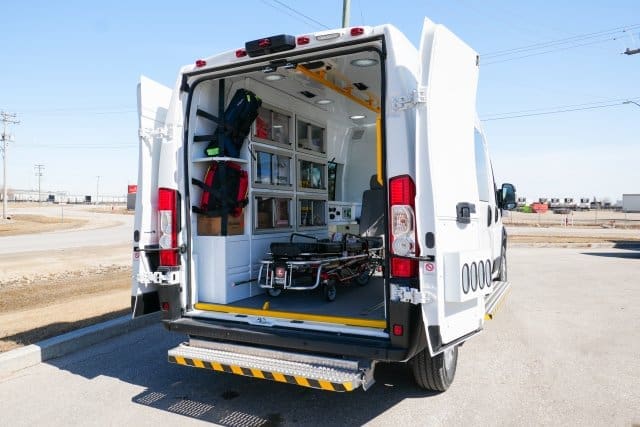
Most patient transfer needs fall into the non-emergency category.
Think about:
- A post-surgical patient moving from the hospital to rehab.
- A dialysis patient traveling from home to a treatment center.
- A behavioral health client relocating between facilities.
- A rural clinic transferring a stable patient to a regional hospital.
These patients need safe transport. They need monitoring, a stretcher, and trained support. They do not need a full emergency ambulance setup.
That’s where a Mobile Response Van can strengthen your patient transfer system.
Here’s how it helps:
- Dedicated stretcher space: The van includes stretcher and attendant transport.
- Secure floor systems: The stretcher locks safely into place.
- Flexible seating: The AutoFloor system allows layout adjustments on the go.
- Rear heat and air conditioning: Patients remain comfortable in all climates.
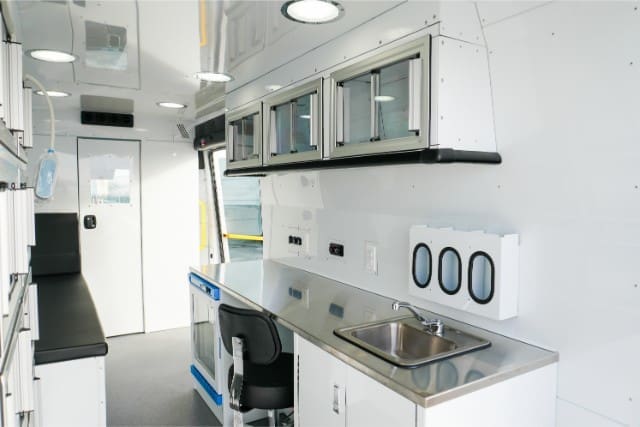
- Clean, bright interior: The environment feels clinical and calm.
When patients feel secure during patient transfer, anxiety drops. Families feel reassured. Staff work more confidently.
That emotional impact matters more than many people realize.
Can it reduce pressure on emergency departments?
Yes, and this is where the broader system impact becomes clear.
According to Mobile Health Map, mobile medical programs can prevent an estimated 600 emergency room visits per year by delivering care directly to patients.
When you use a Mobile Response Van strategically, you can:
- Transport stable patients out of crowded hospitals faster.
- Support urgent care outreach that keeps minor cases out of ERs.
- Provide early treatment before issues escalate.
Imagine a hospital in Southern California during flu season. ER beds are full. A stable patient is waiting for transfer to a skilled nursing facility. Every hour that bed stays occupied slows care for the next person.
A dedicated patient transfer vehicle speeds that movement. Flow improves. Staff stress drops.
That ripple effect adds up.
Can it support rural and interstate patient transfer?
If you serve rural communities, this question is critical.
In states like Montana, Arizona, or New Mexico, patients often travel long distances for specialty care. Rural hospital closures have increased this challenge. According to the Cecil G. Sheps Center, over 130 rural hospitals have closed since 2010.
That means more patient transfer across counties and sometimes across state lines.
A Mobile Response Van supports:
- Inter-facility patient transfer
- Transport from rural clinics to urban centers
- Return transfers back to home communities
When learning how to transfer a patient from one state to another, having a compliant, stable transport vehicle simplifies coordination. You still need to follow licensing and documentation requirements. But operationally, your team has more control over timing and availability.
Patients in remote areas deserve reliable access to care. A mobile unit helps bridge that distance.
What features make it practical for daily patient transfer operations?
Let’s look at the details that make day-to-day operations smoother.
1. Flexible interior layout
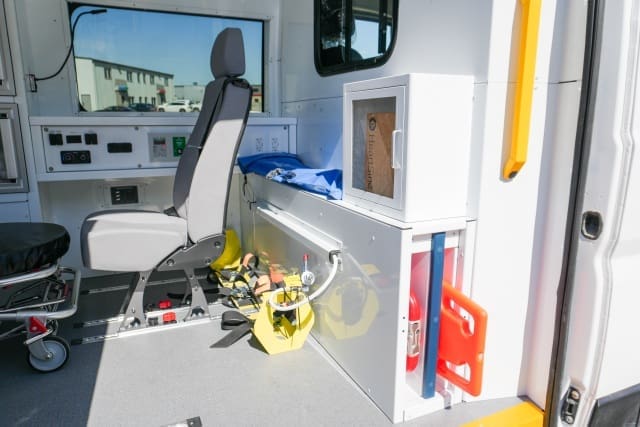
The AutoFloor track system allows you to reposition seating based on need.
One day, you may transport a stretcher patient with one attendant. Another day, you may support a medical outreach visit with seated patients.
That flexibility keeps your vehicle working harder for your program.
2. Built-in storage and organization
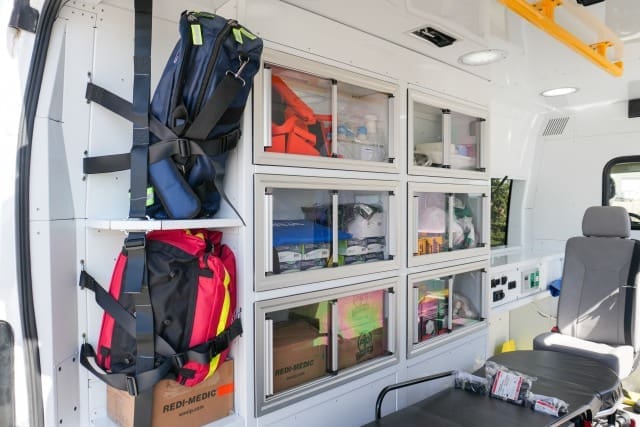
Aluminum cabinets and designated storage systems keep medical supplies secure.
This supports:
- Organized patient transfer operations
- Faster equipment access
- Reduced clutter during transport
An organized environment reduces mistakes.
3. Comfort and climate control
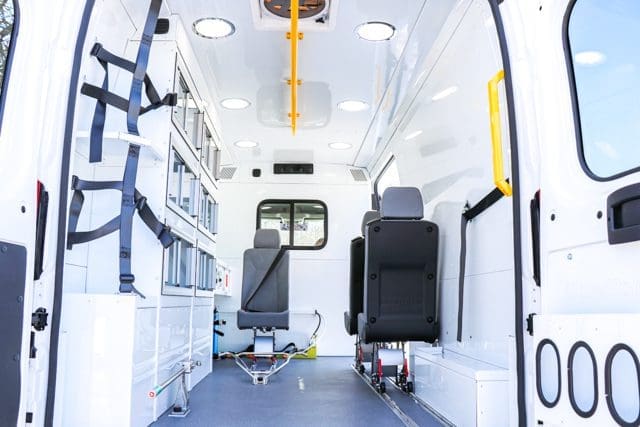
Rear heat and air conditioning protect patients in extreme weather.
If you operate in Minnesota winters or Arizona summers, this matters. Temperature control during patient transfer protects comfort and safety.
4. Standard driver licensing
In most cases, a specialized driver’s license is not required. Always confirm your state regulations. But many programs appreciate the ability to train existing staff rather than hiring CDL drivers.
That lowers barriers to launching or expanding a patient transfer program.
Who is this type of patient transfer vehicle right for?
A Mobile Response Van often works well for:
- Non-EMS patient transfer services
- Tribal and Native health programs
- Homeless outreach and addiction services
- Industrial safety teams on remote job sites
Let’s say you manage a tribal health program in Arizona. You’re transporting stable elders to dialysis centers in another county. Having your own patient transfer vehicle increases reliability. It supports cultural sensitivity. It keeps care within your program’s control.
Or imagine an industrial site in West Texas. Workers need on-site evaluation before deciding on hospital transport. A mobile medical response setup allows early assessment and reduces unnecessary ER trips.
Different environments. Same principle.
You close the access gap.
Are there any limitations?
It’s important to be clear.
A Mobile Response Van is not built for unstable patients who require advanced life support. If your patient transfer program regularly handles critical care cases, an ambulance remains necessary.
The goal is to match the vehicle to the right level of care.
When aligned correctly, this model strengthens your patient transfer system without overextending resources.
What does this mean for your program?
If your biggest patient transfer challenges include:
- High transport costs
- Limited ambulance availability
- Rural distance barriers
- Staff injury risks during transfers
Then a Mobile Response Van may help close those gaps.
At its best, it becomes more than transport. It becomes a steady bridge between care settings, supports dignity during vulnerable moments, gives your team control, and keeps your mission moving forward.
Next, let’s talk about the financial side and what organizations should consider when budgeting for a patient transfer vehicle.
Ready to strengthen your patient transfer program?
You came here because patient transfer feels complicated. You’re trying to move people safely, reduce delays, control costs, and protect your staff. When transport breaks down, care slows down. Beds stay full. Families get frustrated. Your team feels the pressure.
Now you have clarity.
- You understand what patient transfer is and how it works step by step.
- You know how to transfer a patient from one state to another without missing compliance details.
- You’ve seen how patient transfer aids reduce risk and protect dignity.
- You’ve explored how a Mobile Response Van can close system gaps for stable, non-emergency transport.
At AVAN Mobility, we’ve spent more than a decade walking alongside healthcare leaders who were in your exact position. We design and build mobile medical units across the U.S. with a simple focus: help you remove barriers to care. From rural communities to urban health systems, our team listens first and builds around your real-world needs. You’re not buying a vehicle. You’re building a stronger care network. And if you’re ready to talk through what that could look like for your patient transfer program, click below to connect with a mobility expert.
If you’re not ready to talk yet, that’s okay. We’ve gathered a few next reads to help you move forward confidently.
Recommended next reads
- What is the cost of a stretcher transport van? If budget planning is your next step, this guide walks through real pricing factors in the U.S.
- Mobile response unit vs. ambulance: A comparison: If you’re deciding between transport types, this side-by-side comparison clarifies when each makes sense.