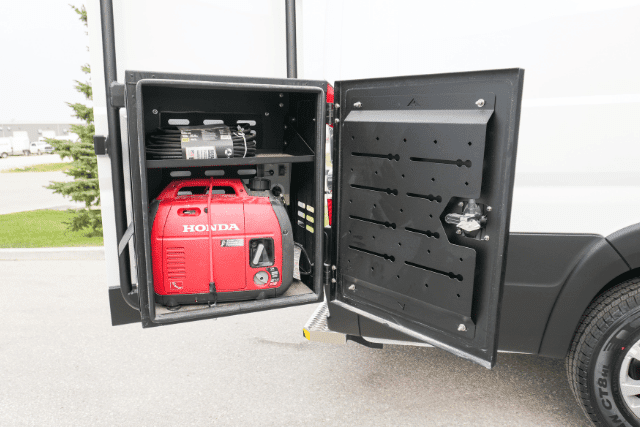
Your mobile clinic inverter generator is the quiet workhorse behind your care team’s day. It powers lights, refrigeration, laptops, and the equipment that helps you deliver care where it’s needed. But here’s the gap many organizations run into. You’re focused on patients, schedules, and community impact, yet generator maintenance often gets pushed aside until something goes wrong. When a mobile clinic generator isn’t serviced properly, you risk downtime, interrupted appointments, and unnecessary stress for your team.
If you’re running outreach in places like rural Texas, California wildfire zones, or hurricane-prone areas along the Gulf Coast, reliable power isn’t a luxury. It’s part of keeping care moving. The good news is that servicing your mobile clinic generator follows clear, manageable steps outlined in the Honda EU2200i guidance, and once you know the routine, it becomes straightforward and predictable.
At AVAN Mobility, we’ve spent over 10 years building mobile medical units designed to reduce barriers to healthcare. We’ve delivered more than 180 mobile medical units and supported organizations like CalOptima, Pacific Clinics, and Siskiyou County in bringing care directly into communities. We hold Ford Pro Upfitter and Stellantis QPro certifications, and while we know we’re one option among several manufacturers, our goal stays the same. Helping organizations like yours keep care accessible, reliable, and moving forward.
In this article, you’ll learn:
- What: Routine service tasks for a mobile clinic inverter generator.
- When: Maintenance timing and warning signs.
- How: Safe, practical steps to keep your mobile health clinic generator running strong.
Why is it so important to service your mobile clinic inverter generator?
Your mobile clinic generator may sit quietly in the background, but it’s powering everything that keeps your day moving, especially if you don’t have shore power available. That includes lights, refrigeration, laptops, and diagnostic tools. When it runs well, care feels smooth and organized. When it doesn’t, the whole clinic feels it.
Regular maintenance keeps your mobile clinic inverter generator safe, reliable, and efficient. It helps the engine run cleaner, reduces wear, and lowers the chance of unexpected shutdowns in the field.
Think about a mobile health team parked in rural Montana. The schedule is full. Patients are waiting. The generator is powering equipment behind the scenes. If it suddenly fails because maintenance was skipped, the day changes fast. Appointments get delayed, staff get stressed, and patients may lose access to care they planned around. That’s a real gap between what you want to deliver and what you’re able to deliver.
Here’s what regular service actually protects:
- Reliability: Keeps your mobile clinic generator ready for long outreach days.
- Safety: Lowers risks tied to breakdowns or poor performance.
- Cost control: Helps avoid expensive repairs caused by small problems that grow over time.
- Mission impact: Supports consistent care delivery where healthcare access is limited.
When maintenance becomes routine, power becomes predictable. And predictable power means your team stays focused on people, not equipment.
How does routine service prevent bigger problems later?
Small issues rarely announce themselves. They build slowly. Dirty filters, low oil, or missed inspections may seem minor, but they add strain that shortens equipment life.
Picture a clinic running outreach in humid Louisiana summer heat. If airflow is restricted or the engine hasn’t been serviced, performance drops. The generator works harder, fuel use climbs, and eventually something gives out.
Routine service helps you stay ahead by:
- Catching small problems early: Before they turn into downtime.
- Protecting engine life: Clean filters and proper oil levels reduce wear.
- Keeping power steady: Stable performance supports medical equipment and refrigeration.
Some checks are simple enough for your team to do with basic tools. Others are best handled by a qualified technician. That balance keeps your mobile health clinic generator dependable without adding extra stress to your staff.
What’s involved in servicing your mobile clinic generator?

Your mobile clinic inverter generator works hard behind the scenes. It powers lights, medical equipment, computers, and climate control so your team can focus on care instead of power problems. The maintenance schedule lays out simple, repeatable tasks that keep your generator reliable and safe for everyday healthcare work.
How often should you service your mobile clinic generator?
Before jumping into each task, it helps to understand how the schedule works.
Key idea: Maintenance happens based on time or operating hours, whichever comes first.
Examples from the schedule include:
- Each use: Quick checks before running
- First month or 20 hours: Early break-in maintenance
- Every 3 months or 50 hours
- Every 6 months or 100 hours
- Every year or 200 hours
- Special intervals: Every 300 hours or every 2 years for certain components
Important note: Dusty environments or heavy use mean more frequent service may be needed. That matters for many mobile health programs operating in rural areas, desert regions, or construction zones.
Engine oil
Engine oil is listed as a check-before-use item because it directly protects the engine.
Why?
- Low oil can lead to poor performance
- Neglecting maintenance can lead to major failures
- Oil keeps internal parts lubricated and running smoothly
Think of it like checking fuel before heading out to a rural health event. You don’t want surprises once patients arrive.
What to look for:
- Oil level at the proper limit
- Clean appearance
- No obvious contamination
For example: You’re setting up a mobile vaccination clinic in Arizona. Temperatures are already high. A quick oil check takes seconds but helps avoid a shutdown during peak patient flow.
When should you change the oil in your mobile health clinic generator?
Changing oil is one of the most important scheduled tasks. The schedule calls for changes after the first month or 20 hours, then at regular intervals afterward.
How is an oil change done?
- Turn the engine and fuel vent off
- Remove the maintenance cover
- Place a container beside the unit to catch used oil
- Remove the oil filler cap
- Tip the generator toward the filler neck to drain oil
- Refill with recommended oil to the upper limit, ensuring not to overfill
- Reinstall the cap and cover securely
Why does the oil need to be warm?
Oil drains faster and more completely when warm, which helps remove contaminants.
Helpful reminders
- Capacity: 14 oz (0.44 L).
- Level: Oil reaches the filler neck upper limit.
- Disposal: Used oil should go to a recycling center, not into the trash or ground.
A clean oil change schedule helps your generator stay dependable during long mobile clinic days where downtime simply isn’t an option.
Air cleaner maintenance
The air cleaner protects the engine from dirt and debris. When filters clog, airflow drops and performance suffers.
What happens if it’s ignored?
- Reduced engine performance
- Harder starts
- Increased wear over time
How do you clean the main and outer filters?
- Wash filters in warm soapy water or nonflammable solvent
- Rinse and dry thoroughly
- Dip in clean engine oil
- Squeeze out excess oil
- Wipe dirt from the air cleaner housing
- Keep dirt from entering the air duct
Helpful tip: Do not twist the filters while cleaning or squeezing them.
Picture a mobile mental health outreach unit in the Southwest U.S., parked on gravel roads each week. Dust builds fast. Cleaning air filters more often keeps power stable, so the team can focus on patients instead of troubleshooting.
How do you service the spark plug?
The spark plug plays a big role in reliable starting and consistent power output.
What does the schedule call for?
- Check and adjust at scheduled intervals
- Replace when required
What tools and parts are required?
- Spark plug wrench
- Correct plug type: CR5HSB (NGK)
Step-by-step process
- Let the engine cool if hot
- Remove spark plug maintenance cover
- Disconnect spark plug cap
- Clean around the plug
- Remove the plug using a wrench
Then inspect:
- Worn electrodes?
- Cracks or chips?
- Heavy deposits?
If reusable, clean with a wire brush.
Gap and tightening details
- Gap: 0.024–0.028 in (0.6–0.7 mm)
- Thread by hand first
- Tighten correctly, depending on new or used plug
A loose plug can overheat and damage the engine.
What is spark arrester cleaning, and why is it part of generator maintenance?
The maintenance schedule includes periodic cleaning of the spark arrester.
While the detailed cleaning instructions appear later in the manual, the key takeaway is this:
- It removes carbon buildup
- It helps the engine breathe and exhaust properly
- It supports safe operation
Steps to clean your spark arrester:
- Remove protector: Remove the four 6 mm screws and remove the muffler protector.
- Remove muffler parts: Remove the three 6 mm bolts, then remove the muffler, the spark arrester, and the muffler gasket.
- Brush deposits: Use a brush to remove carbon deposits from the spark arrester screen. Be careful to avoid damaging the screen.
- Inspect condition: The spark arrester must be free of breaks and tears. Replace it if it’s damaged.
- Reassemble with a new gasket: Replace a new muffler gasket, then reinstall the spark arrester, muffler, and muffler protector in reverse order of removal.
Make it a “100-hour habit.” If your team runs clinics twice a week, that interval can arrive faster than you think.
This becomes especially important for clinics operating in regions where fire-prevention rules apply, such as parts of California or the western U.S.
Which maintenance tasks usually require a professional?
Some items in the maintenance schedule are marked for dealer or professional service.
These include:
- Valve clearance check and adjustment
- Combustion chamber cleaning (every 300 hours)
- Fuel tank and filter cleaning
- Fuel tube checks every two years
Why outsource these?
- Specialized tools
- Mechanical experience
- Safety considerations
Many healthcare organizations build these into annual service visits so their mobile clinic generator stays compliant and dependable.
How does maintenance safety fit into servicing your mobile clinic generator?
Maintenance is about more than mechanical care. Safety is a big part of the process.
Key precautions include:
- Engine off before maintenance
- Allow hot parts to cool
- Avoid running engine unless instructed
- Work in well-ventilated outdoor areas
- Keep flames and sparks away from fuel
These things protect your team and prevent avoidable accidents.
How do you keep maintenance simple for busy healthcare teams?
Let’s be honest. Most healthcare programs aren’t staffed with full-time mechanics. The good news is that many tasks are simple and repeatable.
Practical approach:
- Log hours: Commercial use benefits from tracking runtime.
- Create a checklist: Tie maintenance to regular clinic operations.
- Assign ownership: One team member checks oil and filters.
- Schedule professional service yearly.
A little organization helps your mobile health clinic generator stay ready for community events, vaccination drives, and outreach programs. Good maintenance supports safe, economical, trouble-free operation and helps prevent major malfunctions.
And that’s the real goal. Power you don’t have to think about, so your team can focus fully on people.
Got any questions about mobile clinic generator maintenance?

You came here because you’re trying to avoid downtime, last-minute scrambles, and that sinking feeling when power becomes the problem instead of patient care.
What you learned: You now have a clear, repeatable maintenance rhythm for your mobile clinic inverter generator, plus the key service tasks that keep your mobile clinic generator running steady for real-world outreach.
At AVAN Mobility, we build mobile medical units to perform in real conditions, not perfect ones. Over the last decade, we’ve helped healthcare teams across the U.S. plan for power, service, and long-term reliability, so your clinics stay consistent when schedules get tight. We know what it takes to keep mobile care moving without the drama. If you have any questions, click the button below to talk to a mobility expert.
If you’re not ready to talk to a mobility expert yet, we have a few other resources you should check out to learn more.
Recommended next reads
- Buying a mobile medical van-your process with AVAN Mobility: This is the clearest next step if you want to understand what the purchasing process involves.
- How to choose a mobile medical van: what you need to know: This helps you compare options and avoid buying something that looks good on paper but slows your program down.
- A guide on warranty coverage for mobile health vans: This helps you plan for support after delivery, so you know what’s covered and how to avoid surprises later.