Updated: June 17, 2026
Does your organization need to transport people who require medical support, mobility assistance, or accessible transportation, but do not need an emergency ambulance?
That situation can be tough to navigate.
A standard taxi or rideshare may not provide enough support. An ambulance may be more than the passenger needs. And for organizations like senior care homes, rehabilitation centers, community health programs, and NEMT providers, the wrong transportation option can create stress for staff, passengers, and families.
That is where an ambulette can help.
An ambulette is designed for non-emergency medical transportation. It gives passengers a safer, more supportive way to get to medical appointments, dialysis, rehabilitation, care facilities, or other important destinations when an ambulance is not required.
Over the past ten years, AVAN Mobility has manufactured hundreds of mobile medical vehicles for organizations like yours across North America. Our mission is to reduce barriers to healthcare and transportation by building vehicles that help people reach care safely and with dignity.
We also know we’re not the only option. This article is here to help you understand what an ambulette is, how it works, who uses one, and what features to look for when choosing an ambulette vehicle.
By the end, you will have a clearer idea of whether an ambulette is the right fit for your organization.
What is an ambulette?
As we mentioned earlier, an ambulette is a non-emergency medical transportation vehicle used to transport people who need more support than a standard passenger vehicle can provide, but who don’t need an emergency ambulance.
Depending on the layout, an ambulette may transport:
- Seated passengers
- People who use wheelchairs
- People who need mobility assistance
- A mix of ambulatory, wheelchair, and stretcher passengers
Ambulettes are commonly used for scheduled trips to medical appointments, dialysis, rehabilitation, adult day programs, hospitals, clinics, and care facilities.
The key difference is urgency. An ambulance is used for emergencies. An ambulette is used when the passenger needs safe, accessible, supported transportation, but does not require emergency medical response.
What does ambulette mean?
The word ambulette is commonly used to describe a smaller, non-emergency medical transportation vehicle.
In simple terms, the meaning of ambulette is:
A vehicle used to transport passengers who need medical-related or mobility-supported transportation, but do not need an emergency ambulance.
Some people use the word ambulette to describe wheelchair transportation vehicles. Others use it for non-emergency medical transport vehicles that can also support stretcher passengers. The exact setup depends on the organization, the passengers being transported, and the vehicle design.
That is why it is important to look beyond the name. What matters most is whether the vehicle can safely support the people your organization serves.
How does ambulette transportation work?
Ambulette transportation is usually scheduled in advance. It’s not meant for emergency response.
Here is a simple example.
Mrs. Smith is 95 years old and lives in a small town. She needs to visit her doctor for a routine check-up. She is not in an emergency, but she has trouble walking and needs extra support during the trip.
Here is how ambulette transportation could help:
1. Booking the trip: Mrs. Smith’s caregiver contacts the transportation provider and explains her needs. The provider confirms whether she needs seated transport, wheelchair access, or stretcher support.
2. Passenger pickup: The ambulette arrives at Mrs. Smith’s home. Staff help her board safely and make sure she is properly secured before the trip begins.
3. Safe transportation: The vehicle is designed to make the ride more comfortable and secure. Depending on the vehicle, this may include wheelchair restraints, stretcher securement, climate control, grab handles, and an accessible entry system.
4. Arrival at the appointment: When the ambulette arrives, staff help Mrs. Smith exit the vehicle and get to the right area of the clinic or doctor’s office.
5. Return trip: After the appointment, the ambulette brings her home safely.
This is what makes ambulette transportation valuable. It fills the gap between a regular ride and an emergency ambulance.
Who uses an ambulette?
Ambulettes are used by organizations that need to transport passengers safely, comfortably, and reliably.
Common users include:
- Non-emergency medical transportation providers
- Senior care homes
- Assisted living facilities
- Rehabilitation centers
- Hospitals and discharge teams
- Community health organizations
- Adult day programs
- Municipal accessible transportation programs
- Disability service organizations
For these organizations, transportation is not just about getting from point A to point B. It is about making sure the passenger gets there safely, with dignity, and without creating unnecessary strain for staff or caregivers.
Is an ambulette the same as NEMT?
An ambulette is often used as part of a non-emergency medical transportation, or NEMT, program.
The easiest way to think about it is this:
- NEMT describes the service.
- Ambulette describes one type of vehicle used to provide that service.
For example, a NEMT provider may use an ambulette to transport wheelchair users to dialysis appointments, take seniors to medical check-ups, or move passengers who need stretcher support but do not require an ambulance.
If your organization is researching NEMT vehicle costs, you should read our article on NEMT van cost.
Can an ambulette transport wheelchair or stretcher passengers?
Yes, an ambulette can be designed to transport wheelchair passengers, stretcher passengers, seated passengers, or a combination of those groups.
The vehicle layout is important.
Some ambulettes are built mainly for wheelchair transportation. Others are designed with flexible interiors so organizations can transport different passenger types throughout the day.
A flexible ambulette layout may support:
- One or more wheelchair positions
- Ambulatory seating
- Stretcher access
- Removable or reconfigurable seating
- Securement systems for wheelchairs or stretchers
- Space for caregivers, attendants, or support staff
This flexibility can be especially helpful for organizations that do not want a vehicle limited to only one type of passenger.
What features should an ambulette vehicle have?
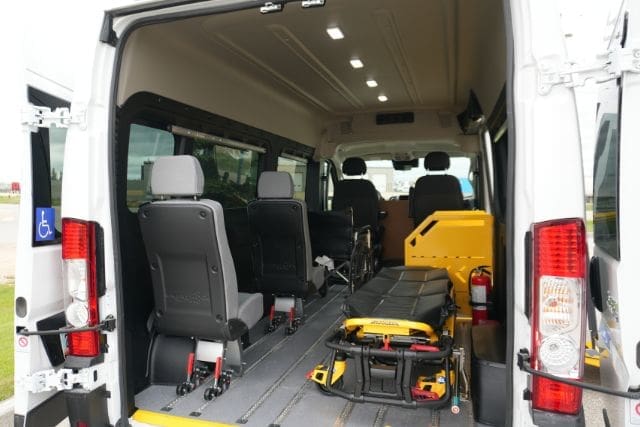
The right ambulette vehicle should make transportation safer, easier, and more comfortable for both passengers and staff.
Important features include:
- Wheelchair accessibility: A ramp or lift helps passengers enter and exit the vehicle safely.
- Flexible seating: Movable seating allows the vehicle to adapt to different passenger needs.
- Wheelchair securement: A secure wheelchair restraint system helps keep passengers safe during transportation.
- Stretcher compatibility: If your organization transports passengers who need to lie down, the vehicle should be designed for safe stretcher access and securement.
- Non-slip flooring: Slip-resistant flooring helps reduce fall risks during loading and unloading.
- Grab handles: Well-placed grab handles give passengers more support when entering, exiting, or moving inside the vehicle.
- Wide entry and exit points: A wider entry makes boarding easier for passengers, caregivers, and staff.
- Climate control: Heating and cooling help keep passengers comfortable during the trip.
- Easy-clean interior materials: Medical transportation vehicles should be practical to clean and maintain.
- Interior lighting: Good lighting helps staff support passengers safely, especially early in the morning, at night, or during winter months.
- Storage: Storage space can help carry mobility aids, medical bags, personal items, or other equipment.
- Driver visibility and safety features: Backup cameras and smart vehicle design can make the vehicle easier to operate in tight spaces.
These features are not just nice to have. They can change how safely and efficiently your team can transport the people who rely on you.
Is an ambulette the same as an ambulance?
No. An ambulette is not the same as an ambulance.
An ambulance is used for emergency medical response. It is designed for urgent situations and may include emergency medical equipment, lights, sirens, and trained medical personnel.
An ambulette is used for non-emergency transportation. It is designed for passengers who need accessible or supported transportation, but who do not need emergency care during the trip.
For example:
- A passenger having a medical emergency needs an ambulance.
- A wheelchair user going to a scheduled appointment may need an ambulette.
- A senior going to dialysis may need an ambulette.
- A passenger who needs a stretcher but is medically stable may need an ambulette, depending on local rules and the organization’s service model.
For a full breakdown, read our article on ambulette vs ambulance.
How much does an ambulette cost?
Ambulette costs vary depending on the vehicle size, seating layout, wheelchair capacity, stretcher compatibility, flooring, accessibility equipment, restraint systems, and interior features.
Because pricing depends heavily on the build, it is best to review the major cost factors before comparing options.
For a full pricing breakdown, read AVAN’s article on how much an ambulette costs.
When is an ambulette not the right choice?
An ambulette is useful, but it is not the right fit for every situation.
An ambulette may not be the right choice when:
- The passenger needs emergency medical care
- Lights and sirens are required
- The passenger needs active medical monitoring during transport
- Local regulations require an ambulance
- A basic wheelchair van would fully meet the passenger’s needs
- The organization does not need medical-related or mobility-supported transportation
This matters because choosing too much vehicle can increase costs. Choosing too little vehicle can create safety and service challenges.
The right answer depends on your passengers, your staff, your service area, and the type of transportation your organization provides.
Which vehicle can you use for ambulette transportation?
The P4 3-in-1 Van from AVAN Mobility can be used for ambulette transportation and non-emergency medical transportation services.

It is built on the Ram ProMaster 2500 159-inch wheelbase high-roof model and is designed for organizations that need to move passengers who need medical-related or accessibility support, but do not need emergency ambulance transportation.
The P4 3-in-1 Van is called “3-in-1” because it can support different transportation needs in one vehicle:
- Ambulatory passengers
- Wheelchair passengers
- Stretcher passengers
That flexibility can help organizations serve more people without needing a separate vehicle for every transportation scenario.
P4 3-in-1 Van features for ambulette transportation
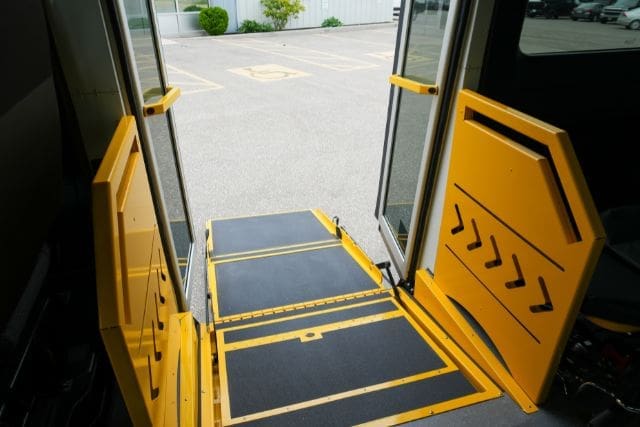
Let’s take a look at features of the P4 3-in-1 that make it ideal for ambulette transportation.
Easy to operate
- No special driver’s license required in many cases: The P4 3-in-1 Van can often be driven without a special license, although requirements may vary by state, province, insurance provider, and local regulations.
- Compact footprint: The van is easier to drive than larger medical transport vehicles, which can help in cities, parking lots, residential areas, and tight facility entrances.
- Backup camera: The backup camera helps drivers reverse and park with more confidence.
Accessible and comfortable

- Ambulatory, wheelchair, and stretcher access: The vehicle can transport people who walk, use wheelchairs, or require stretcher transportation.
- Barrier-free entry: A stowable ramp helps passengers enter and exit without steps.
- Heavy-duty ramp: The ramp supports up to 1,000 pounds and includes a manual backup system.
- Large windows:Large windows bring in natural light and help the interior feel more open and comfortable.
- Grab handles: Grab handles throughout the vehicle help passengers and staff during entry and exit.
- Anti-slip running boards: Anti-slip running boards help reduce the chance of slips and falls, especially in wet, snowy, or icy conditions.
Built for safety and performance
- High ground clearance: The P4 3-in-1 Van has ground clearance designed to support travel in both urban and rural areas.
- Front-wheel drive: Front-wheel drive can help provide traction in snow and ice.
- 3.6L Pentastar V6 engine: The engine provides reliable performance for daily transportation needs.
- Wheelchair restraints: A 4-point wheelchair restraint system helps secure wheelchair passengers during transport.
Flexible for changing needs

- AutoFloor system: The AutoFloor system allows seating and wheelchair positions to be reconfigured. This helps organizations adapt the vehicle to different passenger needs.
- Power-operated glass doors: Power-operated doors can be controlled from the driver’s dash and provide strong visibility.
The P4 3-in-1 Van is a strong option for organizations that need an ambulette vehicle with flexibility, accessibility, and passenger comfort built in.
Is an ambulette right for your organization?
An ambulette may be a good fit if your organization regularly transports people who need more support than a standard vehicle can provide, but who do not need emergency ambulance service.
It may be especially useful if you transport:
- Seniors
- Wheelchair users
- Stretcher passengers
- People attending recurring medical appointments
- People going to dialysis or rehabilitation
- Passengers who need help entering, exiting, or riding safely
- Multiple passenger types throughout the day
If your transportation needs are changing, an ambulette can give your team more flexibility and help reduce barriers to care.
Continue learning about ambulettes
You came to this article looking for a better way to transport people with non-emergency medical needs. Now you know what an ambulette is, how ambulette transportation works, who uses these vehicles, and what features matter when choosing one.
The next step is to decide which type of vehicle best fits your passengers, your staff, and your service model.
If you are still comparing options, these resources can help:
- Read our guide on ambulette vs ambulance if you are deciding between non-emergency and emergency transportation.
- Read our article on how much an ambulette costs if you are building a budget.
- Read our guide on NEMT van cost if you are planning a non-emergency medical transportation program.
- Read our article on gurney transportation if your passengers may need to travel lying down.
At AVAN Mobility, we build accessible and mobile medical vehicles for organizations that help people reach care safely. If you have questions about whether the P4 3-in-1 Van fits your ambulette transportation needs, click the button below and talk to a mobility expert.
FAQs about ambulettes
Q: What is an ambulette?
A: An ambulette is a non-emergency medical transportation vehicle used to transport people who need accessible or supported transportation, but do not need an emergency ambulance.
Q: What does ambulette mean?
A: Ambulette means a smaller non-emergency medical transport vehicle. It is often used for wheelchair transportation, assisted transportation, or stretcher transportation when emergency care is not required.
Q: Who uses an ambulette?
A: Ambulettes are used by NEMT providers, senior care homes, rehabilitation centers, hospitals, dialysis transportation providers, community health programs, and organizations that transport people with mobility or medical-related needs.
Q: Is an ambulette used for emergencies?
A: No. An ambulette is used for non-emergency transportation. If a passenger needs urgent medical care, an ambulance is the proper option.
Q: Can an ambulette transport wheelchair users?
A: Yes. Many ambulettes are designed with ramps or lifts and wheelchair securement systems to transport wheelchair users safely.
Q: Can an ambulette transport stretcher passengers?
A: Some ambulettes can transport stretcher passengers, depending on the vehicle layout and local regulations.
Q: What features should an ambulette vehicle have?
A: Important features include wheelchair access, securement systems, flexible seating, non-slip flooring, grab handles, climate control, interior lighting, storage, and easy-clean surfaces.
Q: Is an ambulette the same as NEMT?
A: Not exactly. NEMT stands for non-emergency medical transportation. An ambulette is one type of vehicle that may be used in a NEMT program.