Updated: June 26, 2026
Over 20 million children in the U.S. don’t have proper access to healthcare. When a child needs care, the hardest part shouldn’t be getting through traffic, finding a ride, missing work, or hoping the only appointment available somehow fits around school pickup. Yet for many families across the U.S., those barriers are part of the deal. A mobile pediatric clinic helps bring care closer to children, so families can get support in places they already know, like schools, neighborhoods, community centers, shelters, and rural towns.
At AVAN Mobility, we’ve seen how access to healthcare can change a family’s day, week, and future. When care comes closer, a parent can breathe a little easier. A child can get a checkup before a small concern becomes a bigger one. A community can offer care with more dignity and less stress. That’s the real power behind reducing barriers to healthcare. It’s less about a vehicle and more about what happens when care finally reaches the people waiting for it.
In this article, you’ll learn what a mobile pediatric clinic is, how it works, what services it can provide, who it helps, and what your organization should think about before starting one. We’ll also look at how mobile care can support families facing transportation barriers to healthcare, rural care gaps, and limited local pediatric services.
What is a mobile pediatric clinic?
A mobile pediatric clinic is a healthcare space that brings medical services for children directly into the community. Instead of asking every family to travel to a hospital, clinic, or doctor’s office, a mobile pediatric clinic can meet families closer to home.
That might mean setting up outside a school in rural Oklahoma, visiting a community center in Pennsylvania, serving families at a shelter in California, or supporting a neighborhood health event in Texas. The location changes, but the goal stays the same: help children get care earlier, easier, and with less stress on the family.
You may also hear people call it a pediatric mobile clinic, mobile children’s clinic, mobile health clinic for children, or even “mobile peds.” Different names, same idea. Care goes where kids and families already are. No treasure map required.
What can a mobile pediatric clinic help with?
A mobile pediatric clinic can support many types of care, such as:
- Checkups: Routine visits that help track a child’s growth, health, and development.
- Vaccines: Immunizations that help protect children and communities from preventable illness.
- Screenings: Vision, hearing, dental, developmental, and general health checks.
- Basic sick visits: Support for common concerns like coughs, sore throats, rashes, or ear pain.
- Health education: Guidance for parents on nutrition, medication, follow-up care, and prevention.
- Referrals: Help connecting families to pediatricians, specialists, mental health support, or social services.
The biggest value of a mobile pediatric clinic is access. A child who misses care because their parent can’t leave work, doesn’t have a reliable ride, or lives too far from the nearest clinic is still a child who needs care.
This is why many organizations look at mobile care when they’re trying to improve healthcare access, reach families in underserved areas, or understand what communities benefit from mobile clinics.
How does a mobile pediatric clinic help children?
A mobile pediatric clinic helps children by bringing care closer to where life actually happens. For many families, the problem isn’t that they don’t care about appointments. The problem is getting there.
A parent may be choosing between losing a shift at work, finding gas money, arranging childcare for siblings, or taking two buses across town with a sick child. That’s not a small barrier. That’s a wall with a waiting room on the other side.
A mobile pediatric program helps lower that wall.
It can support children through:
- Earlier care: Kids can get checkups, screenings, vaccines, and basic care before small health concerns grow.
- Less missed care: Families who struggle with distance, transportation, or clinic access have another way to connect.
- More comfort: Children can receive care in familiar places like schools, community centers, or local events.
- Stronger trust: Care teams can build relationships in the community, instead of waiting for families to come to them.
- Better follow-through: Families may be more likely to complete referrals, ask questions, and stay connected when care feels within reach.
This is where the impact goes beyond healthcare. A pediatric mobile clinic can help a child get the hearing screening they need to focus in class. It can help a parent get answers without missing another day of pay. It can help a community say, “We see you, and care is coming closer.”
That’s also why mobile pediatric care connects closely with preventive care, healthcare access barriers, and the larger role mobile medical units play in improving access.
What services should your mobile pediatric clinic focus on first?
The best mobile pediatric clinic programs don’t start by trying to offer every service under the sun. That sounds helpful at first, until your team is juggling supplies, staff schedules, patient flow, follow-up calls, and a clipboard that somehow always disappears.
A stronger starting point is to ask: what’s the biggest gap children in your community face right now?
For example, your mobile pediatric program may focus first on:
- School readiness: Physicals, basic screenings, and immunization support before the school year starts.
- Rural access: Regular visits to towns where families drive long distances for pediatric care.
- Preventive outreach: Check-ins that help catch small health concerns earlier.
- Care coordination: Helping families move from a one-time visit to ongoing pediatric care.
- Community event support: Bringing child-focused care to health fairs, school events, shelters, and family resource days.
This keeps your pediatric mobile clinic focused, easier to manage, and more useful for the families you’re trying to reach. It also helps your team measure what’s working. Are more children getting school physicals? Are fewer families missing follow-up care? Are parents leaving with a clear next step instead of a folder full of mystery papers?
That’s where mobile pediatric care becomes more than a convenient visit. It becomes a bridge between families and the healthcare system.
If you’re still shaping your program, review the 5 steps to starting a mobile clinic program or look at a practical mobile clinic equipment list.
Who benefits from a mobile pediatric clinic?

A mobile pediatric clinic can help any organization that serves children who face barriers to care. That includes barriers like distance, transportation, cost, long wait times, language, trust, or a parent’s work schedule.
The families who benefit most are often the ones doing everything they can, but still running into roadblocks. Think of a single parent in rural New Mexico who can’t take a full day off for a 20-minute appointment. Or a family in Los Angeles relying on public transit while caring for three kids. Or a school nurse in Georgia, seeing the same student struggle because a basic screening never happened.
A pediatric mobile clinic can support:
- Schools and school districts: Helping students access care closer to the classroom.
- Community health centers: Reaching families who miss appointments because getting there is the hardest part.
- Public health departments: Bringing child-focused services into neighborhoods, rural areas, and community events.
- Tribal health programs: Supporting families with care that respects place, trust, and community connection.
- Nonprofits and shelters: Reaching children and families during unstable or stressful seasons of life.
- Rural hospitals and clinics: Extending care into communities where pediatric access is limited.
A mobile health clinic for children gives these organizations another way to meet families with dignity instead of expecting every family to clear every obstacle alone.
Where can a mobile pediatric clinic be used?
A mobile pediatric clinic can be used almost anywhere families already gather, as long as the site is safe, accessible, and practical for care delivery. That flexibility is one of the biggest reasons organizations look at mobile pediatric care in the first place.
A fixed clinic waits for families to come in. A pediatric mobile clinic can meet families in places that feel familiar and easier to reach.
Common locations include:
- Schools: Helpful for school physicals, screenings, vaccines, and care coordination with nurses or family support teams.
- Community centers: Familiar spaces where families may already attend events, food programs, or support services.
- Rural towns: Useful when the nearest pediatric provider is too far away for regular visits.
- Shelters and family housing programs: Important for children whose families are facing housing instability.
- Tribal communities: Helpful for delivering care closer to home while respecting community connection and local trust.
- Health fairs and outreach events: A good fit for one-day or recurring pediatric health services.
- Public housing communities: Supportive for families who face transportation gaps or limited nearby clinic options.
- Churches and faith-based sites: Trusted local gathering places in many neighborhoods.
The best location is rarely chosen from a map alone. It’s chosen by looking at where families already go, where they feel safe, and where your team can provide care without creating more stress.
For example, a rural school parking lot might be the easiest place for a parent who can’t drive an hour to a clinic. A community center may work better in a city where families rely on buses. A shelter visit may help a child get care during a time when life feels anything but steady.
That’s the heart of a mobile health clinic for children. It turns care from something families have to chase into something that shows up with them in mind.
If you’re thinking through possible locations, you may find it helpful to review the top areas to start a mobile medical clinic in the U.S. and how mobile clinics bridge rural and urban healthcare gaps.
What should you consider before starting a mobile pediatric clinic?
Before starting a mobile pediatric clinic, your organization needs a clear plan for the people, places, and problems you’re trying to support. The goal isn’t to launch the biggest program possible. The goal is to launch the right program for the children and families who need you most.
A strong plan starts with the gap.
Are families missing care because the nearest pediatric provider is too far away? Are parents struggling with transportation? Are school nurses seeing the same health concerns go unaddressed? Are children in shelters, rural towns, or underserved neighborhoods falling through the cracks?
Once you know the gap, your mobile pediatric program can be built around solving it.
What gap will your mobile pediatric clinic close?
Every community has different needs. A neighborhood in Houston may need school physicals and vaccines. A rural county in Pennsylvania may need recurring pediatric visits. A Tribal community in Arizona may need care that reduces long travel and builds trust over time.
Start by asking:
- Who are we trying to reach? Define the children, families, and communities your program will serve.
- What care are they missing? Look at missed visits, local wait times, travel barriers, and preventable health concerns.
- Where do families already feel safe? Schools, community centers, shelters, and local events can all matter.
- Who needs to be involved? Pediatric providers, nurses, outreach workers, school staff, local partners, and family advocates may all play a role.
This planning stage helps keep your pediatric mobile clinic focused. It also helps your team avoid spending time and money on features, routes, or services that don’t match the real need.
What makes a mobile pediatric clinic feel safe for children?
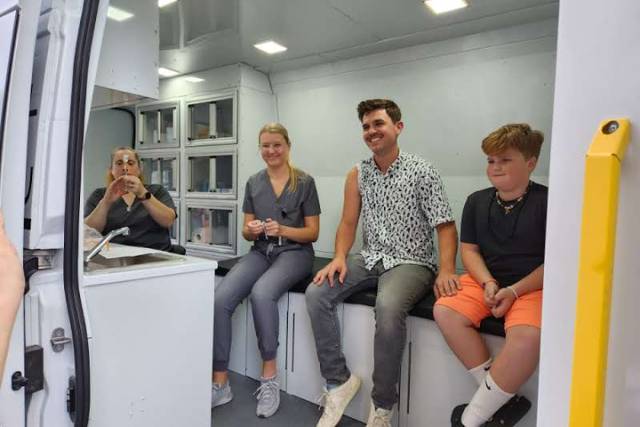
A mobile pediatric clinic should feel calm, private, and welcoming. That matters because children don’t always see healthcare as “help.” Sometimes they see it as bright lights, strange tools, cold chairs, and a grown-up saying, “This won’t hurt,” which, let’s be honest, rarely builds instant confidence.
For kids, safety starts with how the space feels.
A mobile pediatric clinic can help children feel more comfortable when it includes:
- A calm layout: A simple, organized space helps reduce stress for children, parents, and care teams.
- Room for a parent or caregiver: Kids feel safer when a trusted adult can stay close.
- Privacy: Families need space to ask questions, share concerns, and receive care with dignity.
- Clear communication: Friendly explanations help children understand what’s happening.
- Child-friendly details: Warm lighting, simple colors, and thoughtful storage can make the clinic feel less intimidating.
- Accessible entry: Families with strollers, mobility needs, or tired little legs should be able to enter without extra stress.
The goal isn’t to make a mobile health clinic for children feel like a theme park. No one needs a slide next to the exam table. The goal is to create a space where families feel respected and children feel less afraid.
That sense of safety can change the whole visit. A child may be more willing to answer questions. A parent may feel more comfortable sharing concerns. A care team may have a better chance to build trust instead of rushing through a stressful appointment.
If your organization is thinking about patient experience, these articles on mobile clinic design and patient care, patient comfort in mobile medical clinic vans, and privacy in a mobile clinic van can help.
Is a mobile pediatric clinic right for your organization?
A mobile pediatric clinic may be right for your organization if children in your community are missing care because care is too far away, too hard to reach, or too difficult to fit into daily life.
That doesn’t mean every organization needs a mobile pediatric program. Sometimes, a fixed clinic, school partnership, or referral network may solve the problem. The key is knowing what gap you’re trying to close before you invest time, staff, and funding.
A pediatric mobile clinic may be a strong fit if:
- Families are missing appointments: Transportation, work schedules, distance, or childcare needs are getting in the way.
- Children need earlier support: Your team is seeing preventable issues become bigger because care is delayed.
- Your community has limited pediatric access: Rural towns, underserved neighborhoods, and provider shortage areas may need care closer to home.
- Schools or local partners are asking for help: Strong community partners can make mobile care easier to launch and easier to trust.
- Your organization wants more outreach: A mobile health clinic for children can help you meet families outside your usual four walls.
It may not be the right first step if your organization doesn’t yet know who it needs to serve, what services families need most, or where the clinic would go. That’s not a failure. That’s a planning flag waving politely in the wind.
Before moving forward, look closely at your community data, partner feedback, missed appointment trends, and staff capacity. A mobile pediatric clinic works best when it’s built around a real need, not around a shiny idea that looks good in a boardroom.
For more planning support, you can read about mobile clinic customization, and how to justify the cost of a mobile clinic.
What’s the next step if you’re planning a mobile pediatric clinic?
The next step is to turn the idea of a mobile pediatric clinic into a clear, practical plan. Start small enough to manage well, but focused enough to create real change for children and families.
A good first move is to gather the people who understand the problem best. That may include school leaders, pediatric providers, nurses, outreach teams, public health staff, community partners, and families. The best ideas often come from the people closest to the barrier. Funny how that works.
From there, your team can map out:
- Your main goal: Decide what problem your mobile pediatric program needs to solve first.
- Your service model: Choose the type of care you’ll offer, how often you’ll offer it, and who will provide it.
- Your route: Pick locations based on family access, safety, parking, privacy, and community trust.
- Your partners: Work with schools, shelters, clinics, nonprofits, health departments, or local leaders.
- Your budget: Plan for staffing, equipment, supplies, maintenance, insurance, and long-term operation.
- Your success measures: Track things like visits completed, missed appointments reduced, referrals made, or families reached.
A pediatric mobile clinic works best when it’s built around the community, not dropped into it like a mystery box on wheels. Families can usually tell the difference.
Want to learn more about mobile pediatric clinics?
In this article, you learned what a mobile pediatric clinic is, how it helps children, where it can be used, who benefits from it, and what your organization should consider before starting one.
The biggest takeaway is this: mobile pediatric care is about access, dignity, and trust. It can help a child get care sooner. It can help a parent feel less alone. It can help your organization reach families who may be doing their best, but still facing barriers that make healthcare harder than it should be.
At AVAN Mobility, we build mobile medical spaces for organizations working to improve healthcare access across the U.S. We understand that the vehicle is only one part of the story. The real impact happens when your team can show up in a community, open the door, and help a child get the care they need closer to home.
If you’re planning a mobile pediatric program, your next step is to keep learning and map out what your community needs most.
Recommended next reads
- A guide on securing grants for mobile health clinics in the U.S.: This is a helpful next read if your organization is struggling to find funding.
- How much does a mobile medical unit cost in the U.S.? Learn what you can expect to pay for a mobile pediatric clinic.
Mobile pediatric clinic FAQs
Q: What is a mobile pediatric clinic?
A: A mobile pediatric clinic brings healthcare services for children into communities, schools, neighborhoods, rural towns, and other easier-to-reach locations.
Q: Who uses a mobile pediatric clinic?
A: Schools, community health centers, public health departments, Tribal health programs, nonprofits, shelters, and rural healthcare organizations often use them.
Q: What services can a mobile pediatric clinic provide?
A: It can support checkups, vaccines, screenings, basic sick visits, parent education, referrals, and other child-focused healthcare services.
Q: Is a pediatric mobile clinic only for rural areas?
A: No. A pediatric mobile clinic can help rural, urban, and suburban communities where families face transportation, cost, distance, or access barriers.
Q: What’s the biggest benefit of a mobile health clinic for children?
A: The biggest benefit is easier access to care. Families can get support closer to where they live, learn, work, and gather.
Q: How do you start a mobile pediatric clinic program?
A: Start by identifying your community’s biggest care gap, choosing your core services, finding partners, planning your route, and building your budget.
Q: Is a mobile pediatric clinic worth it?
A: It can be worth it if your organization serves children who miss care because traditional clinics are too far away, too hard to reach, or too difficult to schedule.