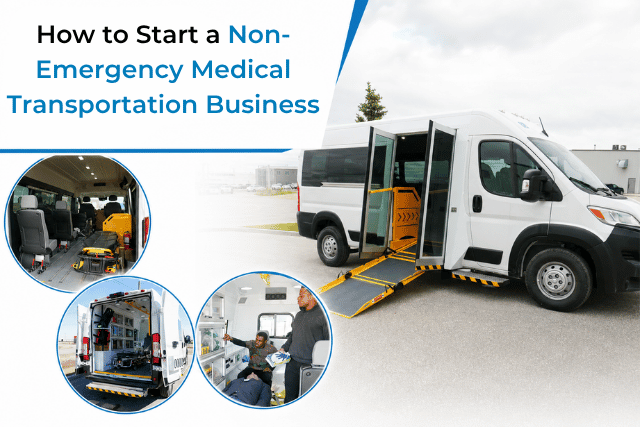
More than 1 in 5 U.S. adults without access to a vehicle or public transit skipped needed medical care in a recent year. That’s the real reason more organizations are wondering how to start a non-emergency medical transportation business. They see the gap. Patients need dialysis, rehab, follow-ups, and specialist visits, but many can’t get there safely. If you’re thinking about starting a non-emergency medical transport business, you may feel excited, cautious, and a little overwhelmed. That makes sense. When rides fall through, care gets delayed. When transportation works, people gain dignity, comfort, and a clearer path to better health.
At AVAN Mobility, we’ve spent over a decade helping organizations remove barriers to care through purpose-built vehicles. We’ve manufactured over 180 mobile medical units focused on saving lives and improving access. We’ve supported organizations like CalOptima, Community Clinic of Southwest Missouri, and Pacific Clinics. Our Ford Pro Upfitter and Stellantis QPro certifications guide how we build for safety, comfort, and daily use. We know we’re one manufacturer in a wider market, so this guide is here to educate first.
In this article, you’ll learn:
- Steps: How to start a non-emergency medical transport business.
- Planning: What to include in a non-emergency medical transportation business plan.
- Mistakes: What to avoid before buying NEMT vans.
- Checklist: A simple NEMT startup list to keep you moving.
What is a non-emergency medical transportation business?
A non-emergency medical transportation business helps people get to medical care when they don’t need an ambulance, but they still need safe, reliable support. If you’re learning how to start a non-emergency medical transportation business, this is the first thing to understand: You’re helping people close the gap between having care available and being able to reach it.
These rides often support people who can’t drive, don’t have family nearby, use a wheelchair, or need extra help getting in and out of a vehicle. A patient might need a ride to dialysis in rural Texas. A senior in Florida may need help getting to physical therapy. A wheelchair user in California may need safe transportation to a specialist appointment.
Common NEMT trips include:
- Dialysis: Regular rides for patients who need treatment several times a week.
- Rehab: Transportation after surgery, injury, or illness.
- Routine care: Primary care, dental visits, imaging, and lab work.
- Specialty care: Cancer treatment, wound care, or follow-up appointments.
- Accessible rides: Wheelchair transportation using a purpose-built NEMT van.
Non-emergency medical transport is different from emergency medical services. EMTs respond to urgent medical events. NEMT providers focus on scheduled, medical transport non-emergency trips.
That may sound simple, but the impact is big. A missed ride can mean a missed treatment. A safe ride can mean less stress, better care, and more dignity for the person in the seat.
Next, let’s look at the bigger question many new providers ask before going further: Is NEMT a good business to start?
Is NEMT a good business to start?
Yes, a non-emergency medical transportation business can be a good business to start when your area has a clear access problem, and your service is built to solve it.
The real question isn’t, “Can I make money with NEMT?” The better question is, “Who in my community is missing care because transportation is unreliable, unsafe, or unavailable?”
That gap can look different across the U.S.
In rural New Mexico, a patient may live far from the nearest specialty clinic. In Florida, an older adult may no longer drive but still needs regular medical appointments. Over in Los Angeles, a wheelchair user may have access to care nearby, but no reliable vehicle that can transport them with dignity. In Texas, a clinic may struggle with missed appointments because patients don’t have a dependable ride.
That’s where non-emergency medical transportation services become valuable. You’re giving healthcare organizations and patients a practical way to keep care moving.
What signs show NEMT could work in your area?
- Missed appointments: Clinics lose time, revenue, and patient progress.
- Limited accessible transportation: Wheelchair users may have fewer safe options.
- Long travel distances: Rural patients may need help reaching care outside town.
- Aging populations: More people may need support getting to appointments.
- Healthcare partners: Facilities may need trusted transportation providers.
This type of business also has more than one possible customer path. You may work with private-pay clients, Medicaid brokers, hospitals, dialysis centers, senior living communities, rehab facilities, or local agencies.
Still, NEMT isn’t a shortcut business. You’ll need a clear service area, proper insurance, trained drivers, reliable scheduling, and the right vehicle setup. A weak plan can lead to missed pickups, unhappy riders, and contracts that disappear faster than a donut tray in a break room.
If you treat NEMT as a healthcare access service first, you’ll make better decisions from day one. That includes how you price, who you serve, and what type of NEMT van fits your business model.
Next, let’s look at the types of non-emergency medical transport services your business can offer.
What services can a NEMT business offer?
A NEMT business can offer several types of non-emergency medical transportation services, and the right mix depends on your community, your vehicles, and the people you want to serve.
Some riders can walk on their own but no longer drive. Others use a wheelchair, need help getting from the door to the vehicle, or require extra space for medical equipment. This is why choosing your services early is a key step in starting a non-emergency medical transportation business.
Common services can include:
- Ambulatory rides: For riders who can walk with little or no help.
- Wheelchair transportation: For riders who need ramps, lifts, and securement systems.
- Door-to-door transport: For riders who need help from their home entrance to the vehicle.
- Curb-to-curb transport: For riders who can meet the driver outside.
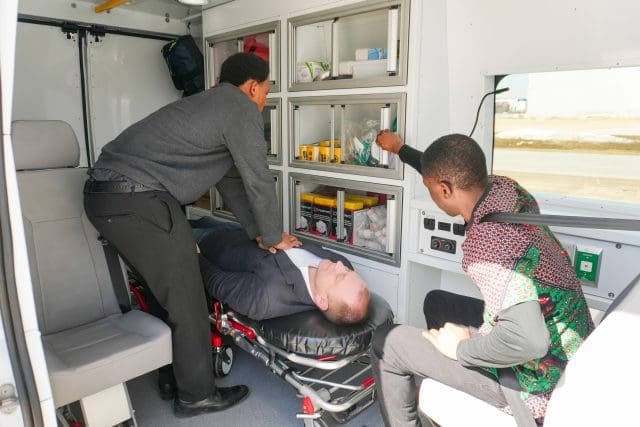
- Stretcher or gurney transport: For riders who can’t sit upright during travel.
- Dialysis transportation: For riders who need steady trips several times per week.
- Facility discharge rides: For patients leaving a hospital, rehab center, or clinic.
You may also hear terms like non-emergent medical transport, ambulette, or medical transport non-emergency. These can describe similar services, though exact meanings can change by state, payer, or facility. For example, New York may use “ambulette” more often, while other areas may simply say NEMT.
This is where planning saves headaches. A business focused on wheelchair users will need different vehicles than one focused on ambulatory riders. A provider offering stretcher transport may need more training, more space, and different insurance.
Before you choose your services, ask one simple question: “What ride is missing in my area?” The answer can guide your non-emergency medical transportation business plan and help you avoid buying the wrong vehicle.
Next, let’s look at what it can cost to start this kind of business.
How much does it cost to start a non-emergency medical transportation business?
When you’re learning how to start a non-emergency medical transportation business, cost is usually the “okay, let’s get serious” part of the plan.
In the U.S., a realistic startup budget can range from under $100,000 for a small ambulatory-only setup to $150,000 to $250,000+ for a wheelchair accessible or stretcher-capable NEMT business. The biggest cost is usually the vehicle. A purpose-built NEMT van can cost between $145,000 and $225,000, depending on layout, wheelchair access, stretcher setup, storage, and other features.
Your startup costs may include:
- Vehicle: Accessible van, stretcher van, or ambulatory passenger vehicle.
- Insurance: Commercial auto, general liability, workers’ compensation, and other coverage.
- Licensing: Business registration, state permits, local permits, and possible Medicaid provider enrollment.
- Driver costs: Hiring, training, background checks, uniforms, and payroll.
- Technology: Dispatch software, GPS, phones, billing tools, and a website.
- Marketing: Local SEO, Google Business Profile, brochures, and outreach to clinics.
- Maintenance reserve: Tires, oil changes, lift service, inspections, and repairs.
A solid non-emergency medical transportation business plan should also include a cash cushion. Startup planning experts often suggest setting aside an extra 10% to 20% for surprise costs, because permits, repairs, delayed payments, and insurance deposits can sneak up fast.
Here’s the key: Don’t price your NEMT business around the cheapest way to get on the road. Price it around the safest way to serve your riders and stay open long enough to grow.
Next, let’s build that plan step by step.
How do you create a non-emergency medical transportation business plan?
A non-emergency medical transportation business plan is where your idea becomes a clear path forward. This step helps you define what you’re building before money, time, and energy start flying out the window.
Your plan doesn’t need to sound fancy. It needs to answer the right questions. Who will you serve? What transportation gap are you solving? What area will you cover? And what services will you offer? How will you stay organized as you grow?
Think of it like building the frame before putting up the walls. Skip this step, and the whole thing can get wobbly fast.
1. Define the healthcare transportation gap you want to solve
Start by naming the exact problem in your area.
Don’t write, “People need rides.” That’s too broad.
Instead, get specific:
- Distance: Are patients traveling too far for care?
- Access: Are wheelchair users struggling to find safe rides?
- Reliability: Are clinics dealing with missed appointments?
- Support: Are seniors or people with disabilities lacking help getting to appointments?
- Timing: Are riders waiting too long for pickup or return trips?
For example, a rural county in New Mexico may need longer medical trips to larger cities. A provider in Florida may see more demand from older adults who no longer drive. A business in Los Angeles may focus on accessible rides where traffic and scheduling are daily challenges.
This part of the plan gives your business a reason to exist.
2. Choose who your NEMT business will serve first
A new NEMT business can serve many groups, but it shouldn’t try to serve everyone on day one.
Choose your first audience clearly. You may focus on:
- Seniors
- Wheelchair users
- People with disabilities
- Dialysis patients
- Rehab patients
- Veterans
- Group home residents
- Adult day program clients
- Hospital discharge patients
This choice will shape the rest of your plan. A business built around wheelchair users will look different from one focused on ambulatory riders. A business serving rural patients will plan routes differently than one serving a dense city.
A clear audience also makes your message stronger. When people visit your website or call your business, they should quickly understand who you help.
3. Decide what services fit your first customers
After you choose your audience, match your services to their needs.
You may plan to offer:
- Ambulatory trips
- Wheelchair transportation
- Door-to-door support
- Curb-to-curb rides
- Recurring appointment transportation
- Long-distance medical trips
- Facility discharge transportation
This is where your non-emergency medical transportation services can branch in different directions. Some riders need simple transportation. Others need more support, patience, and accessible equipment.
Be honest about what you can offer safely at launch. It’s better to do fewer services well than offer everything and disappoint people.
If your plan includes wheelchair transportation, you may also want to review what an NEMT van is used for before deciding how your service will operate.
4. Pick your starting service area
Your service area should be clear and realistic.
A common early mistake is covering too much ground too soon. Long routes can drain fuel, stretch drivers thin, and make scheduling harder. That can lead to late pickups, frustrated riders, and stressed staff.
Start with a defined area, such as:
- One city
- One county
- A cluster of nearby towns
- A set radius around your base
- A specific rural region with limited transportation
Then list the care locations your riders may need to reach. These could include hospitals, rehab centers, dialysis clinics, medical offices, imaging centers, and senior care facilities.
This gives your business plan a real map, not a hopeful guess.
5. Study the local competition
Your business plan should explain who else provides non-emergency medical transport in your area.
Look at:
- What services they offer
- What areas they cover
- What riders they seem to serve
- How professional their website looks
- What reviews say about them
- Where customers may still feel underserved
The goal isn’t to copy them. It’s to find the gap.
Maybe competitors don’t offer wheelchair access. Others might not serve rural areas. Maybe their reviews mention late pickups. Maybe some clinics need a provider who communicates better.
That gap can become your opening.
6. Write your simple value statement
A value statement explains why someone should choose your NEMT business.
Keep it short and human.
For example:
“We help wheelchair users get to medical appointments safely, comfortably, and on time.”
Or:
“We provide reliable non-emergency medical transport for seniors who need extra support getting to care.”
Your value statement should connect to the problem you found earlier. It should also sound like something a real person would say. If it sounds like it came from a boardroom fog machine, simplify it.
7. Outline your startup milestones
Your business plan should include the major steps you need to complete before launch.
At this stage, keep the milestones broad. The details will come in later sections of this article.
Your milestones may include:
- Research state and local requirements
- Build your startup budget
- Choose your first service area
- Select your first vehicle type
- Set up business operations
- Prepare your pricing model
- Create basic marketing materials
- Build referral relationships
- Launch your first rides
This keeps your plan moving without turning it into a 90-page binder that no one opens again.
8. Set clear goals for your first 90 days
A good non-emergency medical transportation business plan should include simple launch goals.
For your first 90 days, you might track:
- Number of rides completed
- On-time pickup rate
- Number of referral partners contacted
- Number of repeat riders
- Customer feedback
- Revenue by service type
- Trips completed by area
These goals help you learn what’s working. They also help you adjust before small issues become expensive ones.
9. Keep the plan flexible
Your first plan won’t be perfect. That’s normal.
You may learn that one service gets more calls than expected, one neighborhood needs more support, and that some clinics want recurring trips more than one-time rides.
That doesn’t mean your plan failed. It means your market is talking.
Listen to it.
A strong plan gives you direction, but it also leaves room to improve. That’s how you build a non-emergency medical transportation business that can grow with the people it serves.
Next, let’s look at the licenses and requirements you may need before your NEMT business can operate legally.
What licenses and requirements do you need when starting a non-emergency medical transportation business?
Licenses and requirements are the part you should never guess when starting a NEMT business. This is where your due diligence is so important.
Rules can vary by state, county, city, payer, and service type. A non-emergency medical transport provider in California may face different steps than one in Texas, Florida, Arizona, or New York. Before you launch, check with your Secretary of State, local business office, state Medicaid agency, and transportation authority. The U.S. Small Business Administration also explains that permits and licenses depend on your location and business activity.
What basic business requirements should you check first?
Start with the business setup items most companies need before they operate.
These may include:
- Business registration: LLC, corporation, sole proprietorship, or another structure.
- EIN: A federal tax ID from the IRS.
- Local business license: City or county approval to operate.
- Sales tax or state tax registration: If your state requires it.
- Commercial vehicle registration: Based on vehicle type and use.
- Local permits: Some cities may require extra approvals for transportation services.
This isn’t the glamorous side of starting a business. No one throws confetti for paperwork. Still, it helps protect your company from fines, delays, and shutdowns.
What NEMT-specific requirements should you expect?
A non-emergency medical transportation provider may also need transportation-specific approvals.
Depending on your state, you may need:
- Driver background checks: Often required for passenger safety.
- Motor vehicle record checks: To review driver history.
- Drug and alcohol testing: Required in some programs or contracts.
- Vehicle inspections: Especially for accessible or commercial vehicles.
- Wheelchair securement training: If you transport wheelchair users.
- Passenger assistance training: For riders who need extra help.
- Medicaid enrollment: If you plan to provide Medicaid-funded rides.
Medicaid rules deserve close attention. MACPAC explains that NEMT is a required Medicaid benefit, but states use different delivery models. Some use brokers. Some use fee-for-service. Others work through managed care plans.
That means your next step is simple: Start local. Confirm the rules where your business will operate before buying vehicles, hiring drivers, or signing contracts.
If your plan includes wheelchair transportation, review what makes an NEMT van different from a regular passenger van.
Next, let’s look at the insurance a NEMT business may need before it starts carrying riders.
What insurance does a NEMT business need?
A non-emergency medical transportation business carries people who may be older, disabled, recovering, or medically fragile. That means insurance can’t be treated like a small box to check. It protects your riders, your drivers, your vehicle, and your company.
Here’s the important disclaimer: Insurance requirements vary by state, payer, contract, vehicle type, and service model. A provider offering wheelchair rides in Texas may need different coverage than a provider offering ambulatory rides in Georgia. Before launching, speak with a licensed commercial insurance broker who understands non-emergency medical transport and review your state, Medicaid, and contract rules.
Common NEMT insurance coverage may include:
- Commercial auto insurance: Covers vehicles used for business transportation.
- General liability insurance: Helps protect your business from certain injury or property damage claims.
- Professional liability insurance: May help with claims tied to service errors or negligence.
- Workers’ compensation: Often required if you have employees.
- Abuse and molestation coverage: May be required by some contracts or agencies.
- Umbrella liability insurance: Adds extra protection above your main policies.
- Property coverage: Helps protect office equipment, supplies, or business property.
The U.S. Small Business Administration explains that business insurance helps protect companies from costs tied to property damage, legal claims, and other covered losses. For commercial general liability, policies often cover bodily injury and property damage claims, but vehicle-related claims usually need separate auto coverage.
Your insurance plan should also match your services. Wheelchair transportation, stretcher trips, long-distance rides, and facility contracts may each add different risk.
Next, let’s look at the vehicle choices that shape your service, cost, and rider experience.
I used your uploaded internal link list for the anchored AVAN resources in this section.
What vehicles can you use for your non-emergency medical transportation business?
The vehicle you choose should match the people you plan to serve. That sounds simple, but it’s one of the biggest decisions in how to start a non-emergency medical transportation business.
A basic passenger van may work for ambulatory riders. A wheelchair user needs safe access, proper securement, and enough space to move with dignity. A patient who must lie flat may need a stretcher-ready setup. The right vehicle helps you serve people well. The wrong one can limit your services before your business really gets moving.
Let’s take a look at a few options.
What is a mobile response van best used for?
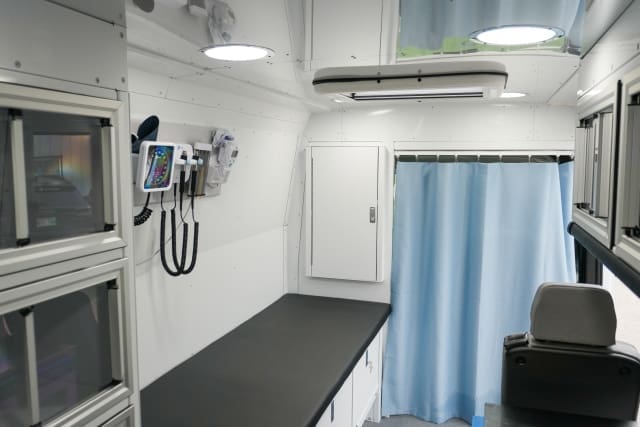
A Mobile Response Van is a full-size van converted into a simple treatment and transport space for non-urgent needs.
It may be used for:
- Patient transfers: Moving stable patients between care settings.
- Non-urgent response: Helping people who need care but don’t need an ambulance.
- Remote work sites: Supporting injured workers before formal emergency response.
- Urgent care support: Bringing basic care closer to the community.
This type of van is similar to an ambulance in appearance, but it’s not an ambulance. It doesn’t carry life support systems for unstable patients. That line matters. If someone needs emergency care, call EMS.
A Mobile Response Van can be a fit for organizations that want medical transport non-emergency support with room for equipment, storage, seating, and a cleaner care space.
What is a P4 3-in-1 Van best used for?
The P4 3-in-1 Van is built for flexibility. It can support ambulatory transportation, wheelchair transportation, and stretcher transportation in one vehicle.
That can help if your rider needs change by the day.
For example, Monday may bring a wheelchair trip. Tuesday may bring an ambulatory group ride. Wednesday may require stretcher transport for a patient who can’t sit upright. Instead of managing several vehicles, one flexible setup can help your team respond faster.

The P4 3-in-1 Van may be useful for:
- Community health organizations
- Senior living providers
- Patient transfer services
- Rehab centers
- Transportation companies
- Programs serving people with mixed mobility needs
It can also help reduce fleet complexity. Fewer vehicle types can mean simpler training, easier scheduling, and less confusion for your staff.
What is a Dialysis Patient Transport Van best used for?
A dialysis patient transport van is designed around the reality of frequent treatment trips. Many dialysis patients travel several times per week. That kind of routine can wear people down fast, especially if rides are long, cold, crowded, or uncomfortable.
This vehicle type focuses on comfort, access, and repeat use.

Helpful features may include:
- Reclining seats: Support riders after tiring appointments.
- Flexible flooring: Adjust seating for different rider needs.
- Wheelchair access: Help riders board without unsafe lifting.
- Securement systems: Keep mobility devices stable during travel.
- Climate control: Improve comfort during hot or cold weather.
- Privacy glass: Give riders a calmer, more respectful ride.
- Connectivity options: Help riders stay in touch during long trips.
If your non-emergency medical transport business plans to serve dialysis centers, rural health programs, or recurring treatment routes, this kind of van can help make the ride feel less like another burden.
How do you choose the right NEMT vehicle?
Start with your service model. Then match the vehicle to the rider experience you want to provide.
Ask yourself:
- Who will ride: Ambulatory riders, wheelchair users, stretcher patients, or mixed groups?
- How far will they travel: Short city trips or long rural routes?
- How often will they ride: One-time appointments or recurring care?
- What support do they need: Ramp access, lift access, reclining seats, or medical storage?
- How flexible should the layout be: Fixed seating or adjustable configurations?
Your vehicle should help people feel safe before the ride starts. That’s the bigger goal. You’re building non-emergency medical transportation services that help people reach care without fear, strain, or feeling like an afterthought.
Next, let’s look at how to get non-emergency medical transportation contracts once your service model and vehicle needs are clear.
How do you get non-emergency medical transportation contracts?
Getting contracts is another one of the most important steps in starting a non-emergency medical transportation business. Contracts can give your company steadier rides, stronger referrals, and better long-term planning.
Start by understanding this: Contracts are built on trust. A healthcare partner is putting their patients, residents, or members in your care. They need to know you’ll show up, communicate well, and treat people with respect.
What types of organizations offer NEMT contract opportunities?
You may find contract opportunities with:
- Medicaid brokers: Companies that arrange rides for eligible Medicaid members.
- Managed care plans: Health plans that may coordinate transportation benefits.
- Hospitals: Discharge rides, follow-up trips, and patient transfers.
- Dialysis centers: Recurring transportation for scheduled treatments.
- Rehab centers: Rides for patients recovering from injury, illness, or surgery.
- Senior living communities: Appointment transportation for residents.
- Adult day programs: Daily or weekly accessible transportation.
- County agencies: Transportation support for public health or social service programs.
Medicaid deserves extra attention. According to MACPAC, states can manage NEMT through different models, including brokers, fee-for-service programs, and managed care plans. That means your path in Ohio may look different from your path in Arizona, Florida, or California.
How should you prepare before reaching out?
Before you ask for a contract, get your basics in order.
You should be ready to show:
- Licensing: Proof your business can operate in your area.
- Insurance: Coverage that matches the contract requirements.
- Vehicle details: Capacity, access type, and safety features.
- Driver standards: Background checks, training, and service expectations.
- Service area: The cities, counties, or regions you cover.
- Response process: How you handle bookings, delays, and cancellations.
- Professional materials: Website, brochure, business card, and contact information.
A simple one-page capability sheet can help. Keep it clear. Explain who you serve, what rides you provide, what areas you cover, and why your service is dependable.
You can also build relationships before asking for formal work. Visit care centers. Talk to discharge planners. Connect with clinic managers. Ask where transportation breaks down for their patients. This article on mobile medical vehicle partnerships can help you think through local relationship building.
The goal isn’t to sound big. The goal is to sound reliable.
What should you avoid when chasing NEMT contracts?
Avoid promising what you can’t deliver. That can hurt your reputation fast.
Watch out for:
- Taking routes outside your real service area
- Accepting wheelchair rides without proper equipment
- Underpricing trips to win work
- Missing documentation requirements
- Ignoring after-hours communication needs
- Relying on one contract for all your revenue
A good contract should fit your business. It should also protect the rider experience. If a deal forces rushed pickups, tired drivers, or unsafe scheduling, it’s not the right deal.
A strong non-emergency medical transport provider wins repeat work through dependability. Be clear, be honest, and build slowly. In this business, trust compounds. Fancy phrase, simple truth.
Next, let’s look at how NEMT businesses get paid and what payment sources you may want to plan for.
How do NEMT businesses get paid?
A non-emergency medical transportation business can get paid in several ways. The best mix depends on your state, your services, and the customers you serve.
Medicaid is one common payment path. NEMT is a required Medicaid benefit for eligible enrollees who have no other way to reach medical appointments, but states manage it in different ways. Some states use transportation brokers. Some use fee-for-service systems. Others work through managed care plans. That means a provider in Michigan may bill differently than a provider in Texas or Arizona.
What are the main NEMT payment sources?
Common payment sources include:
- Medicaid brokers: Brokers arrange rides and pay approved providers.
- Managed care plans: Some health plans coordinate rides for members.
- Healthcare facilities: Hospitals, rehab centers, and clinics may pay for trips.
- Senior living communities: Facilities may contract for resident transportation.
- Private-pay riders: Riders or families pay directly.
- Local agencies: Counties, nonprofits, or public programs may fund rides.
Medicare is different. Original Medicare usually focuses on medically necessary ambulance transportation when other transportation could put the patient’s health at risk. In some cases, Medicare may cover non-emergency ambulance transportation with a written order from a doctor or other provider. This is not the same as routine NEMT van service.
Some Medicare Advantage plans may offer extra benefits, but plan options and benefits vary by county and insurance company. Private companies typically decide where plans are available and may offer different benefits and costs by area.
The key is to build your payment plan before you launch. If your non-emergency medical transportation business plan depends on Medicaid trips, learn your state’s enrollment process early. If you plan to serve private-pay clients, make booking and payment simple.
Next, let’s look at how to market your NEMT business locally.
How do you market a NEMT business locally?
Marketing a non-emergency medical transportation business starts with trust. People are looking for more than a ride. They want to know your team will arrive on time, help safely, and treat riders with care.
Start with the basics. Your website should explain what you do in plain language. Don’t make families hunt for answers like they’re searching for lost car keys.
Your website should include:
- Service area: List the cities, counties, or regions you cover.
- Ride types: Explain your non-emergency medical transport services.
- Accessibility: Show if you offer wheelchair, ambulatory, or stretcher transportation.
- Booking process: Tell people how to schedule a ride.
- Contact details: Make phone, email, and forms easy to find.
- Vehicle photos: Help people see the space before they book.
A clear site helps riders, families, clinics, and care teams understand if you’re the right fit.
How can local SEO help your NEMT business get found?
Local SEO helps people find you when they search phrases like “non-emergency medical transportation services in Phoenix.”
Create a Google Business Profile and keep it up to date with your service area, hours, phone number, photos, and reviews. Then build website pages for the main locations you serve. For example, you may create pages for “NEMT services in Tampa,” “wheelchair transportation in Dallas,” or “medical transport non-emergency in Fresno.”
Your content should answer real questions, such as:
- How far do you travel?
- Do you help riders from the door?
- Can you transport wheelchairs?
- How much notice do you need?
- Do you work with facilities?
You can also learn more about how to advertise a mobile medical vehicle if your vehicle will be part of your local brand.
How do you build referral relationships?
Some of your best leads may come from people who already support your riders.
Reach out to:
- Discharge planners
- Dialysis center managers
- Rehab clinics
- Senior living directors
- Case managers
- Adult day programs
- Local nonprofits
- Veterans groups
Keep your message simple. Explain who you help, where you operate, what types of rides you offer, and how to book.
Next, let’s look at the common mistakes to avoid when starting your NEMT business.
What common mistakes should you avoid when starting a NEMT business?
Starting a non-emergency medical transportation business is exciting, but a few early mistakes can create expensive problems. The good news? Most of them are avoidable with the right plan.
What mistakes can hurt your NEMT business early?
Here are common issues to watch for when starting your non-emergency medical transportation business.
- Buying the wrong vehicle: A low-cost van may look good at first, but it can limit the riders you can serve. If your community needs wheelchair transportation, your vehicle has to support that safely.
- Skipping local research: A NEMT business should solve a real gap. Don’t assume every area needs the same service. A rural county may need long-distance trips, while a city may need better wheelchair access.
- Underpricing your rides: Cheap rates can win calls, but they can also crush your margins. Fuel, insurance, driver time, cleaning, maintenance, and admin work all add up.
- Ignoring rider experience: Riders may feel tired, nervous, or frustrated before they even enter the vehicle. A clean van, kind driver, and clear pickup process can change the whole ride.
- Offering too many services too soon: It’s tempting to say yes to everything. Ambulatory, wheelchair, stretcher, long-distance, facility discharge, after-hours trips. That can overwhelm a new team fast.
- Weak scheduling: Late pickups can damage trust with riders and healthcare partners. Build a process for trip confirmations, delays, cancellations, and return rides.
- Not training drivers well: Drivers need more than a clean record. They need patience, passenger support skills, wheelchair securement training, and a calm way of handling stressful moments.
- Forgetting maintenance: A vehicle breakdown can mean missed care.
The biggest mistake is treating NEMT like basic transportation. It’s a service built around people who may already be facing a hard day. When you protect their comfort, time, and dignity, you build a stronger business too.
Next, let’s turn everything into a clear NEMT business startup checklist.
Non-emergency medical transportation business startup checklist

Got any questions about starting a non-emergency medical transportation business?
You came here because you saw a gap: people in your community need care, but safe transportation is getting in the way. Starting a NEMT business can feel like a lot, but with the right plan, that gap can become a service that helps people reach care with less stress and more dignity.
You’ve learned how to think through the core steps, including:
- Planning: How to build a clear non-emergency medical transportation business plan.
- Requirements: What licenses, insurance, and state-specific rules to check.
- Vehicles: What types of NEMT vehicles can support different riders.
- Growth: How to approach contracts, payments, local marketing, and common mistakes.
At AVAN Mobility, we build vehicles around real care problems, not cookie-cutter ideas. Our team works with organizations that need transportation to feel safer, calmer, and more human for the people they serve. We take time to understand your riders, your routes, your service goals, and the gaps you’re trying to close. If you have questions, click the button below to talk to a mobility expert.
If you’re not ready to talk to a mobility expert yet, here are a few other resources you should check out to learn more.
Recommended next reads
- What Are the Differences Between NEMT and EMT Vans? Learn about the biggest differences between NEMT and EMT vans.
- How much does an NEMT van cost? This is a helpful next step if you’re starting to build your budget and want to understand what affects vehicle pricing.
FAQs about starting a non-emergency medical transportation business
Q: Do you need a license to start a NEMT business?
A: In most cases, yes. Requirements can vary by state, county, city, payer, and service type. Always check your local and state rules before launching.
Q: How much does an NEMT van cost?
A: The cost of a NEMT van depends on the layout, access features, seating, wheelchair positions, stretcher setup, and equipment.
Q: Can a NEMT business transport wheelchair users?
A: Yes, if the business has the right vehicle, securement equipment, driver training, insurance, and operating approvals.
Q: Can a NEMT business offer stretcher transportation?
A: Yes, some providers offer stretcher transportation for stable riders who need to lie flat. It’s not the same as emergency ambulance care.
Q: How do NEMT businesses get contracts?
A: They may work with Medicaid brokers, managed care plans, hospitals, dialysis centers, rehab centers, senior living communities, and local agencies.
Q: Who pays for non-emergency medical transportation?
A: Payment may come from Medicaid brokers, health plans, facilities, local programs, private-pay riders, or families.
Q: Does Medicare cover non-emergency medical transportation?
A: Original Medicare usually doesn’t cover routine NEMT van rides. Some Medicare Advantage plans may offer transportation benefits, depending on the plan and location.
Q: Is starting a NEMT business profitable?
A: It can be, but profit depends on pricing, route planning, insurance, driver costs, vehicle payments, contracts, and maintenance.
Q: What is the biggest mistake new NEMT businesses make?
A: Buying a vehicle before understanding their riders, service area, state rules, and contract goals.
Q: What should you do next if you want to start a NEMT business?
A: Write down the local transportation gap, define who you’ll serve, check your state rules, and choose a vehicle that fits your service plan.