Are mobile health units practical if your nurses, residents, or outreach staff feel nervous about driving them? It’s a fair question. In the U.S., many healthcare teams already face staffing pressure, long travel routes, and patients who can’t always reach care. In fact, HRSA data shows that rural communities make up a large share of primary care shortage areas across the country.
If your team is worried the vehicle will feel too big, too complex, or too stressful to operate, that concern matters. A mobile program only works if your staff feel safe using it. The goal is simple: give your team a vehicle they can drive with confidence, so care reaches people in places like rural Missouri, Northern California, West Texas, or the Appalachian region without adding another headache to their day.
At AVAN Mobility, we’ve spent over 10 years building vehicles that reduce barriers to healthcare and help save lives. We’ve manufactured more than 180 mobile medical units and supported organizations like CalOptima and the Community Clinic of Southwest Missouri. Our Ford Pro Upfitter and Stellantis QPro certifications help us build with real-world use in mind. We also know we’re one voice in the industry, so this article is here to educate first.
You’ll learn:
- Why: Many teams worry about who will drive.
- How: Driving compares to a pickup truck.
- Who: Nurses and residents can often operate one.
- What: Licensing may be required.
- Which: Features make today’s units easier to drive.
Why do healthcare organizations worry about who will drive your mobile health unit?
Many healthcare organizations worry about who will drive mobile health units because the risk feels real. You may trust your clinical team with patient care, but asking them to drive a larger vehicle through city streets, rural roads, or tight clinic parking lots can feel like a big leap.
That concern often comes from a good place. You want your team to feel safe, want patients to feel calm, and want the program to run without turning every trip into a stress test on wheels.
Mobile healthcare is growing, but staffing remains a challenge
Mobile healthcare is growing because more people need care brought closer to home. For many patients, getting to a clinic can be hard. Transportation gaps, long drives, disability, cost, and poor local access can all get in the way.
That’s where mobile health units can help. They bring services into neighborhoods, schools, rural towns, shelters, tribal communities, and outreach sites.
But growth also brings a practical question: Who’s actually going to drive the unit?
That question can feel awkward because your staff already carry a lot. Nurses, medical assistants, outreach workers, social workers, and residents often have packed days before the vehicle even enters the conversation.
You may be thinking:
- Will: Our nurses feel comfortable driving this?
- Can: Our residents handle it safely?
- Do: We need to hire a dedicated driver?
- What: Happens if our best clinician refuses to drive?
- How: Much training will this add?
Those are smart questions. They’re also common.
Picture a community clinic in rural Arkansas, West Virginia, or Northern California. Your team wants to reach patients who miss care because the nearest clinic is 45 minutes away. The need is clear. The mission is clear. Then someone asks, “Who’s driving?”
Suddenly, the mobile program feels more complicated.
That doesn’t mean it’s a bad idea. It means the driving experience needs to fit the people who will use it. A mobile unit that looks great on paper but scares your staff in real life creates a gap. The vehicle may be built for care, but your team may not feel ready to operate it.
Good planning closes that gap.
The right setup can make the driving role feel less like a special assignment and more like part of the daily workflow. That starts with understanding a common assumption about mobile medical vehicles.
Many organizations assume a mobile health unit requires a specialized driver
Many teams assume mobile health units need a commercial driver or someone with years of large vehicle experience. That belief makes sense at first glance. Some mobile medical units look big. They carry equipment. They may have exam areas, storage, power systems, and medical supplies inside.
So it’s natural to think, “This must drive like a bus.”
In many cases, that’s not true.
A lot depends on the size, chassis, layout, and weight of the vehicle. Some mobile health units are built on familiar platforms that feel closer to driving a pickup truck, cargo van, or shuttle-style vehicle. That can make them much easier for clinical staff to learn.
This is important because hiring a full-time driver can change the cost of your program. It can also make scheduling harder. If the driver is unavailable, the unit may sit parked while patients still wait for care. Nobody wants a life-saving vehicle becoming an expensive driveway ornament.
Here’s the real issue
| Concern | What it can create |
| Staff feel nervous driving | Fewer outreach days |
| Only one person can drive | Scheduling bottlenecks |
| A driver must be hired | Higher program costs |
| Training feels unclear | Slower launch |
| Vehicle feels too large | Lower staff confidence |
This is why driver comfort should come up early in the buying process.
A good manufacturer should ask how your team works. They should ask where the unit will go. Will it visit dense parts of Los Angeles? Rural roads in Missouri? Snowy routes in Michigan? Tight school parking lots in Ohio? Long stretches between towns in New Mexico?
Those details matter because your mobile health unit should support your staff, not intimidate them.
If your clinical team feels comfortable behind the wheel, they’re more likely to use the unit often. That means more patients reached, fewer missed visits, and less stress on staff who are already doing hard work.
Is a mobile health unit as easy to drive as a pickup truck?
Yes, many mobile health units built on a van chassis can feel much closer to driving a smaller pickup truck than people expect. It’s still larger than a regular SUV, but for many clinical staff, it doesn’t feel like stepping into a bus or heavy commercial vehicle.
That’s a relief for teams that want to launch a mobile care program without making driving feel like a whole second career.

Similar dimensions and visibility
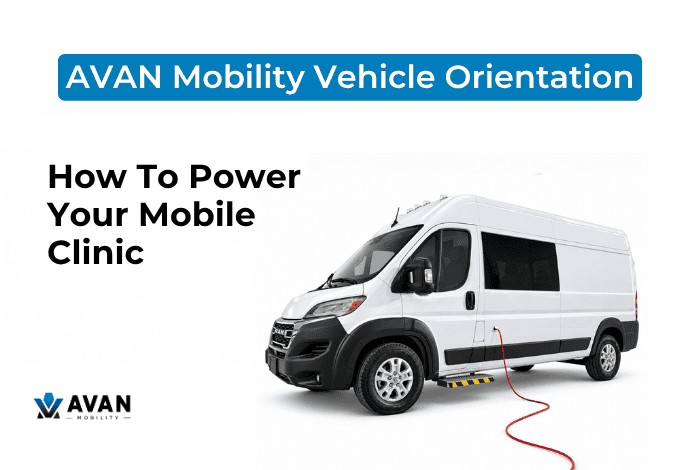
The RAM ProMaster 159″ wheelbase we use at AVAN Mobility gives you a strong balance between interior workspace and street-friendly size. It helps support a practical mobile medical layout, while the van still stays manageable for everyday driving. This wheelchair is in the same general range as some longer pickup truck configurations. Ford lists some F-150 configurations with wheelbases ranging from 145 to 157 inches, depending on cab and box setup.
In plain English, that means the footprint may feel more familiar than scary.
Your team is sitting high enough to see the road clearly. That helps in city traffic, rural intersections, and busy clinic parking lots. The large windshield gives the driver a wide forward view, and the side mirrors help with lane changes and backing into spaces.
Here’s how the RAM ProMaster 159″ setup can feel in real use:
| Feature | What it means for clinical staff |
| 159″ wheelbase | Feels stable without being oversized |
| 132″ usable interior space | Gives room for care without going huge |
| 70″ width | Helps the unit feel manageable on the road |
| 72″ headroom | Supports staff comfort inside the unit |
| Extended version length | Adds 14″ when more space is needed |
The turning radius is also a big part of driver confidence. A tighter turning feel helps in places like school parking lots, community centers, rural health sites, and curbside outreach stops.
Think about a nurse driving into a church parking lot in rural Kentucky for a blood pressure screening day. They may be nervous at first. Then they realize the view is open, the mirrors are helpful, and the vehicle responds in a familiar way. That first “Oh, I can do this” moment is huge.
That comfort grows even more when modern safety tech joins the ride.
Why does it feel familiar behind the wheel?
For many drivers, a RAM ProMaster-based mobile health unit feels closer to a Ford F-150 than a larger van. That comparison helps because many Americans already understand pickup trucks. They see them everywhere, from Texas highways to Ohio job sites to small towns in the Midwest.
The driver sits upright. The steering feels direct. The mirrors are large. The road view is clear. The vehicle may be taller and more open inside, but the basic driving experience can feel familiar.

That matters for healthcare teams because confidence affects use.
If your team feels the mobile unit is too hard to drive, it may sit unused more than planned. Outreach days may get delayed. Staff may avoid taking it to certain locations. A program built to close healthcare gaps can create a new gap if the vehicle feels hard to operate.
A familiar driving feel helps prevent that.
Here’s a simple way to think about it
| Vehicle type | How it may feel to staff |
| Standard SUV | Most familiar, but limited care space |
| Ford F-150-style pickup | Larger feel, but common and manageable |
| RAM ProMaster mobile health unit | Similar confidence level, with clinical space added |
| Large bus-style mobile clinic | More space, but often more driver concern |
A RAM ProMaster mobile health unit gives your team something important: enough room to deliver care, without forcing every driver to feel like they’re piloting a city bus.
That can help a clinic in Missouri reach farm communities. It can help a county health team in California bring vaccines to remote towns. It can help a nonprofit in Georgia park closer to people who have no easy way to reach care.
The real win isn’t the vehicle size. It’s what happens when your staff says, “Yes, I’m comfortable driving that.”
That confidence can lead to more outreach days, smoother scheduling, and better access for patients who’ve been waiting too long for care to come closer.
So, is a mobile health unit as easy to drive as a pickup truck?
For many teams, yes, it can feel surprisingly close. The key is choosing the right chassis, layout, safety features, and training plan. When those pieces work together, mobile health units become easier for clinical staff to use, and that helps care move from the parking lot to the people who need it.

Can nurses and residents drive a mobile health unit?
Yes, nurses, residents, community health workers, outreach coordinators, physicians, and program managers can often drive a mobile health unit with the right vehicle setup and a short orientation. The bigger question is less about job title and more about comfort, training, and clear driving expectations.
Clinical staff are already trusted with serious work. They make care decisions, speak with families, manage supplies, and support people through hard moments. Driving a mobile health unit can feel like one more task on a long list, but it doesn’t have to feel overwhelming.
The key is making sure the vehicle fits the real people using it.
Most drivers adapt quickly
Most clinical staff adapt faster than they expect once they get behind the wheel. A RAM ProMaster-based mobile health unit has a familiar driver area, clear sightlines, large mirrors, and helpful safety features. That makes the first drive feel less like a leap and more like learning the size of a larger work vehicle.
A nurse resident may feel nervous during the first walkaround. That’s normal. They may look at the height, the equipment inside, and the medical supplies onboard and think, “Please don’t make me parallel park this downtown.”
Fair enough.
But once they sit in the driver’s seat, the fear often starts to shrink. The controls are familiar. The road view is clear. The mirrors help. The backup camera gives support. After a few turns and a short practice drive, many staff realize it feels manageable.
Different team members may use the unit in different ways:
- Nurse residents: Can drive to scheduled clinics, rural stops, or community health events.
- Community health workers: Can bring care closer to neighborhoods, shelters, and outreach sites.
- Outreach coordinators: Can manage routes, parking, setup, and daily logistics.
- Physicians: Can drive when smaller teams rotate responsibilities.
- Program managers: Can move the unit for events, maintenance, or backup coverage.
This flexibility can help your mobile program run more smoothly. If only one person can drive, your schedule depends on that one person. If several trained staff feel comfortable, your mobile health unit becomes easier to use across more days, locations, and service types.
That can make a real difference in places like rural Mississippi, Northern California, the Texas Panhandle, or small towns across the Midwest. When distance blocks care, staff flexibility helps close the gap.
Here’s a simple example
Your clinic plans a vaccination event at a school in rural Georgia. The usual driver is out sick. If no one else feels ready, the event may be delayed. If two nurses and an outreach coordinator are trained, the visit can still happen. Patients get care. Staff stay calm. The vehicle does what it was built to do.
That’s the point.
Mobile health units should help your team reach people, not create a new staffing puzzle.
Confidence grows after a short orientation
A short orientation can turn worry into confidence. Staff don’t need to become professional drivers overnight. They need to understand the vehicle, practice the basics, and know what to expect.
A good orientation should cover the things that affect daily use:
- Driver controls: Lights, mirrors, wipers, cameras, and dashboard alerts.
- Vehicle size: Height, width, length, and safe clearance.
- Turning: Wide turns, tight lots, and curbside stops.
- Backing up: Camera use, mirrors.
- Setup: Parking position, power systems, doors, ramp (if applicable), and clinic workflow.
- Safety checks: Tires, lights, supplies, equipment storage, and walkarounds.
This doesn’t need to feel like boot camp. No whistle required.
A calm, hands-on walkthrough helps staff build trust with the unit. Let them drive around the lot, make a few turns, practice backing into a space, ask the questions they may feel embarrassed to ask in a group.
Those small moments build confidence.
It also helps to create a simple driver list. Choose staff who are willing, steady, and comfortable learning. Then give them the same process each time.
What does a sample checklist include?
- A pre-trip checklist
- A parking and setup checklist
- A post-trip checklist
- A clear policy for bad weather
- A plan for fuel, charging, or maintenance
- A backup driver schedule
This structure helps staff feel supported. It also helps leaders feel better about daily operations.
We’ve seen how much confidence can grow once staff understand the vehicle. The first question is often, “Can our team really drive this?” After orientation, the tone often changes to, “Okay, who’s taking it out next?”
That shift matters because comfort leads to use. Use leads to outreach. Outreach leads to people getting care closer to home.
A mobile health unit should feel like a practical part of your care model. When nurses, residents, and other team members feel ready to drive it, your program gains more freedom to serve the community without waiting on one specialized driver.
Do you need a special license?
Most mobile health units built on van chassis can be driven with a standard driver’s license. That said, licensing depends on the unit’s weight, seating, use, and the state where it operates. Bigger units may trigger CDL rules, so it’s worth checking before launch day.
Licensing depends on your state
In many U.S. mobile medical programs, staff can drive a van-based mobile health unit with a regular license. This is common when the vehicle stays under certain weight limits and isn’t designed to carry a large number of passengers.
The key term to know is GVWR, which stands for gross vehicle weight rating. That means the maximum loaded weight the vehicle is rated to carry.
The Federal Motor Carrier Safety Administration says a CDL may be required for certain vehicles, including single vehicles with a GVWR of 26,001 pounds or more. CDL rules can also apply to vehicles designed to carry 16 or more people, including the driver, or vehicles carrying certain hazardous materials.
Here’s the simple version:
| Vehicle situation | Licence impact |
| Van-based unit under CDL weight limits | Often standard licence |
| Larger unit over 26,001 pounds GVWR | CDL may be required |
| Designed for 16 or more passengers | CDL may be required |
| Carries certain hazardous materials | CDL may be required |
| State has extra rules | Verify locally |
This is where planning saves headaches.
A clinic in California, Texas, or Ohio may have different state-level requirements than a program in Missouri or Georgia. Some states may also look at passenger capacity, vehicle use, insurance type, or medical equipment onboard.
So before your nurses, residents, or outreach staff start driving, confirm the rules with your state DMV, insurance provider, and legal or fleet team.
That small step helps your mobile health unit hit the road with confidence, not confusion.
Ready to choose a mobile health unit your staff can drive?
You came here because you’re trying to answer a practical question: can your clinical team actually drive the vehicle without feeling stressed, unsafe, or out of their depth? That concern is real, because a mobile care program only works when your staff feel ready to use it.
After reading this article, you now know:
- Driving: Many van-based mobile health units feel closer to a pickup truck than a bus.
- Staffing: Nurses, residents, outreach workers, physicians, and program managers can often drive them after orientation.
- Licensing: Most van-based units use a standard license, but larger units may require a CDL.
- Confidence: Features like mirrors, cameras, sensors, and training help your team feel prepared.
At AVAN Mobility, we build around the day your team will actually have. That means thinking through tight parking lots, rural roads, nervous first-time drivers, patient comfort, and the small details that make outreach less stressful. We’re a U.S.-based organization focused on reducing barriers to healthcare and transportation through mobile medical vans. Our job is to help your team show up with care, dignity, and confidence, because that’s what leadership in this industry should look like.
If you have questions, click the button below to talk to a mobility expert.
Recommended next reads
- Do mobile medical vans require a commercial driver’s license? This is the best next step if licensing is still your biggest question before moving forward.
- Ram ProMaster vs. Ford Transit mobile medical vans: This will help you compare two common chassis options and understand which driving experience may fit your team better.
- How to choose a mobile medical van: This article takes you from driver comfort into the bigger buying decision, use case, budget, and long-term fit.
If you’re not ready to talk to a mobility expert yet, these resources will help you keep learning before your next step.