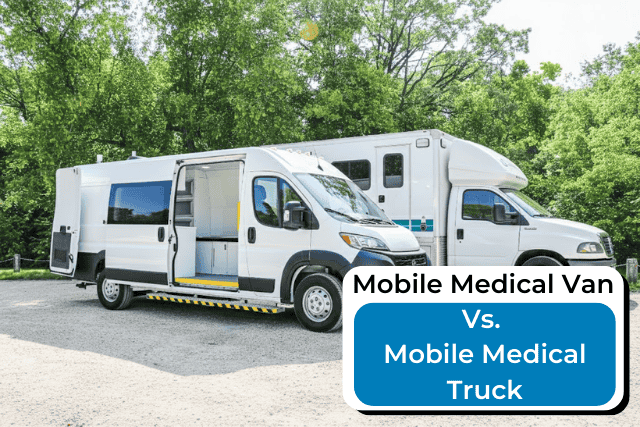
More than 80% of people in the U.S. live in a healthcare desert. If you’re here, you’re probably an organization that wants to change that. You want to bring help to people who feel forgotten. But right now, you might feel stuck. You’re trying to choose between mobile medical vans and mobile medical trucks. It’s a big choice.
If you pick a vehicle that’s too big, you might not fit on tight streets in places like Boston. If it’s too small, your team might feel crowded. You worry about wasting money or failing to meet your community’s needs. You want your patients to feel safe and cared for. Choosing the right tool means you can finally close that gap and bring health to your neighbors.
At AVAN Mobility, we get it. We’ve been doing this for over 10 years and have built more than 150 mobile medical units to help save lives across the country. Our team has worked with great groups like CalOptima and Pacific Clinics. We have Ford Pro Upfitter and Stellantis QPro certifications. We know what works because we have seen it in action. We also know we are not the only ones building these vehicles. We value transparency and want to help you find the best fit for your mission.
After reading this article, you’ll have a better idea if mobile medical vans or mobile medical trucks are the right fit.
How do mobile medical vans and mobile medical trucks compare?
It’s helpful to look at how these vehicles compare across different criteria. Both mobile medical vans and mobile medical trucks have strengths that help them reach people who need care. Let’s start with how they navigate on the roads.
1. Navigating busy city streets and parking
If your program operates in dense urban areas like Boston or San Francisco, vehicle size plays a role in day-to-day operations. Larger mobile medical trucks can require more planning when navigating narrow streets or securing parking near schools, housing complexes, or community centers. In some locations, this may affect where and how often services can be delivered.
Mobile medical vans are generally easier to maneuver in these environments. Their size is comparable to commercial delivery vans commonly seen in cities, allowing them to access standard parking spaces and curbside locations. This can make routing and setup more predictable in high-traffic areas.
- Turning radius: Vans typically handle tighter turns and smaller streets more easily than larger trucks.
- Parking access: Vans can often park in standard spaces, while trucks may require designated or pre-arranged locations.
Handling rural roads and driver needs
When you’re out in rural areas like the hills of Kentucky or the plains of Kansas, you face different tests. A mobile medical truck is built on a heavy frame. This is great for carrying a lot of medical gear, but it can be too heavy for some old country bridges. You don’t want to find out a road is closed to heavy vehicles when a patient is waiting for you.
You also have to think about who’s driving. In the U.S., you usually don’t need a special license to drive mobile medical trucks if they weigh less than 26,000 pounds. Most manufacturers stay under this weight, so your staff can drive them easily. Even so, a big truck feels very different from a van. Some team members might feel nervous driving something so large.
- Licenses: Most of these vehicles are built so that any staff member can drive them.
- Weight: Check the local roads in your area to see if a heavy truck can pass safely.
- Staff comfort: Think about how your team feels behind the wheel of a much larger vehicle.
2. How do mobile medical vans and mobile medical trucks compare in size?
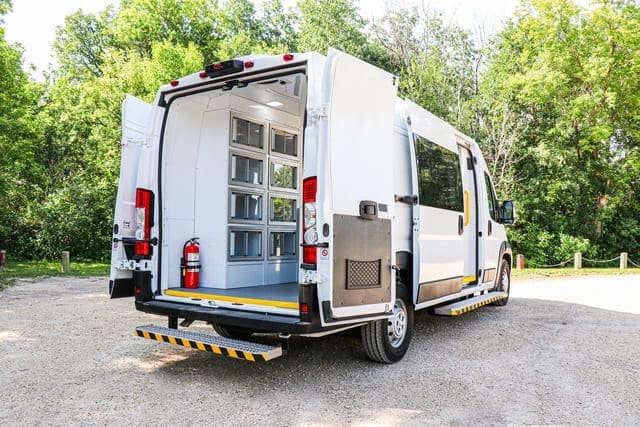
Finding the right amount of room is a big part of your plan. You want your team to work well without feeling cramped. You also want your patients to feel relaxed. Both mobile medical trucks and vans offer different ways to set up your mobile clinic.
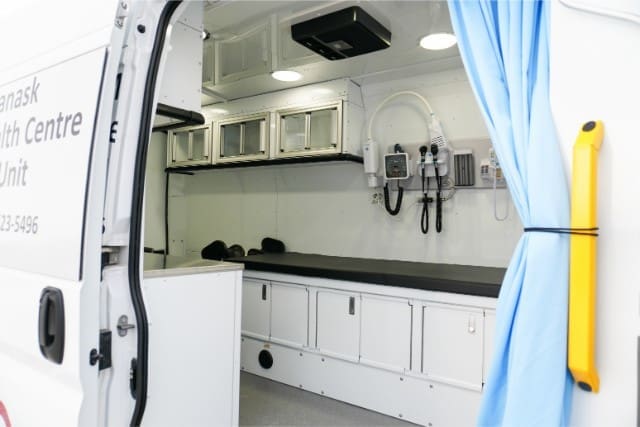
When we build mobile medical vans, we use a 159-inch wheelbase. This gives you plenty of room while keeping the vehicle easy to drive. You get 132 inches of space behind the partition wall that sits behind the driver. The interior is 70 inches wide and has 72 inches of headroom. If you need more length, an extended version adds 14 inches.
This size is perfect for creating a cozy and private place for care. It feels less like a big hospital and more like a safe spot to talk. You can fit an exam bed, a desk, a fridge, a sink, and cabinets for your supplies. It’s a great fit for things like mental health visits in places like Phoenix or wellness checks for kids in Ohio.
- Private space: A smaller area helps patients feel safe and builds deep trust.
- Smart storage: You can keep all your tools organized and within reach.
- Standing room. Most staff members can stand up straight and work without hurting their backs.
Comparing the layout of mobile medical trucks
On the other hand, some mobile healthcare missions need a lot more room if their budget can support it. This is where mobile medical trucks or some of the larger vehicles come in. These units are often constructed with a large box attached to the back of a frame. They can be significantly wider than a van, typically measuring around 95 inches across. They’re also taller, giving your staff about 82 inches of headroom.
This extra space allows you to have more than one exam room in a single mobile medical truck. You can also have a separate waiting area or even a bathroom. If you’re bringing dental chairs or mammogram gear to a town in Florida, a truck can shine in these situations. These vehicles are designed to carry very heavy equipment that smaller vehicles cannot hold.
- Multiple rooms: You can see more than one patient at the same time.
- Heavy gear: Trucks can handle the weight of big machines like X-rays.
- Extra features: You’ll have space for a bathroom or a large waiting bench.
It’s all about matching the space to the gap in care you’re trying to fill. A van is great for private one-on-one care. A truck might be more suitable for multiple patients at the same time.
3. How do the costs of mobile medical vans and mobile medical trucks compare?
It’s smart to consider the financial aspect of your mission early on. You want to spend your funds in a way that helps the most people. Both mobile medical trucks and vans have different price tags for buying and keeping them running.
When you first start your program, the biggest cost is the vehicle itself. A mobile medical van is usually the more affordable choice. You can often get one ready to go for between $170,000 to $290,000. This price helps smaller non-profits in places like rural Alabama or downtown New York get started faster. It’s a great way to remove barriers to care without needing a massive amount of money.
Mobile medical trucks cost quite a bit more because they’re much larger. You might spend anywhere from $400,000 to over $800,000 for a new one. These vehicles are like moving buildings, so they’re built a lot differently.
- Lower entry price: Vans are easier for many groups to afford when they’re just starting.
- Equipment: Trucks can handle heavy machines, but those tools also add to the total bill.
Keeping your clinic on the road
After you buy your vehicle, you have to think about the monthly bills. A mobile medical van is built to be efficient. It uses less fuel, and you can take it to a regular mechanic for an oil change. Since they’re smaller, they don’t put as much stress on their tires or brakes. This helps you save money that you can spend on more medical supplies for your patients.
Mobile medical trucks are heavier and need more fuel to move around. You might also need a specialized mechanic to fix them, which can cost more per hour. Because they’re so big, simple things like new tires or engine repairs can be more expensive. Even with these higher costs, a truck might be worth it if you see a lot of patients every day. It’s all about finding the balance that works for your team.
- Fuel savings: Vans are usually better on gas, which is great for long trips in the U.S. or Canada.
- Routine service: You can find a shop to fix a van almost anywhere you go.
- High capacity: A truck might cost more to run, but it can help more people at the same time.
4. Patient experience and comfort
The first impression matters when a person walks toward your mobile clinic. You want them to feel like they’re stepping into a place of dignity and healing. The size and style of your vehicle can change how a patient feels before they even say hello to your team.
A mobile medical van often feels very approachable for patients. Because it looks like a vehicle people see every day, it can feel less like a clinical facility and more like a neighbor visiting. This is a big help for reaching people in places like the Appalachian foothills or city parks in Atlanta. It helps lower the stress that some people feel when they have to go to a big hospital.
Inside, the smaller space feels relaxing and quiet. This is a great feature for patients who need mental health support or private counseling. It allows them to speak freely because it feels like a safe, private bubble. For a child getting a vaccine, a van doesn’t feel as big or overwhelming as a larger unit might.
- Lower step height: Most vans sit closer to the ground, which can make it easier for people to get inside.
- Cozy environment: Smaller spaces are easier to keep calm and private for sensitive talks.
- Familiar shape: The common look of a van helps it blend into a neighborhood easily.
The clinic experience in mobile medical trucks
Mobile medical trucks feel more like a traditional clinic. The larger interior can include waiting areas and separate rooms. Some patients find this familiar and reassuring. The extra space can be helpful for longer visits or services that require equipment. Clear separation between areas can also help manage patient flow during busy clinics.
Different patients prefer different settings. Some value privacy and simplicity. Others prefer a clinic-like environment. Both vans and trucks can support positive experiences when designed for the care being offered.
5. Power, utilities, and daily setup

Power is a key part of any mobile medical clinic. Medical equipment, lighting, heating, cooling, and computers all depend on it. How power is supplied can affect where you operate and how long you can stay on site.
Mobile medical units usually rely on a mix of shore power and generators. Some vans are designed to plug into shore power when available, such as at a clinic, community center, or hospital. When shore power is not available, the onboard generator system supports basic operations for several hours.
Because vans are smaller, they often need less power overall. This can make power systems simpler to manage. It can also reduce fuel use when running generators. For short visits or rotating stops, this setup is often enough.
Mobile medical trucks usually require more power. Larger interiors, multiple rooms, and heavier equipment increase energy needs. Trucks are often built with larger generators and expanded electrical systems to support these demands.
Mobile medical vans vs. mobile medical trucks: Which option should you choose?
There is no single right answer. The best choice depends on how you operate, who you serve, and what care you provide.
Use the chart below to compare mobile medical vans and mobile medical trucks based on common organizational needs.
| Key consideration | Mobile medical van | Mobile medical truck |
| Best for organizations that… | Serve smaller groups or one patient at a time | Serve many patients in one stop |
| Typical programs | Mental health, outreach, screenings, follow-up care | Dental, imaging, multi-room clinics |
| Operating areas | Cities, suburbs, mixed urban routes | Planned sites, rural hubs, fixed locations |
| Driving & parking | Easier to drive and park | Requires more planning |
| Licensing needs | No special license | Usually, no special license if under weight limits |
| Interior space | Compact, single exam area | Large, multiple rooms possible |
| Patient flow | One patient at a time | Multiple patients at once |
| Equipment capacity | Light to medium equipment | Heavy and specialized equipment |
| Setup time | Faster, minimal setup | Longer setup and breakdown |
| Power needs | Lower power demand | Higher power demand |
| Purchase cost | Lower starting cost | Higher starting cost |
| Operating cost | Lower fuel and maintenance | Higher fuel and maintenance |
| Staff comfort | Familiar driving experience | A larger vehicle may need training |
| Best when flexibility matters most | Yes | Sometimes |
| Best when volume matters most | Sometimes | Yes |
What’s next?
You came to this article because choosing between a mobile medical van and a mobile medical truck felt like a big decision. You likely needed clarity on size, cost, operations, and patient experience before moving forward with confidence.
After reading, you now have a clearer picture of:
- How vans and trucks compare across driving, space, cost, power, and patient needs
- Which option fits different organizations, programs, and service models
- What trade-offs matter most based on how and where you plan to deliver care
Pasted
At AVAN Mobility, we take a different approach than most manufacturers. We don’t start with a vehicle. We start with how your organization operates, who you serve, and where care actually happens. Our team designs mobile medical units that are built to last, easy to operate, and shaped around real-world healthcare delivery.
From early planning to long after delivery, we stay involved because we know these vehicles are more than equipment. They’re tools that help communities access care when they need it most. If you have questions or would like to discuss your options, click the button below to speak with a mobility expert.
If you’re not ready to talk to a mobility expert yet, we have a few other resources you should check out to learn more.
Recommended next reads
- Mobile medical van vs. mobile medical bus: What are the differences? This article helps you understand how larger vehicle options compare and whether a bus-style clinic makes sense for your needs.
- How to choose a mobile medical van: A practical guide that walks through key questions organizations should answer before selecting a van-based clinic.
- How much does a mobile medical unit cost in the U.S.? A clear breakdown of pricing ranges and cost drivers to help with budgeting and planning.