Did you know that nearly 1 in 5 U.S. adults face mental illness every year? It’s tough to watch your community struggle while you feel like you can’t reach everyone. You see the gaps in care. You likely feel the pressure to do more for the people counting on you.
That’s where a mobile crisis response team steps in. Without one, too many neighbors fall through the cracks. Risks go up when help is too far away. But with the right setup, you close that gap. You bring hope, dignity, and safety directly to the curb.
We know this because we have been in this business for over 10 years. We’ve built over 150 mobile units that are all about saving lives. We’ve helped organizations like Pacific Clinics and CalOptima reach more people with life-saving care. We hold Ford QVM and Stellantis QPro certifications, so you know safety is our priority.
In this article, you’ll learn the eight steps to starting a mobile crisis response team.
Here’s a quick look at what we’ll cover:
- Assess community needs
- Define your program model
- Plan your budget and secure funding
- Build partnerships
- Choose your vehicle
- Staffing and training
- Launch operations
- Measure and refine
What are the eight steps to starting a successful mobile crisis response team?
Imagine trying to drive from New York City to California without a roadmap or GPS. That’s what it can feel like when starting a mobile crisis response team without a plan. Let’s take a look at the eight steps to guide your path a little better.
1. Assess your community needs
The first step in launching a successful mobile crisis response team is understanding your community. You cannot solve a problem until you know exactly what the problem looks like. Where do people feel the most vulnerable?
For example, in a large, spread-out county like Siskiyou County, California, the biggest barrier might be distance. In a dense city like Chicago, the barrier might be response time in heavy traffic. Your mission is to find the pain points that keep people from getting help. This helps you figure out where your mobile crisis response team near me needs to go most often.
Think about these questions as you assess your community:
- Hot Spots: Where do emergency calls for mental health crises happen most frequently?
- Response Times: How long does it currently take for police or an ambulance to get to these areas?
- Gaps in Care: Which age groups or neighborhoods lack access to existing behavioral health centers?
Data: What numbers tell the real story?
Start by talking with your local law enforcement and hospital emergency departments. They have the data on crisis calls. You might find a high number of repeat calls from the same few areas. That data shows you a clear need. Look for information on uninsured rates and poverty levels. People struggling with money often struggle with mental health too, but they have a harder time getting care. Finding where the lack of care is the biggest gap lets you know where your crisis mobile response team will make the most impact.
When you look at the data, you’re seeing real lives that need support. This helps you clearly define the value your program will bring. It moves you from “just another service” to a life-saving resource. Now that you have a solid picture of the need, the next step is defining your program model.
2. Define your mobile crisis response team program model
After you’ve determined what your community needs, you need to decide how your mobile crisis response team will actually operate. This is where you define your program model. It’s like deciding what kind of race car you’re building based on the track you just studied. You can’t use a dragster for a winding, off-road rally. The good news is that you’ve got a few proven models here in the U.S. that you can look at.
The model you choose affects everything: who answers the phone, who rides in the van, and whether you work with police or go solo.
Model breakdown: Who responds to the crisis?
In the U.S., most mobile crisis response teams fall into one of three main buckets. Your choice should match your community’s unique needs and the data you collected in step one.
| Model type | Team composition (who rides?) | Best for… |
| Civilian-only team | Licensed clinician and a peer specialist (someone with lived experience). | Communities focused on fully diverting calls from law enforcement and reducing arrests. |
| Co-responder team | Licensed clinician paired with a specially trained law enforcement officer. | Situations where safety is a high concern or in communities that want to build trust between police and health providers. |
| Triage/diversion team | Clinicians often working remotely, sometimes with a quick, non-emergency in-person follow-up. | Programs that want to resolve a high volume of lower-risk calls over the phone (telehealth) quickly. |
The goal of any model is to keep people out of the emergency room or jail. Data shows that non-police responses are often the preferred choice for people in crisis, according to one study on client preferences. This is why the civilian-only mobile crisis rapid response team is growing fast.
Why might a civilian-only model be your best bet?
Most experts agree that the ideal crisis mobile response team uses a two-person unit. One person is a clinical expert, and the second is often a peer support specialist. The peer specialist is a person who understands the struggle firsthand. That shared understanding builds immediate trust.
Example: Think about a place like Denver, Colorado. They use a non-police response called the Support Team Assisted Response (STAR) program. They only send behavioral health specialists and paramedics. In its first six months, the STAR team handled hundreds of calls without calling the police once. That’s because the non-uniformed team arrives in an unmarked, accessible vehicle. It sends a message of care, not of force.
This approach saves lives by providing dignity and immediate stabilization. It’s also an effective way to save money by reducing the need for repeat visits to emergency departments. For your program to truly succeed, you must adopt a model that can respond to any crisis quickly. This means working toward 24/7 coverage, just like the best mobile crisis response teams in the country do. Next, let’s talk about how you’re going to pay for this crucial work.
3. Planning and budgeting for your mobile crisis response team
Starting a mobile crisis response team is a huge commitment. It’s also an investment that saves lives and money in the long run. We know that feeling of staring at a blank budget sheet and wondering how you’ll pay for everything. Don’t worry, you’re not alone. The shift from an idea to a fully functioning mobile crisis rapid response team requires a clear, three-part budget plan: the vehicle, the people, and the operations.
The vehicle: Your command center on wheels
The first major expense is the vehicle itself. This is much more than a plain van. It’s a private, safe space that enables care and dignity. A specialized Mobile Counseling Van, often used by mobile crisis response teams, can range between $150,000 to $260,000.
This cost includes things like:
- Layout: A quiet living room type of layout for private conversations.
- Accessibility: Ramp and secure seating.
- Technology: Internet functionality to connect with hospitals and specialists.
The people and operations: Beyond the initial cost
Your vehicle is great, but your team is just as important. You must budget for the service model you decided on in Step 2. Remember, an intervention by a mobile crisis team costs far less, around $360 per episode, than an emergency room visit, which can cost thousands.
Your yearly budget must include:
- Salaries: Licensed clinicians, peer specialists, and dispatch staff. This is usually the largest piece of the pie.
- Training: Costs for specialized de-escalation and safety courses.
- Fuel and Maintenance: Keeping your mobile crisis response team on the road 24/7.
- Technology: Software for routing, scheduling, and data collection.
Grants and funding: Where the money is right now
Federal and state governments are now highly motivated to fund these programs. This is because they realize these programs reduce strain on police and hospitals. This is a huge opportunity to secure funding.
The two biggest sources of federal support in the U.S. currently are:
- Medicaid ARPA Enhanced Funding: Thanks to the American Rescue Plan Act (ARPA), states can receive an enhanced federal match rate of up to 85% for covering qualifying mobile crisis services for Medicaid members. If your state has adopted this, it provides a stable, long-term funding path. You can check the CMS website for details on this State Option to see if your state is participating.
- CCBHC Grants (Certified Community Behavioral Health Clinics): The Substance Abuse and Mental Health Services Administration (SAMHSA) often awards Certified Community Behavioral Health Clinic (CCBHC) grants. CCBHCs are required to offer 24/7 crisis services, which includes mobile crisis teams. These grants are massive and are designed to build out comprehensive systems. You can check the SAMHSA grant page often for new opportunities.
Securing funding shows you’re serious about long-term success. It moves your crisis mobile response team from a short-term project to a permanent, trusted resource. With the budget in place, you can now focus on building strong relationships.
4. Build partnerships
You can have the best plan and the perfect funding, but a mobile crisis response team will have a hard time getting off the ground without strong community partnerships. Think of it like a chain: the service is only as strong as its weakest link. You need to ensure your team is welcomed and properly dispatched when a crisis happens.
What two key partnerships should you have?
Two partnerships are essential for the survival and effectiveness of your mobile crisis response teams: Law enforcement and hospitals.
- Partnership: Law enforcement
- The gap: Police officers are often the first on the scene, but they’re trained for law, not therapy. This can lead to arrests when stabilization is what is truly needed.
- The fix: You need a clear agreement on when they call you. If your model is civilian-only, they need to trust your team’s ability to handle the situation safely. If you use a co-responder model, you need shared training. In Los Angeles County, for instance, different agencies have signed agreements to work together to divert mental health calls from 911 to the appropriate mobile crisis rapid response team. This saves police time and gets people better care.
- The Goal: The police should see your mobile unit as a relief, not a competitor.
- Partnership: Hospitals and emergency departments (EDs)
- The gap: EDs are overloaded. When someone is in a mental health crisis, waiting hours in a noisy hospital only makes things worse.
- The fix: Your crisis mobile response team needs a clear path to get someone into a crisis stabilization center or back home with follow-up care, without passing through the ED. The ED staff should be able to call you for discharge planning, too. Your team prevents costly, unnecessary hospital admissions.
Working with the 988 and community resources
Your program must connect with the national 988 Suicide & Crisis Lifeline. The 988 call centers are the central hub for dispatching your mobile crisis response team near me in the future. Meet with the local 988 coordinator now.
You need clear agreements on:
- Dispatch protocol: When a call comes in, how quickly and precisely is it transferred to your team?
- Data sharing: Sharing data (while protecting privacy) helps both sides understand the need better.
Remember to also build ties with local housing agencies, food banks, and shelters. Crises are rarely just about mental health. They are often about stable housing and food security, too. These community partners are the long-term support system that your mobile unit connects people to once the immediate crisis has passed.
5. What kind of vehicle is the best choice for a mobile crisis response team?
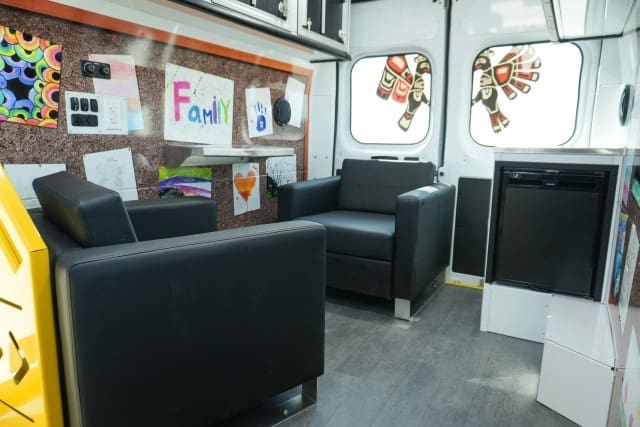
Once the funding is in place, it’s time for the fun part: picking your mobile crisis response unit. Your vehicle is the single most important tool for your mobile crisis response team. It’s a private, therapeutic space that shows your clients respect.
Over the years, we’ve learned that many organizations choose a customized van setup over larger vehicles, such as buses or RVs. Why? They give you the best of both worlds. They’re easier to drive in tight city streets, like downtown Boston, but durable enough for the back roads of rural Tennessee. Plus, they are more affordable to run than bigger vehicles.
Here are the features that make a Mobile Counseling Van an ideal fit for your mobile crisis rapid response team:
- A private meeting space: Imagine a sturdy table set between the seating areas. Counselors and clients can sit across from each other like they are in a living room, not a clinical setting. This small change enables meaningful, personal conversations from the start.
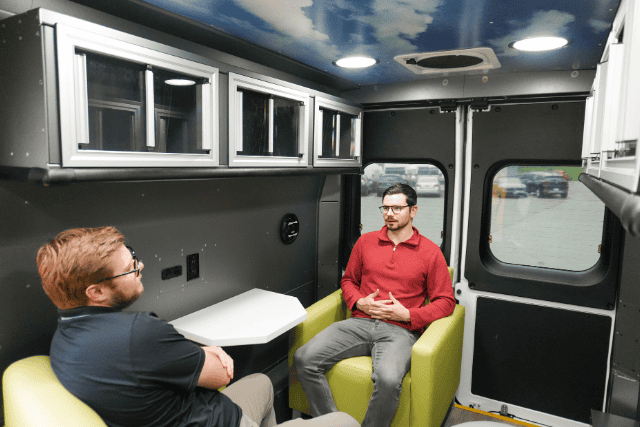
- Welcoming natural light: Having many windows, a skylight, and a large side door fills the space with sunshine. This bright, welcoming feel takes away the cold, clinical atmosphere. It instantly makes people feel calmer.
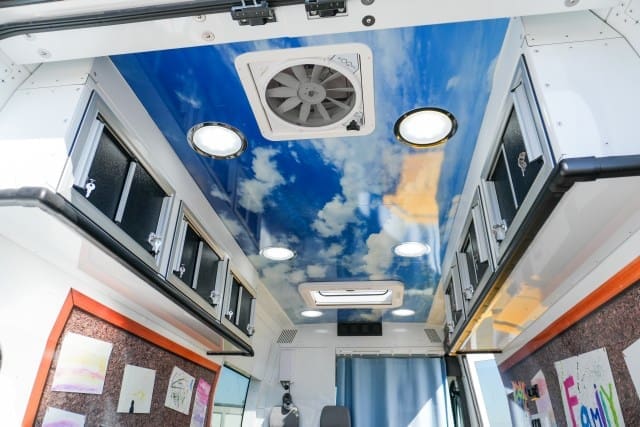
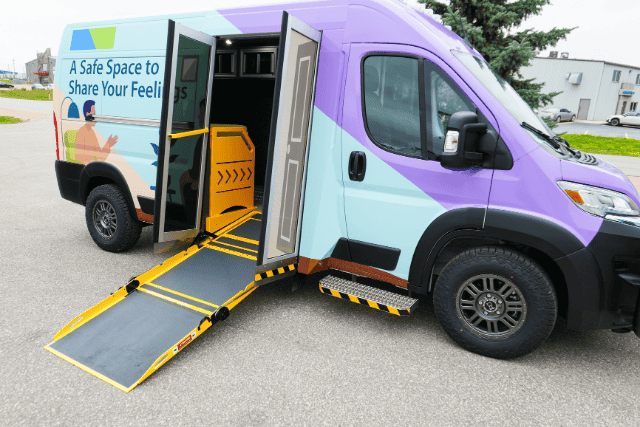
- Easy, dignified access: The van includes a side entry door and a gentle ramp. This feature makes it easy for absolutely anyone to enter and exit. This is key for people with mobility issues or those who are simply unsteady during a crisis. It avoids the wear and tear that quickly ruins standard sliding doors.
- Staying connected for care: Built-in WiFi keeps your team connected during sessions. For example, if your clinician needs to look up a local shelter or securely access a client’s health records, they can do it instantly. This makes your mobile crisis response team even more efficient.
- Safety and privacy first: Tinted windows give you the benefit of natural light while guaranteeing privacy. People outside cannot see in, but your clients and team can still see out. This creates a secure, protected bubble.

- Security monitoring: An external security system lets your team monitor the area around the vehicle. This adds an extra layer of peace of mind, especially during late-night responses.
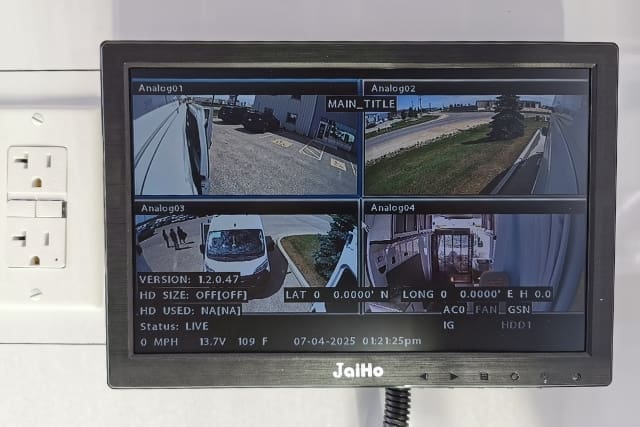
- A cozy, quiet environment: The van is fully insulated for sound and temperature. This means conversations stay private and confidential inside. It also keeps the temperature comfortable, regardless of the scorching heat in Arizona or the cold snap in Minnesota.
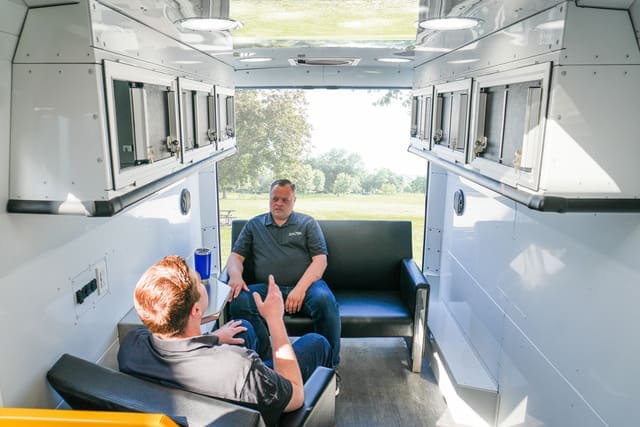
- Flexibility for community needs: The seats can be quickly taken out. This means your vehicle can pull double-duty, like transporting people to an appointment or delivering essential supplies. This makes your crisis mobile response team useful for more than just emergencies.

When you choose a vehicle that focuses on comfort, privacy, and accessibility, you’re sending a clear message to the community: we are here to help, and you matter. Now that you have the right vehicle, let’s talk about the people who will drive and staff it.
6. Who should staff our mobile crisis response team, and what training do they need?
You’ve got the funds and the vehicle, which is fantastic. Now, you need another important element: the people. Your staff is the core of your mission. The success of a mobile crisis response team hinges on having the right mix of clinical skills and lived experience. This team needs to be ready for anything, which means training is non-negotiable.
Staffing your mobile crisis response team
Most successful teams, whether they’re a mobile crisis rapid response team or a co-responder unit, use a two-person model, as we mentioned earlier, for safety and effectiveness.
- The clinician: This person is usually a Licensed Clinical Social Worker (LCSW) or another licensed mental health professional. Their job is to perform a full assessment, stabilize the person, and make a plan for ongoing care. They handle complex medical and behavioral decisions.
- The peer specialist: This team member is someone who has personally recovered from a mental health or substance use challenge. They are invaluable. Their presence builds instant trust. When someone in crisis hears, “I’ve been there, too,” it changes the entire dynamic. They offer hope and connection that a clinician alone sometimes cannot.
- The dispatcher: Don’t forget the people managing the calls! A highly trained dispatcher is essential for screening 988 calls and deciding which ones require an in-person response from your mobile crisis response teams.
What training should your mobile crisis response team have?
Your team will face high-stress situations. Standard clinical training is not enough. You must invest in specialized training that emphasizes safety and de-escalation, especially since the goal is to save lives by preventing arrests or hospitalizations.
- De-escalation techniques: This is the most crucial training. It teaches your team how to calmly lower the intensity of a crisis. This includes using a quiet voice, non-threatening body language, and giving the person space.
- Mental Health First Aid (MHFA): While clinicians have advanced training, MHFA gives the entire team a shared foundation in recognizing signs of mental distress.
- Trauma-informed care: Every response must recognize that past trauma often drives current behavior. Training in this area means your crisis mobile response team acts with compassion and avoids re-traumatizing the person they are trying to help.
- Safety protocols: Even if your model is civilian-only, your team needs to know how to assess an environment for safety risks. In rural areas, like parts of Montana, this might include training on rough terrain safety. In cities, it means understanding neighborhood dynamics.
A well-trained and balanced team is what truly makes your mobile unit a lifesaver. It’s how you ensure that when people search online for a ‘mobile crisis response team near me’, they get the absolute best care available. Once your team is ready, it is time to put your plan into action.
7. How do we successfully launch operations for our mobile crisis response team?
You’ve done the groundwork. The vehicle is here, the staff is trained, and the partnerships are strong. Now comes the exciting part: launching your operations. Getting your mobile crisis response team up and running smoothly takes careful planning. You don’t just open the doors and hope calls come in. You need a solid process to go from a crisis call to a positive resolution.
What are the three phases of a crisis response?
Launching means perfecting the flow of information and action. Every successful mobile crisis rapid response team follows three main steps for every call:
1. Dispatch and screening:
- This process begins when a call is received, either through your dedicated line or, more commonly, through the 988 Suicide & Crisis Lifeline.
- Your specialized dispatcher quickly screens the call. They must determine if an immediate in-person response is needed or if the situation can be resolved over the phone (tele-triage).
- The Goal: Quick triage ensures your mobile crisis response teams are only deployed to situations where a mobile unit is the safest, most effective tool.
2. Field response and stabilization:
- The team drives the Mobile Counseling Van to the location. Remember that vehicle choice was important because it needs to navigate fast.
- The first job is to establish safety and trust. The peer specialist often takes the lead here, using those de-escalation skills you trained them on.
- The clinician performs a comprehensive assessment. The focus is always on stabilizing the immediate crisis, not rushing to the emergency room. For instance, in remote parts of Oregon, the team might use their Starlink connection and laptop to consult with a doctor via video link, avoiding a long, unnecessary drive to the nearest hospital.
3. Follow-up and connection:
- The crisis is over, but the work is not. The team never just leaves someone and drives away. This follow-up care is what prevents repeat crises.
- The team helps connect the person directly to long-term resources, like a local food bank, housing services, or a mental health clinic.
- They might schedule a follow-up call or visit within 24 to 48 hours to ensure the connection was made. This dedication ensures the client finds permanent support.
What’s the soft launch approach?
A good recommendation is to start with a soft launch. You don’t need to jump to 24/7 service on day one. Start with a few focused hours or a specific geographic area where you identified the greatest need.
This lets your crisis mobile response team iron out any glitches in your dispatch process or communication with 988. It gives your team confidence before you tackle round-the-clock service. A measured start builds the foundation for long-term success. Now that you are on the road, you need to track how well you are actually doing.
8. Measure and refine your mobile crisis response team efforts
You’re now up and running your mobile crisis response team. That’s a huge win for your community! But the work doesn’t stop once the wheels are turning. To be a leader in accessible care, you must continually measure your actions and refine your processes. This is the difference between a temporary program and a sustainable, life-saving resource.
We understand that you feel a deep sense of responsibility to prove your value. Data is how you show your funders, partners, and community that your efforts are truly saving lives.
What metrics prove your team is saving lives?
The most effective mobile crisis response teams track specific data points. They go beyond simple numbers and focus on outcomes that show people are getting better, not just avoiding the hospital for a day.
| Key Performance Indicator (KPI) | Why it matters for your team |
| Response time | The time from dispatch to arrival. States often aim for under 60 minutes in urban areas. Faster responses mean less trauma and better safety. |
| Community resolution rate | The percentage of calls resolved right there in the community. This means the person did not need to be taken to the ED or jail. |
| ED diversion rate | The number of times your crisis mobile response team prevented a costly, unnecessary trip to the Emergency Department. This proves your financial value to the healthcare system. |
| Follow-up connection | The percentage of people you checked in with 24–48 hours later. This ensures they’re connected with long-term resources like housing or mental health clinics. |
| Law enforcement referrals | The number of times law enforcement called your team instead of using force or making an arrest. This shows your partnerships are working. |
Refining your program: Use the data to get better
Data is your roadmap to improvement. When you review your data, you should ask simple, straightforward questions:
- Response time: If your average response time is 90 minutes in a certain area, do you need to move your vehicle’s starting point? Maybe your mobile crisis response team needs a second unit focused on that specific high-need zip code.
- Repeat calls: If you see the same person or location appearing repeatedly, it indicates that the initial follow-up was unsuccessful. This points to a gap in community resources. You can then work with your community partners to fix that missing link, such as securing more short-term crisis beds.
- Team safety: Tracking safety incidents, if any, helps you refine training or change vehicle protocols. This keeps your staff safe and supported.
As you commit to measuring and refining, you’re building a system that evolves based on real-world evidence. This dedication to continuous improvement is what makes your organization a long-term leader in the industry. It proves that the vehicle you bought is a trusted solution that saves lives.
Ready to take control of the crisis and start your mobile crisis response team?
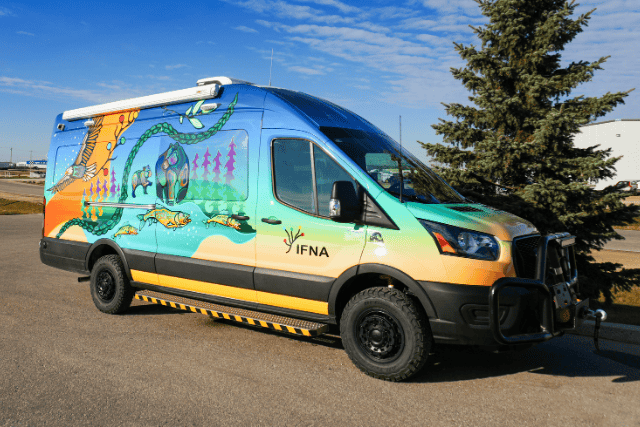
You came to this guide because you were looking for a clear, actionable plan to move beyond the traditional emergency room and police response model, seeking a dignified solution for people in crisis. After walking through these steps, you will now understand the journey from concept to full operation, learning the eight core steps that span ideation to refinement.
For years, we have been the established leaders in designing and manufacturing the exact innovative vehicles that make these critical services possible. We partner with teams like you to ensure you have the most effective and accessible tool to respond to calls and save lives, wherever the need may be.
If you’re ready to put this plan into action and discuss the vehicle that will drive your mission forward, click the button below to talk to a mobility expert.
If you are not ready to talk to a mobility expert yet, we have a few other resources you should check out to learn more:
- What are the top 5 benefits of using a mobile crisis unit in your community? This piece will reinforce the massive community impact and value of the service you are planning, strengthening your justification for the purchase.
- What is the cost of a Mobile Counseling Unit?: You’ve decided on the Mobile Counseling Van, and the next logical step is understanding what’s behind the cost.