Florida has received more than $209 million in first-year funding through the Rural Health Transformation Program (RHTP). For rural hospitals, health clinics, and community healthcare organizations, this investment creates opportunities to improve access to care.
But if you’re planning to purchase a mobile medical vehicle with these funds, there’s an important restriction you need to know.
Florida’s Rural Health Transformation Program cannot pay for the purchase of a mobile medical vehicle. However, certain technology upgrades and operational expenses associated with mobile healthcare programs may qualify.
According to the Florida Agency for Health Care Administration’s (AHCA) official RHTP FAQs, vehicle purchases are prohibited under every initiative.
That doesn’t mean mobile healthcare is excluded from the program. In fact, Mobile Health is one of Florida’s 15 approved initiatives.
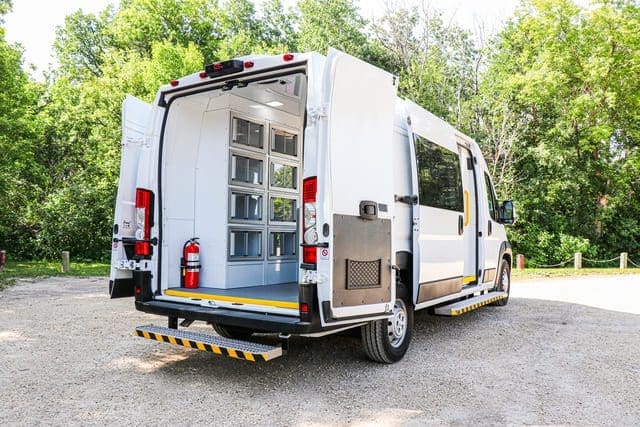
At AVAN Mobility, we’ve spent more than a decade helping healthcare organizations develop mobile medical programs that bring services closer to the people who need them. We understand how challenging it can be to secure funding, especially when you’re balancing the cost of a vehicle with the ongoing expenses of delivering care.
In this article, you’ll learn:
- How Florida’s Rural Health Transformation Program works
- Which mobile healthcare expenses may qualify for funding
- Who can apply and how to check eligibility
- How to plan your mobile clinic budget when vehicle purchases aren’t covered
What is the Florida Rural Health Transformation Program, and how does it work?
The Florida Rural Health Transformation Program is part of the federal $50 billion Rural Health Transformation Program, designed to strengthen rural healthcare across the United States over five years.
Florida’s Agency for Health Care Administration (AHCA) oversees the state’s program, which received approximately $209 million in its first annual award.
The program focuses on improving healthcare delivery in rural communities through new care models, workforce development, technology, and better coordination between healthcare providers.
Consider a rural community where residents regularly travel an hour or more for medical appointments. A local healthcare organization might want to introduce mobile health services, connect patients with remote specialists, or improve coordination with nearby hospitals.
These are examples of the kinds of healthcare access challenges the program is designed to address.
However, an eligible healthcare project doesn’t automatically make every project expense eligible. Organizations must follow Florida’s specific funding restrictions.
What are the main goals of Florida’s RHTP?
Florida organizes its 15 initiatives around five strategic goals:
1. Make Rural America Healthy Again: Improve preventive healthcare and address chronic disease.
2. Sustainable Access: Strengthen the availability of healthcare in rural communities.
3. Workforce Development: Improve healthcare workforce training and capacity.
4. Innovative Care: Support new models for delivering healthcare.
5. Technology Innovation: Improve digital health tools, connectivity, and care coordination.
The state’s initiatives include mobile health, rural and satellite clinics, community paramedicine, telehealth, remote patient monitoring, and other services.
You can review the full list on Florida AHCA’s Rural Health Transformation Program page.

Can you purchase a mobile clinic with Florida’s Rural Health Transformation Program?
No. Florida’s RHTP funds cannot be used to purchase mobile medical vehicles, even when the proposed healthcare services align with an approved initiative.
AHCA makes this restriction explicit in its April 10, 2026, FAQs.
Question 53 states that RHTP funds cannot be used to purchase a mobile vehicle. Question 47 also identifies mobile unit and vehicle purchases as prohibited expenses across every initiative.
This restriction applies even to organizations proposing mobile health services under the program’s dedicated Mobile Health initiative.
For example, imagine your organization wants to purchase a new mobile medical clinic to deliver preventive screenings in rural Florida.
Even if your proposed program supports the state’s healthcare goals, you cannot include the vehicle purchase as an RHTP-funded expense.
You would need another source of funding to purchase the vehicle.
What mobile healthcare costs may qualify for RHTP funding?
Although purchasing a mobile medical unit is prohibited, AHCA identifies certain mobile healthcare expenses that may be eligible.
| Expense | Funding eligibility |
|---|---|
| Purchasing a new mobile medical vehicle | Not eligible |
| Purchasing a used mobile medical vehicle | Not eligible |
| Purchasing a mobile stroke unit | Not eligible |
| Technology upgrades to an existing mobile unit | Potentially eligible |
| Operational and technology costs for leased units | Potentially eligible |
| Mobile healthcare program coordination and reporting | Potentially eligible |
| Clinician salaries and direct patient care | Not eligible |
| Non-medical patient transportation programs | Not eligible |
AHCA’s guidance explains that technological enhancements to existing mobile units may qualify when they are necessary, reasonable, and directly related to an approved initiative serving eligible rural communities.
Operational and technology costs associated with leased units may also qualify under applicable initiatives. However, applicants should not assume that vehicle lease payments themselves are approved without confirmation in their initiative’s funding requirements.
Examples of technology-related expenses worth evaluating include:
- Telehealth equipment for connecting rural patients with specialists
- Technology supporting remote patient monitoring
- Digital systems that improve coordination between healthcare providers
- Eligible diagnostic technology used in approved rural healthcare programs
Each expense must satisfy the applicable initiative’s requirements. Not every type of medical equipment or technology will qualify.
Before committing to an expense, confirm its eligibility with AHCA and the funding agreement for your specific initiative.
Why does Florida fund mobile health services but not vehicle purchases?
There’s an important difference between supporting mobile healthcare delivery and purchasing the vehicle used to provide it.
Florida’s Mobile Health initiative focuses on expanding preventive care, screenings, prenatal services, rehabilitation, and other healthcare services in areas where access is limited.
The program can support qualifying activities associated with those goals without paying for vehicle ownership.
For organizations interested in expanding mobile healthcare, this creates two separate funding questions:
How will we acquire the vehicle? This requires another capital funding source or a separately financed arrangement.
How will we support eligible program activities? Certain costs may qualify for RHTP funding if approved under the relevant initiative.
Understanding that distinction can prevent your organization from developing a grant budget around an expense that Florida will not reimburse.
Who is eligible for Florida Rural Health Transformation Program funding?
Florida’s RHTP serves eligible rural communities, but eligibility isn’t determined only by where your organization’s headquarters are located.
AHCA explains that eligibility is based on the rural areas receiving services.
This means an organization located in a larger city may potentially qualify if it proposes to serve communities that meet Florida’s approved rural eligibility criteria.
Likewise, being located in a traditionally rural county doesn’t automatically guarantee funding.
Applicants must document that their proposed service areas qualify through one or more of Florida’s designated rural eligibility pathways.
Organizations that may be involved in eligible projects include rural hospitals, Federally Qualified Health Centers, healthcare clinics, community health organizations, municipalities, and qualifying partner organizations. Eligibility varies by initiative and application structure.
How can you tell if your organization is a good fit?
Before preparing a funding proposal, consider four questions:
| Question | Why it matters |
|---|---|
| Does your service area meet Florida’s rural eligibility requirements? | You must document that your program will serve qualifying communities. |
| Does your project align with an approved RHTP initiative? | Funding can only support activities authorized under the program. |
| Are your proposed expenses allowable? | Vehicle purchases and several other cost categories are prohibited. |
| Can your organization support the program over time? | Applicants must demonstrate operational capacity and a five-year sustainability plan. |
For example, a healthcare organization with an existing mobile clinic might propose adding qualifying telehealth technology to improve access to specialists.
That proposal may align with RHTP goals, assuming it meets all applicable requirements.
However, an organization whose only objective is purchasing a new mobile medical van would need to explore another funding opportunity for that purchase.
How can you apply for Florida Rural Health Transformation Program funding?
Florida administers RHTP funding through state-level application and procurement processes rather than through direct applications to the federal government.
AHCA uses Requests for Applications (RFAs) for approved initiatives and groups certain initiatives into larger funding bundles.
The Mobile Health initiative is included in the Preventive Care & Care-at-Home Bundle, alongside community paramedicine, remote patient monitoring, on-site pharmacy services, and health information exchange activities.
AHCA’s April 2026 guidance states that organizations applying for this bundle must address all required components rather than applying for Mobile Health separately as a standalone initiative.
The state’s RHTP website also reports that first-year subawardees have been selected. Organizations interested in future opportunities should review current announcements rather than relying on the original application timeline.
Steps to prepare for a funding opportunity
1. Review Florida’s official RHTP website. Check the current announcements, funding opportunities, and initiative guidance.
2. Confirm rural eligibility. Identify the specific communities your program would serve and collect the required documentation.
3. Identify an eligible initiative. Determine which initiative or bundle aligns with your proposed healthcare services.
4. Separate eligible and prohibited expenses. Keep vehicle acquisition costs outside your RHTP funding request.
5. Build your program plan. Document the healthcare needs you’re addressing, your proposed partners, expected outcomes, and long-term sustainability.
6. Review the current application requirements. Confirm deadlines, procurement procedures, partnership documentation, and allowable costs before submitting.
For current funding opportunities and application guidance, visit the Florida Rural Health Transformation Program website.
What if you need funding to purchase a mobile medical vehicle?
If your primary goal is buying a mobile medical vehicle, Florida’s RHTP is not the right funding source for that purchase.
However, other funding approaches may help your organization move forward.
Explore grants that allow vehicle purchases
Healthcare organizations can research federal, state, local, and private grants with capital expenditure provisions that explicitly permit purchasing mobile medical vehicles.
Eligibility depends on the specific funding program. Some grants support healthcare equipment but exclude vehicles, while others may permit mobile healthcare assets.
Our guide to securing grants for mobile health clinics can help you understand the grant research and application process.
Consider partnerships and capital fundraising
Some organizations acquire mobile medical vehicles by combining several funding sources.
For example, a rural health program might use a charitable contribution or an eligible capital grant to purchase a vehicle, then separately apply for RHTP funding to support qualifying technology or coordination activities.
A partnership with a hospital, foundation, or community organization may also provide access to resources that aren’t available through RHTP.
The important consideration is to maintain clear budgets and avoid charging the same costs to multiple funding sources.
Plan for both the vehicle and its operating costs
Before selecting a mobile medical unit, estimate the full cost of operating the program.
That includes vehicle acquisition, medical equipment, insurance, maintenance, staffing, fuel, technology, and other ongoing expenses.
Not all these costs will qualify for grant support, but understanding them will help you determine how much funding your organization needs.
For help estimating acquisition expenses, read our article on how much a mobile medical unit costs in the U.S.
What impact could Florida’s RHTP have on rural mobile healthcare?
Although the program cannot purchase mobile medical vehicles, it may still help eligible organizations strengthen healthcare delivery in underserved communities.
For example, a rural healthcare provider that already owns a mobile clinic might apply for support to add eligible technology that improves communication with specialists.
Another organization could participate in a qualifying mobile health program using a leased vehicle, with certain approved operational or technology expenses supported through RHTP.
In both cases, the goal is to make healthcare more accessible without assuming the grant covers every expense.
Florida’s Rural Health Transformation Program also encourages collaboration, which could help organizations coordinate services across rural communities.
The potential impact will depend on how funded programs are implemented, what services they provide, and whether they can remain sustainable after the funding period.
How should you move forward with a mobile healthcare program in Florida?
If you’re considering a mobile medical unit, the first step is to separate your vehicle funding strategy from your healthcare program funding strategy.
Florida’s RHTP may support certain activities that improve rural healthcare access, but it cannot cover the purchase of your mobile medical vehicle.
Before proceeding, remember these three points:
- Florida’s RHTP prohibits mobile vehicle purchases across all initiatives.
- Eligible technology enhancements and some operational costs associated with mobile healthcare may qualify.
- Your organization needs to confirm rural eligibility, initiative requirements, and allowable expenses before building its funding proposal.
At AVAN Mobility, we work with healthcare organizations to understand their patient needs, service models, and vehicle requirements.
Whether you’re developing a new mobile clinic or expanding an existing program, we can help you evaluate the vehicle options that fit your goals and establish a realistic acquisition budget.
Talk with an AVAN Mobility expert to discuss your mobile healthcare program and the vehicle options available.
Recommended next reads
- How Much Does a Mobile Medical Unit Cost in the U.S. in 2026? — Understand the expenses involved in purchasing and operating a mobile medical unit.
- AVAN Mobility Learning Center — Explore additional resources covering mobile healthcare funding, planning, and vehicle selection.
- Florida’s Rural Health Transformation Program — Review official state funding information, program guidance, and announcements.
FAQ about the Florida Rural Health Transformation Program
Q: Can Florida’s Rural Health Transformation Program pay for a mobile medical vehicle?
A: No. Florida’s AHCA explicitly prohibits purchasing mobile medical vehicles with RHTP funds, regardless of the initiative. Organizations must use another funding source to purchase a vehicle.
Q: Can RHTP funding support an existing mobile clinic?
A: Yes, certain technology enhancements to existing mobile clinics may qualify. The expenses must be necessary, reasonable, and directly connected to an approved initiative serving eligible rural communities.
Q: Can RHTP funds pay for leasing a mobile medical unit?
A: AHCA states that certain operational and technology costs associated with leased mobile units may qualify. However, applicants must confirm whether vehicle lease payments are allowable under their specific initiative.
Q: Which Florida counties qualify for Rural Health Transformation Program funding?
A: Eligibility depends on the approved rural service area, which may be defined using counties, communities, ZIP codes, or census tracts. Organizations must document eligibility using Florida’s approved rural eligibility pathways.
Q: Can RHTP funds pay healthcare staff salaries?
A: Florida’s RHTP prohibits using funds for clinician salaries and direct patient care services. Certain non-clinical administrative activities, such as approved program reporting and oversight, may qualify subject to program requirements.
Q: Is Florida’s Rural Health Transformation Program still accepting applications?
A: AHCA reports that first-year subawardees have been selected. Organizations should check the official program website for future opportunities, current procurement announcements, and any remaining application options.
Q: Where can I confirm whether my mobile healthcare expenses qualify?
A: Review AHCA’s current initiative guidance and contact the Florida Rural Health Transformation Program at RH**@************da.com for clarification before including uncertain expenses in your proposal.