A mobile vaccine clinic can make the difference between a family getting vaccinated close to home or going without care altogether. In many parts of the U.S., people still face long drives, missed work, transportation problems, or a lack of nearby healthcare providers. Rural vaccine rates remain much lower than urban areas.
In fact, CDC data found that COVID-19 vaccination rates in rural counties were 58.5% compared to 75.4% in urban counties. That gap leaves people more at risk and creates more pressure on healthcare systems, schools, and community programs. A mobile immunization clinic helps close that gap by bringing care directly to neighborhoods, schools, workplaces, senior centers, and rural towns.
At AVAN Mobility, we’ve spent more than 10 years helping organizations remove barriers to healthcare with mobile medical vehicles. We’ve built more than 180 mobile medical units across North America and worked with organizations like the Community Clinic of Southwest Missouri and Pacific Clinics. We’re also proud to hold both Ford Pro and Stellantis certifications. We know there are other manufacturers out there, so this article is meant to help you make the right choice for your organization.
After reading this article, you’ll have a better idea of how to set up a mobile vaccine clinic that works for your team and the people you serve.
What features should your mobile vaccine clinic setup include?
Once you know where your mobile vaccine clinic will operate, the next step is deciding what should go inside it. The setup inside your vaccine mobile clinic affects how many people you can serve, how safe your vaccines stay, and how smoothly your team can work during long clinic days.
One of the first and most important features to think about is refrigeration.
1. Fridge

A medical-grade fridge is one of the most important parts of any mobile immunization clinic. Vaccines are sensitive. If they get too warm or too cold, they can lose their strength and may no longer work properly.
The CDC says most refrigerated vaccines should be stored between 36°F and 46°F (2°C and 8 °C). The ideal temperature is around 40°F or 5°C. Some vaccines can even be damaged if they freeze by accident.
That means your vaccine mobile van needs more than a household cooler with ice packs tossed inside. Your mobile vaccine clinic should have a medical fridge designed to keep a stable temperature all day, even if you’re driving through hot weather in Texas, parked at a school in Florida, or working in a rural area of Arizona.
A fridge inside your immunization mobile clinic also helps your team:
- Keep vaccines fresh and safe
- Carry enough doses for busy clinic days
- Reduce waste from spoiled vaccines
- Stay compliant with CDC vaccine storage rules
- Track fridge temperatures with digital monitors
Example: If your mobile immunization clinics plan to visit schools during flu season, your team may need hundreds of doses on board. A proper fridge gives you the space and temperature control to keep those vaccines ready to use.
Without reliable refrigeration, a mobile immunization setup can quickly run into safety, compliance, and cost problems.
Learn how the fridge works in your mobile clinic.
2. Sink

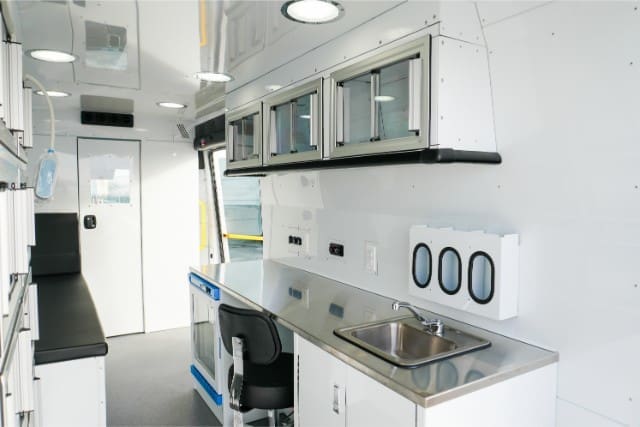
A sink may not sound exciting, but it’s one of the most important features inside a mobile vaccine clinic. Your staff need a clean place to wash their hands before and after giving vaccines, cleaning equipment, or helping patients.
Hand washing is one of the best ways to stop germs from spreading. Washing your hands with soap and water helps lower the spread of viruses and bacteria that can make people sick. In a mobile immunization clinic, your team may see dozens or even hundreds of people in a day. Without a sink, it becomes much harder to keep the space clean and safe.
A sink inside your vaccine mobile clinic can help your staff:
- Wash hands between patients
- Clean small medical tools and surfaces
- Fill water bottles or clean up spills
- Stay compliant with health and safety guidelines
- Create a cleaner, more professional space
Many mobile immunization clinics include a small handwashing station with running water, soap, paper towels, and a waste bin nearby. Some vaccine mobile units also include foot-pump sinks or touch-free faucets to lower the spread of germs.
Example: If your vaccine mobile van is parked outside a school during flu season, your staff may be giving vaccines to students all day long. A sink gives your team a quick and easy way to stay clean between each patient.
It may seem simple, but a sink helps your mobile immunization setup run smoothly while helping protect both staff and patients.
Learn how the sink works in your mobile clinic.
3. Patient bed with under-bed storage

A patient bed gives people a safe and comfortable place to sit or lie down during their visit. Many people do fine sitting in a chair for a vaccine, but some patients may feel dizzy, nervous, or lightheaded afterward. That is especially true for children, older adults, or people with a fear of needles.
A patient bed inside your mobile vaccine clinic gives your staff a place to monitor patients for a few minutes after their shot if needed. It can also help if someone feels faint or needs a little extra time before leaving. In a mobile immunization clinic, having that extra level of comfort can make the whole experience feel calmer and less stressful.
Under-bed storage is just as important. Space inside a vaccine mobile clinic is limited, so every inch matters. Storage built under the bed gives your team a place to keep supplies close by without making the vehicle feel crowded.
A patient bed with under-bed storage can help your mobile immunization clinic:
- Give patients a place to rest if they feel faint
- Support children, seniors, or nervous patients
- Store extra gloves, masks, syringes, and paperwork
- Keep medical supplies organized and easy to reach
- Reduce clutter inside the vaccine mobile van
Example: If your immunization mobile clinic is parked at a community center during a flu shot event, your staff may need quick access to extra supplies while also helping someone who feels lightheaded after their vaccine.
A patient bed with storage helps your mobile vaccine clinic stay organized while making patients feel more comfortable and cared for.
4. Floor-to-ceiling cabinetry

Storage can make or break your mobile vaccine clinic. Your team needs room for vaccines, syringes, gloves, paperwork, PPE, cleaning products, sharps containers, and other supplies. Without enough storage, your space can quickly become messy and hard to work in.
Floor-to-ceiling cabinetry helps your mobile immunization clinic stay organized from top to bottom. Tall cabinets use vertical space that would otherwise go unused. That means you can fit more supplies into your vaccine mobile clinic without taking away valuable room for staff or patients.
Cabinetry also helps keep important items secure while the vehicle is moving. Loose supplies can slide, fall, or become damaged on the road. Closed cabinets with locking doors help protect your equipment and make it easier for your team to find what they need quickly.
Floor-to-ceiling cabinetry can help your vaccine mobile van:
- Store medical supplies in one place
- Keep vaccines and PPE organized
- Reduce clutter around patient areas
- Protect supplies during travel
- Make cleaning easier at the end of the day
Example: If your mobile immunization clinics are traveling between schools, churches, and community centers in one day, your staff may need quick access to different supplies at each stop. Tall cabinets help keep everything organized and within reach.
A well-organized immunization mobile clinic feels calmer, safer, and easier to use. Floor-to-ceiling cabinetry helps your team spend less time searching for supplies and more time helping patients.
5. Office desk space

Office desk space gives your team a place to handle the work that happens before and after each vaccine. In a mobile vaccine clinic, staff often need room for laptops, patient forms, clipboards, printers, vaccine records, and scheduling tools.
Without a proper desk area, paperwork can pile up fast. Staff may end up using countertops, patient seating areas, or their laps to complete forms. That can slow things down and make the inside of your mobile immunization clinic feel crowded and disorganized.
A built-in desk gives your team a clean and dedicated workspace. It also helps create a better flow inside the vaccine mobile clinic by separating patient care areas from administrative tasks.
Office desk space inside your immunization mobile clinic can help your team:
- Complete patient intake forms
- Enter vaccine records into electronic systems
- Schedule follow-up appointments
- Print consent forms or vaccine cards
- Store laptops, tablets, and office supplies
Example: If your vaccine mobile van is parked outside a workplace flu clinic, staff may need to check in employees, confirm appointments, and update records throughout the day. A desk gives them a space to do that quickly and accurately.
Many mobile immunization clinics also include storage drawers or overhead cabinets near the desk area. That gives staff easy access to forms, pens, chargers, and other office supplies without taking up more room.
A desk may seem simple, but it helps your mobile immunization setup stay organized and keeps the day running more smoothly.
6. Rear heat and air conditioning

Rear heat and air conditioning help keep your mobile vaccine clinic comfortable for both patients and staff. People may spend time waiting inside before or after their vaccine, and if the space is too hot or too cold, the experience can quickly become unpleasant.
Temperature control also matters for your staff. Nurses, outreach workers, and administrative team members may spend long days inside the vaccine mobile clinic. If the inside of the vehicle feels stuffy, freezing, or humid, it can make the day harder and slow down your workflow.
Rear heat and air conditioning can help your mobile immunization clinic:
- Keep patients comfortable while waiting
- Create a better work environment for staff
- Help children, seniors, and vulnerable patients feel more at ease
- Reduce humidity inside the vehicle
- Support year-round use in different climates
Some parts of the U.S. may need stronger heating or cooling systems than others. If your vaccine mobile van will operate in states like Texas, Arizona, Florida, or Nevada, a higher-capacity air conditioning system may be worth considering. Summer temperatures in cities like Phoenix or Houston can climb above 100°F, and a standard factory air conditioning system may struggle to keep the rear of the vehicle cool.
On the other hand, if your mobile immunization clinics will operate in colder states like Minnesota, North Dakota, or Maine, extra rear heat can help keep patients comfortable during winter clinics.
Example: If your immunization mobile clinic is running a back-to-school vaccine event in Texas during August, strong rear air conditioning can make the difference between a comfortable visit and a very sweaty one.
7. Overheard storage

Similar to floor-to-ceiling cabinetry, overhead storage helps your mobile vaccine clinic stay clean, organized, and easy to work in. When space is limited, using the upper walls for storage gives your team more room to move around without clutter building up on counters or floors.
A mobile immunization clinic often carries a lot of supplies. Staff may need gloves, masks, forms, clipboards, vaccine records, syringes, cleaning products, and extra PPE throughout the day. If those items are left out in the open, the space can quickly feel cramped.
Overhead storage gives your vaccine mobile clinic a place to keep those items nearby but out of the way. It also helps protect supplies while the vehicle is moving between stops.
Overhead storage can help your mobile immunization clinic:
- Keep supplies organized and easy to reach
- Store patient forms and vaccine records
- Reduce clutter on desks and countertops
- Protect equipment during travel
- Make the inside of the vehicle feel larger
Many vaccine mobile units include overhead cabinets above desks, patient areas, or workstations. Some also use clear labels on cabinet doors so staff can quickly find what they need during busy clinic days.
Example: If your vaccine mobile van is traveling between several schools in one day, your team may need quick access to forms, gloves, and extra supplies between each stop. Overhead storage helps keep everything in its place without slowing the team down.
A well-organized immunization mobile clinic feels calmer for staff and more welcoming for patients.
8. Exterior awning

An exterior awning gives people a dry and shaded place to stand outside your mobile vaccine clinic. This can make a big difference if you’re running a busy vaccine event where people are waiting in line outside the vehicle.
Many mobile immunization clinics serve large groups at schools, community centers, workplaces, churches, or public events. During these clinics, people may need to wait outside before entering the vehicle. Without an awning, patients could end up standing in the hot sun, rain, snow, or wind.
An awning helps create a more comfortable and welcoming experience. It also gives your team more flexibility to use folding tables, chairs, and check-in stations outside the vaccine mobile clinic.
An exterior awning can help your mobile immunization clinic:
- Give patients shelter from rain and sun
- Create a shaded waiting area
- Support outdoor registration tables
- Make long clinic days more comfortable
- Help patients feel more welcomed when they arrive
This can be especially helpful in states with hot weather, like Florida, Texas, Arizona, and Georgia, where patients may be waiting outside in strong sun for long periods. It can also help in rainy areas like the Pacific Northwest, where a sudden downpour can quickly leave people soaked.
Example: Imagine your vaccine mobile van is parked outside a school for an all-day flu shot clinic. Halfway through the morning, it starts raining. Without an awning, parents, students, and staff could end up standing outside in wet clothes while waiting for their turn.
A simple feature like an awning can make your immunization mobile clinic feel much more comfortable, organized, and prepared for real-world conditions.
9. Privacy curtain

A privacy curtain helps patients feel more comfortable inside your mobile vaccine clinic. Even though vaccines are quick, some people still want a little privacy during their appointment.
This can be especially important for children, teens, seniors, or people who feel nervous around needles. A privacy curtain gives them a more personal space while they get their vaccine or speak with staff.
A curtain can also help separate different parts of the vaccine mobile clinic. For example, one patient could be checking in while another receives their vaccine behind the curtain. This helps the clinic move faster while still respecting each person’s comfort.
A privacy curtain can help your mobile immunization clinic:
- Give patients a more private experience
- Help nervous patients feel calmer
- Separate treatment areas from waiting areas
- Support conversations about medical history
- Create a more professional setup
Many mobile immunization clinics use privacy curtains around the patient bed or vaccine station. These curtains are easy to open and close and do not take up much space.
Example: If your vaccine mobile van is serving students at a high school, some teens may feel embarrassed or anxious about getting a shot in front of their classmates. A privacy curtain helps them feel more relaxed and respected.
A little privacy can go a long way in helping people feel safe and comfortable during their visit.
10, Wipe-clean surfaces

Wipe-clean surfaces help your mobile vaccine clinic stay clean throughout the day. Staff may need to disinfect counters, patient beds, tables, cabinet handles, and workstations between patients.
A mobile immunization clinic can serve a large number of people in a short amount of time. During busy flu clinics, school vaccine events, or community health days, staff may be cleaning surfaces dozens of times throughout the day.
Surfaces made from materials like stainless steel, laminate, or solid surface countertops are much easier to disinfect than fabric or textured materials. They can be wiped down quickly with cleaning products between patients without slowing down the clinic.
Wipe-clean surfaces can help your vaccine mobile clinic:
- Support faster cleaning between patients
- Reduce the spread of germs
- Keep the clinic looking professional
- Protect surfaces from damage over time
- Make long clinic days easier for staff
The Centers for Disease Control and Prevention recommends cleaning and disinfecting high-touch surfaces often in healthcare settings. This includes counters, tables, door handles, and exam areas.
Example: If your vaccine mobile van is giving flu shots at a busy community center, your team may need to clean the patient area after every appointment. Wipe-clean surfaces help them do that quickly, so the next patient can come in right away.
Easy-to-clean materials help your immunization mobile clinic stay safer, cleaner, and ready for the next patient.
Interested in planning your mobile vaccine clinic?
You came to this article because you want to bring vaccines closer to the people who need them. You may be trying to reach rural communities, busy schools, workplaces, seniors, or families who cannot easily get to a clinic on their own.
After reading this article, you now have a better idea of what a strong mobile vaccine clinic setup can look like.
- A medical fridge keeps vaccines safe and effective
- A sink supports handwashing and cleanliness
- A patient bed helps people feel more comfortable
- Storage solutions keep supplies organized
- Rear heat and air conditioning help with year-round comfort
- An awning and privacy curtain improve the patient experience
- Wipe-clean surfaces make cleaning between patients easier
Our team at AVAN Mobility has spent over a decade helping healthcare organizations, nonprofits, counties, tribes, and community programs create mobile medical solutions that fit their goals. Every mobile immunization clinic is different. A rural clinic in Montana may need a very different setup than a vaccine mobile clinic serving neighborhoods in Los Angeles or Houston.
That’s why we focus on listening first and helping you build a mobile vaccine clinic around the way your team works. We believe that better access to healthcare can save lives, strengthen communities, and make care feel more human. If you have questions, click the button below to talk to a mobility expert.
If you’re not ready to talk to a mobility expert yet, we have a few other resources you should check out to learn more.
Recommended next reads
- How much does a mobile medical unit cost? Learn about the cost ranges you can expect for a mobile vaccine clinic.
- Your guide to mobile medical van service: You might be wondering what happens if your mobile clinic breaks down. Learn all about that here.