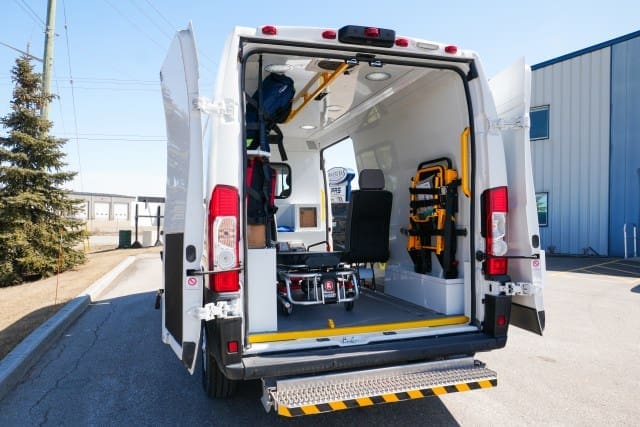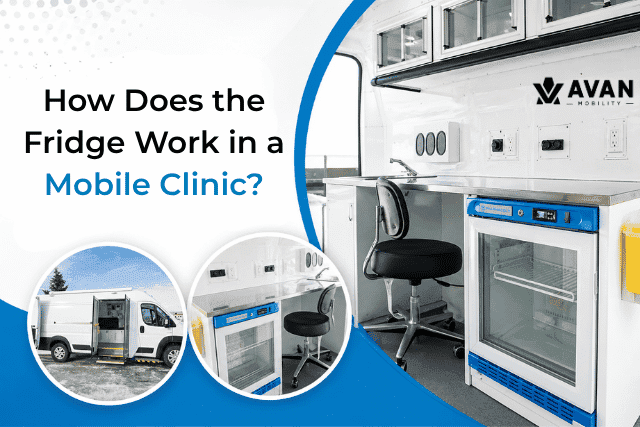
A mobile clinic fridge can feel like a small detail until you lose vaccines, medications, or test samples because the temperature changes during a long drive, a power outage, or a hot day in Texas or Arizona. The CDC says vaccines stored outside the proper range can lose potency and become unusable. If you’re planning a mobile clinic or any type of mobile medical unit that includes a fridge, that can mean lost money, delayed care, and frustrated patients. You already have enough on your plate. The last thing you need is to second-guess whether your fridge is doing its job.
At AVAN Mobility, we’ve spent more than 10 years helping healthcare teams across the U.S. remove barriers to care with mobile medical units that save lives. We’ve built more than 180 mobile medical units and worked with organizations like yours and the Community Clinic of Southwest Missouri. We hold Ford Pro Upfitter certification and QPro certification. We know we’re not the only manufacturer out there, but we do know how much reliable refrigeration matters when you’re delivering mobile healthcare in the real world.
In this article, you’ll learn:
- How to use a Norcold mobile clinic fridge
- How to use a Pharmacold vaccine fridge
How do you use the Norcold standard mobile clinic fridge?

A Norcold mobile clinic fridge is fairly simple to use once you know what to check first. In your mobile clinic, mobile health unit, or mobile medical van, the goal is to confirm power is getting to the fridge, make sure it’s actively running, and then set it to the right cooling level for the day.
How do you turn on the Norcold mobile clinic fridge step by step?
Before you load anything into the mobile clinic fridge, walk through this quick startup process:
1. Check the main inverter knob: Make sure it is in the ON position.
2. Check the breakers: Make sure all related breakers are ON.
3. Check the digital display: Confirm the system is powered and showing the correct setpoint and that the fridge is operating properly.
4. Open the fridge and check the thermostat dial: The Norcold thermostat runs from 1 to 5.
5. Set the thermostat for your day: In most cases, 3 is the best everyday setting.
6. Let the fridge cool down before loading it: Give it time to reach temperature before placing supplies inside.
7. Load items with space around them: Air needs room to move so the whole fridge cools evenly.
That startup check can save you a lot of headaches. If you’re heading out in a mobile health clinic for a full day of outreach, the last thing you want is to arrive on site and realize the fridge never had power in the first place.
What do the thermostat settings mean on a Norcold mobile clinic fridge?
Once power is confirmed, the main control you’ll use is the thermostat dial.
The Norcold fridge uses a simple number system:
1: Warmest setting
3: Best for most daily use
5: Coldest setting
OFF: Full counterclockwise position when the fridge is not in use
For most mobile clinics, setting 3 is the sweet spot. It keeps the fridge cool without putting extra strain on the battery. If you need the fridge colder for a short stretch, like cooling ice packs before a long route in Arizona or Texas, you can turn it closer to 5. After that, it’s smart to bring it back down to 3 so you don’t drain power faster than needed.
If your mobile clinic van will be parked for an extended period, turn the thermostat to OFF. That helps avoid unnecessary battery drain while the mobile medical unit is not in use.
How should you prepare the Norcold mobile clinic fridge before loading supplies?
After startup, give the fridge a little time to cool before loading it. That part matters more than people think. If you place room-temperature items into a warm fridge right away, the unit has to work harder, and it takes longer for everything inside to cool down properly.
A few simple habits make day-to-day use easier:
- Pre-cool the fridge: Turn it on before your route starts.
- Leave space between items: Airflow helps the whole cabinet cool evenly.
- Keep the door closed as much as possible: Every opening lets warm air in.
- Avoid loading hot items: Let them cool first.
- Keep the freezer plate area clear: That helps the fridge do its job.
Picture a mobile pediatric clinic heading out for a school visit in rural Oklahoma. The team loads drinks, snacks, and basic supplies first thing in the morning. If the fridge was already running and cooled down, everything starts off on the right foot. If it wasn’t, the fridge spends the first part of the trip trying to catch up.
That’s why a short pre-check and pre-cool routine helps your mobile healthcare team stay ahead of problems instead of reacting to them later.
How do you keep the Norcold mobile clinic fridge running properly on the road?
One of the biggest challenges in a mobile medical vehicle is power. Your Norcold mobile clinic fridge depends on the battery when you’re driving and shore power when you’re plugged in.
If the battery charge gets too low, the cooling performance drops. That means the inside of the fridge may slowly warm up without making a big fuss about it. In a mobile healthcare vehicle, that’s not something you want to find out after a full day on the road.
The Norcold manual recommends keeping the thermostat at 3 when the ambient temperature is between 70°F and 90°F. That gives you a solid balance between cooling and battery use. Leaving it at 5 all the time might feel safer, but it can drain the battery faster.
A few good habits help here, too:
- Check battery charge regularly: Weak batteries reduce fridge performance.
- Use shore power when parked: Overnight charging helps a lot.
- Turn the setting back down after extra cooling: Use 5 when needed, not forever.
- Avoid quick charging with the thermostat on: Quick chargers should only be used when the thermostat is OFF.
The fridge also has an overheat shut-off feature. If the power module gets too hot, the unit will shut off automatically and restart once it cools down. That helps protect the compressor, especially in very hot weather.
How do you clean and defrost a Norcold mobile clinic fridge?
As you use the Norcold mobile clinic fridge, frost will build up on the freezer plate. A little frost is normal. Too much frost reduces cooling performance, so you’ll need to defrost it as needed.
Here’s the manual’s basic defrost process:
- Turn the thermostat to OFF
- Remove all food and supplies
- Place dry towels inside to catch extra water
- Put trays of hot water inside until the frost melts
- Empty the drip tray
- Remove wet towels and dry the inside
- Turn the thermostat back to your desired setting
- Reload the fridge
Never use sharp tools, a hair dryer, or a heat gun to speed things up. That can damage the interior.
Cleaning is best done right after defrosting. Wash the inside and the door gasket with warm water and mild dish soap, rinse it, and dry it well. Avoid abrasive cleaners or scouring pads. The manual also recommends adding a thin layer of petroleum jelly to the hinge side of the gasket to keep it soft and help prevent it from rolling.
That kind of routine maintenance may not be glamorous, but it keeps your mobile clinic working the way it should. And when your day is built around helping people access care, dependable equipment makes a real difference.
How do you use the Pharmacold vaccine fridge?

A Pharmacold vaccine fridge is different from a standard mobile clinic fridge because it’s built specifically for vaccines, medications, and other temperature-sensitive products.
If the temperature goes too low, vaccines can freeze and lose effectiveness. If the temperature gets too high, they can spoil. That can mean wasted inventory, canceled appointments, and patients needing to come back for another dose. In a busy mobile healthcare program, that is a headache nobody wants.
The Pharmacold fridge is factory set to 5°C, with a low alarm at 2°C and a high alarm at 8°C. That range is designed to keep vaccines safe for daily use in a mobile medical clinic or mobile health van.
How do you turn on the Pharmacold vaccine fridge step by step?
Before loading vaccines into your mobile clinic fridge, start with a quick setup check:
1. Check the main inverter knob: Make sure it is in the ON position.
2. Check all breakers: Confirm all breakers tied to the fridge are ON.
3. Plug the fridge into power: The Pharmacold fridge should be connected to its dedicated power source.
4. Check the digital display: The front panel should light up and show the internal temperature.
5. Confirm the setpoint: Most Pharmacold vaccine fridges are factory set to 5°C.
6. Wait for the fridge to cool: Let it reach temperature before loading vaccines.
7. Check the alarm icons: Make sure there are no active door, power failure, high temperature, or low temperature alarms.
8. Load vaccines with space around them: Airflow is important for even cooling.
When you first plug the fridge in, the display shows the current internal temperature. As the fridge cools, the displayed number slowly decreases until it reaches the setpoint.
If your mobile health unit has been parked overnight in a hot place like Arizona, Florida, or Southern California, it may take longer for the fridge to cool. That’s why it helps to power the mobile clinic van before your route begins.
What do the display symbols and alarms mean on a Pharmacold vaccine fridge?
The digital display does more than show temperature. It also tells you what the fridge is doing in real time.
Some of the main display symbols include:
- Set symbol: Shows you are adjusting settings.
- Snowflake symbol: Means the fridge is actively cooling.
- Defrost symbol: Shows the fridge is in defrost mode.
- Fan symbol: Means the internal fan is running.
- Door symbol: Shows the cabinet door is open.
- Power outage symbol: Warns of a power interruption.
- Drip symbol: Means the fridge is in defrost drip mode.
This is one of the biggest differences between a standard mobile clinic fridge and a Pharmacold vaccine fridge. The Norcold fridge is fairly basic. The Pharmacold fridge constantly monitors itself and gives you alerts if something is wrong.
The built-in alarms can warn you about:
- High temperatures
- Low temperatures
- Door left open
- Power failures
- Sensor issues
- Low battery conditions
For example, if someone leaves the door slightly open during a mobile health screening event in rural Texas, the door alarm can warn your team before the temperature starts climbing too much.
How do you adjust the temperature on a Pharmacold vaccine fridge?
Most mobile clinics leave the Pharmacold vaccine fridge at its factory setting of 5°C. That temperature is right in the middle of the recommended 2°C to 8°C range for vaccine storage.
If you need to check or adjust the setpoint:
1. Press the Set button for 3 seconds.
2. The display will show the code “ST”.
3. Press Set again to view the current set temperature.
4. Use the up or down buttons to raise or lower the setting.
5. Wait a few seconds for the display to save automatically.
Most teams should avoid changing the setting unless there is a good reason. A lower setting can risk freezing vaccines. A higher setting can risk spoilage.
The Pharmacold manual also includes administrator settings for deeper controls, but those should only be changed by a qualified technician or with technical support on the phone. Accidentally changing those settings can affect how the fridge performs in your mobile medical vehicle.
Pharmacold also recommends using a traceable min/max glycol thermometer inside the fridge. That gives you a second way to confirm temperatures and can help during power failures or unexpected alarms.
How do you load vaccines inside a Pharmacold vaccine fridge?
How you load the fridge matters almost as much as the temperature itself.
Vaccines should never be packed tightly against the walls, cooling vents, or fans. The Pharmacold fridge uses forced air cooling, so it needs open space for air to move around inside.
A few good habits can help:
- Leave space between vaccine boxes: Air needs room to circulate.
- Keep products away from the walls: The coldest spots are usually near the back.
- Avoid blocking the fan area: Airflow is what keeps temperatures even.
- Keep the door closed as much as possible: Warm air enters every time it opens.
- Organize shelves clearly: That helps your team find items faster.
Imagine a mobile pediatric clinic during flu shot season. If vaccine boxes are stacked too tightly, some areas of the fridge may stay colder or warmer than others. A little spacing can help the entire mobile healthcare unit run more smoothly.
How do you clean and maintain a Pharmacold vaccine fridge?
The Pharmacold vaccine fridge has automatic defrost, so you do not need to manually scrape frost or use hot water trays as you would with a standard mobile clinic fridge.
Even though it has auto defrost, it still needs regular cleaning.
The manual recommends:
- Disconnect power before cleaning
- Use mild cleaners only
- Avoid abrasive pads or harsh chemicals
- Wipe all surfaces dry after cleaning
- Vacuum dust from the condenser regularly
- Keep the front ventilation grille clear
- Have qualified technicians complete repairs or major maintenance
Dust buildup on the condenser is one of the biggest long-term issues. If the condenser gets dirty, the fridge has to work harder to stay cold. Over time, that can damage the refrigeration system and shorten the life of the unit. The manual recommends cleaning dust buildup at least once a month.
What should you do if the Pharmacold vaccine fridge is not working properly?
If the fridge stops cooling properly, there are a few simple things you can check before calling for service.
- Check the power supply: Make sure the fridge is plugged in correctly.
- Inspect the breakers and inverter: A tripped breaker can stop the fridge from running.
- Check the condenser and vents: Dust or blocked airflow can affect cooling.
- Check the door seal: A loose door can let warm air in.
- Check the room temperature: The recommended operating range is 10°C to 30°C.
- Check for overloading: Too many products inside can block airflow.
If the fridge feels unusually loud, make sure it is not touching another object and that it is sitting level inside the mobile clinic van.
A Pharmacold vaccine fridge gives your mobile medical unit an extra layer of protection because it is built around vaccine storage from the start. When you’re delivering mobile medical care, keeping temperatures stable helps protect your inventory, your schedule, and most importantly, your patients.
Got any questions about your new mobile medical unit fridge?
You came to this article because keeping medications, vaccines, and supplies at the right temperature can feel stressful in a mobile clinic. One wrong setting, a missed alarm, or a power issue can create wasted inventory, canceled appointments, and unhappy patients.
After reading this article, you now feel more equipped to use your mobile medical fridge.
At AVAN Mobility, we spend a lot of time helping healthcare teams think through the small details that make a mobile clinic easier to run day after day. Refrigeration, storage, battery power, climate control, and equipment all work together inside a mobile medical unit.
Our team works closely with organizations like yours across the U.S. to build vehicles around real workflows, real patient needs, and real challenges on the road. At the end of the day, you deserve a mobile clinic that feels simple to use, dependable, and built around the people you serve.
If you have questions about choosing the right mobile clinic, layout, or customization, click the button below to talk to a mobility expert.
Recommended next reads
- How to choose a mobile medical van: This article helps you narrow down the right layout, size, and features for your mobile clinic program.
- Mobile clinic equipment list: What can be installed in a Mobile Clinic Van? If you’re planning refrigeration, storage, and clinical equipment, this article shows what can be added to your mobile medical unit.
- Buying a mobile medical van: Your process with AVAN Mobility: This article walks you through what happens next, from your first conversation to design, production, and delivery.
FAQ about mobile medical fridges
Q: What temperature should a mobile clinic fridge be set to?
A: A standard Norcold mobile clinic fridge is often set around 3 on the thermostat dial, while a Pharmacold vaccine fridge is typically set to 5°C.
Q: Can vaccines be stored in a standard mobile clinic fridge?
A: Vaccines should be stored in a vaccine-specific fridge like the Pharmacold unit because it has alarms and tighter temperature controls.
Q: How long should you let a mobile clinic fridge cool before loading it?
A: It is best to turn the fridge on several hours before use or let it cool overnight before loading supplies.
Q: How often should a mobile clinic fridge be cleaned?
A: The inside should be cleaned regularly, and the condenser should be checked and cleaned at least once a month.
Q: What should you do if a mobile clinic fridge stops cooling?
A: Check the power source, breakers, door seal, ventilation, and temperature settings before calling for service.
Q: Does a mobile clinic fridge work while driving?
A: Yes. Most mobile clinic fridges run off the vehicle battery while driving and shore power when parked.
Q: How do you know if a vaccine fridge is too warm or too cold?
A: A Pharmacold vaccine fridge has built-in high and low temperature alarms that warn you if the fridge goes outside the safe range.