A mobile clinic can close the gap between people who need care and the walls that keep them from it. In the U.S., 26 million people lacked health insurance in 2023. For organizations serving uninsured, unhoused, or under-resourced communities, that number isn’t a chart. It’s the person delaying care because the bus ride is too long, the parent choosing food over a doctor visit, the outreach team asking, “How do we reach people before a small health issue becomes a crisis?”
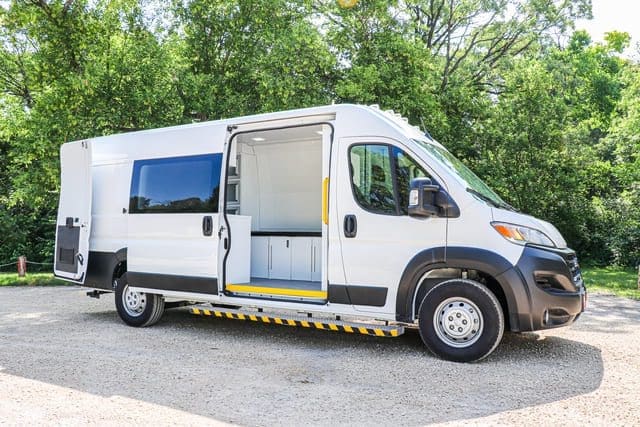
That’s the kind of future Vida Mobile Clinic is building. To support their work, Vida purchased a Mobile Clinic Van from AVAN Mobility. Our role was simple: Help them choose a mobile clinic that fit their mission, their team, and the people they serve. With over 20 years in the industry, 180+ mobile medical units manufactured in the past 3 years, and Ford Pro Upfitter and Stellantis QPro certifications, we brought the vehicle expertise. Vida brought the heart, the mission, and the trust of their community.
“We found AVAN through an internet search. Russ Evans helped us find the perfect vehicle for us.”
-Karla Rugamas, Vida Mobile Clinic
In this case study, you’ll learn:
- How: Vida Mobile Clinic got started.
- What: Barriers they faced serving underserved communities.
- Why: Their mobile clinic helps bring care closer to people.
Let’s start with Vida’s mission.
How did Vida Mobile Clinic get started?

Vida Mobile Clinic began with a clear purpose: to bring free healthcare closer to people who often get left out of the system.
Based in the San Fernando Valley, Vida Mobile Clinic is a 501(c)(3) nonprofit that serves uninsured, unhoused, and under-resourced individuals. Their work is rooted in one simple belief: your health shouldn’t depend on your postal code, insurance status, or ability to travel across town.
That sounds simple. In real life, it’s anything but.
Think about someone who feels sick but doesn’t have insurance. They may wait. Then they wait longer. They may hope the pain goes away because calling a clinic feels expensive, confusing, or out of reach. For some people, the hardest part of healthcare isn’t the exam itself. It’s getting through the front door.
Vida saw that gap and chose to step into it.
“We wanted to help uninsured individuals and marginalized communities receive healthcare.”
-Karla Rugamas, Vida Mobile Clinic
That mission shaped everything that came next. Vida wasn’t created to serve people from a distance. It was built to meet people with compassion, dignity, and practical care.

A mission built around access
Vida Mobile Clinic serves patients in the San Fernando Valley through its partnership with Lestonnac Free Clinic. Together, they help provide free healthcare services for people facing barriers that many healthcare systems still struggle to solve.
For organizations considering a mobile clinic, Vida’s story may sound familiar. You see the same gap in your own community. People need care, but care feels too far away. Your team wants to help, but a fixed location can only reach so many people.
Vida’s work shows what can happen when a healthcare organization decides to move closer to the people it serves.
Their mission includes:
- Free care: Supporting people who may lack insurance or steady access to healthcare.
- Community reach: Serving people in the San Fernando Valley who face daily access barriers.
- Health equity: Helping reduce gaps in care for underserved groups.
- Future providers: Mentoring students and aspiring healthcare professionals.
That last point is a big part of Vida’s story. They’re caring for patients today while helping train the providers who may serve these communities tomorrow. That creates a ripple effect. One patient gets help. One student gains experience. One future provider learns what compassionate, community-based care can look like.
More than a clinic visit
Vida’s work is also about trust.
When someone has gone years feeling unseen by the healthcare system, trust doesn’t appear because a flyer says “free clinic.” It grows when people are greeted with respect. It grows when providers listen first, and grows when care feels safe, human, and close enough to reach.
That’s why Vida’s origin story is so important. They started with the people, not the process. They looked at the San Fernando Valley and saw neighbors who deserved better access to care.
From there, the next challenge became clear: How could Vida reach more people without asking those same people to carry the burden of getting there?
How did Vida Mobile Clinic start reaching people with mobile healthcare?
Vida Mobile Clinic had the mission. They had the heart. They had the people ready to help.
The challenge was movement.
Before they had a Mobile Clinic Van, getting care and supplies to the right place at the right time wasn’t simple. Like many community healthcare organizations, Vida wasn’t working with unlimited space, unlimited staff, or a magic “make logistics easy” button. A shame, really. That button would be popular.
Their team needed a better way to bring healthcare services into the community instead of relying on people to come to them.
“We were unable to get supplies to areas as needed.”
-Karla Rugamas, Vida Mobile Clinic
That one sentence says a lot.
When supplies can’t reach people, services slow down, and when services slow down, people wait longer for care. When people wait, health concerns can grow. For uninsured, unhoused, and under-resourced patients, that delay can feel heavy.
Imagine trying to support a pop-up clinic day without the right setup. Supplies are packed into personal vehicles. Staff are trying to organize equipment on-site. Everyone is doing their best, but the process takes energy away from the part that matters most: caring for people.
That’s the gap Vida needed to solve.
Bringing care closer to the community
A Mobile Clinic Van gave Vida a way to move with more purpose. It helped them bring supplies, services, and support to different locations across the San Fernando Valley.
For an organization like Vida, mobile healthcare isn’t about convenience alone. It’s about removing one more barrier between a person and the care they deserve.
Instead of asking patients to find transportation, plan around work, or figure out where to go, Vida could show up closer to them. That shift can change the tone of care. It can make the first step feel less overwhelming.
A mobile clinic can help organizations like Vida:
- Reach: Serve people in more than one location.
- Respond: Bring supplies where they’re needed.
- Reduce: Lower transportation barriers for patients.
- Support: Give staff a more organized care space.
- Build: Create trust through consistent community presence.
That kind of access can make a big difference. A person may feel more comfortable walking up to a familiar team in their own neighborhood. A volunteer may spend less time sorting supplies and more time helping patients. A student learning in the clinic may see what real community care looks like outside the walls of a traditional facility.
Knowing the Mobile Clinic Van was the right fit
For Vida, the Mobile Clinic Van helped connect their mission to real action.
They already knew who they wanted to serve. They already understood the barriers people faced. The van gave them a practical way to reach more places without losing the warmth and dignity at the center of their work.
“The mobile clinic helped us get services to different locations.”
-Karla Rugamas, Vida Mobile Clinic
That’s the real value of mobile healthcare.
It gives organizations the ability to meet people where life actually happens. In parking lots. Near community partners. Close to shelters. In neighborhoods where care may feel out of reach.
Vida’s Mobile Clinic Van became more than a vehicle. It became a bridge between intention and access.
Next, let’s look at what changed once Vida had a mobile clinic built around their mission.
How is Vida Mobile Clinic breaking down healthcare barriers?
For Vida Mobile Clinic, the Mobile Clinic Van helped turn access into something people could feel.
It meant more than moving supplies from one place to another. It meant showing up in more locations with care that felt close, calm, and reachable. For someone without insurance, stable housing, or easy transportation, that can change the whole experience.
Instead of asking people to overcome every barrier before they get help, Vida can reduce some of those barriers first.
“Accessibility has improved and we are able to reach more individuals.”
-Karla Rugamas, Vida Mobile Clinic
That’s the heart of this case study.
A Mobile Clinic Van helped Vida extend its mission beyond a fixed location. It gave their team a way to bring free healthcare services closer to uninsured, unhoused, and under-resourced people in the San Fernando Valley.
For the communities Vida serves, that can mean:
- Less travel: Care can come closer to familiar places.
- More comfort: Patients may feel safer approaching a community-based clinic.
- Faster support: Teams can bring supplies and services where they’re needed.
- Stronger trust: Repeated community presence can build real relationships.
- Better access: More people can connect with care before problems grow.
The biggest change isn’t the van itself. It’s what the van makes possible.
A patient gets seen. A concern gets heard. A student provider learns from real community care. A team with a mission gains one more way to serve with dignity.
For organizations thinking about mobile healthcare, Vida’s story offers a clear lesson: when care can move, access can grow.
And for the people Vida serves, that access can be the first step toward a healthier life.
Ready to bring your mobile clinic to life?
You likely came to this case study because your organization sees the same gap Vida Mobile Clinic saw. People in your community need care, but distance, insurance, housing, transportation, and trust can all stand in the way.
After reading Vida’s story, you learned how one organization moved from a fixed access challenge to a more flexible way of serving people. You also saw how a Mobile Clinic Van helped them:
- Move: Bring supplies and services to different locations
- Reach: Connect with more individuals in the community
- Serve: Support uninsured, unhoused, and under-resourced people with dignity
Our team at AVAN Mobility helps healthcare teams turn outreach goals into real, usable clinic spaces. Our team works with organizations across the U.S. that are trying to solve hard access problems without making the process feel harder than it needs to be. From layout planning to equipment choices, we help you think through what your team will actually need in the field. That’s why organizations trust us when the work is personal, practical, and tied to better care. If you have questions, click the button below to talk to a mobility expert.
If you’re still gathering information before you talk to a mobility expert, we have a few other resources you should check out to learn more.
Recommended next reads
- Joplin’s road to mobile healthcare case study: Read this next to see how another case study of how the Community Clinic of Southwest Missouri used mobile healthcare to reach people in a real community setting.
- How to choose a mobile medical van: What you need to know: Read this next if you’re comparing layouts, features, and program needs before choosing your own vehicle.
- How much does a mobile medical unit cost in the U.S.? Read this next when you’re ready to understand budget ranges, cost factors, and what can affect your final investment.