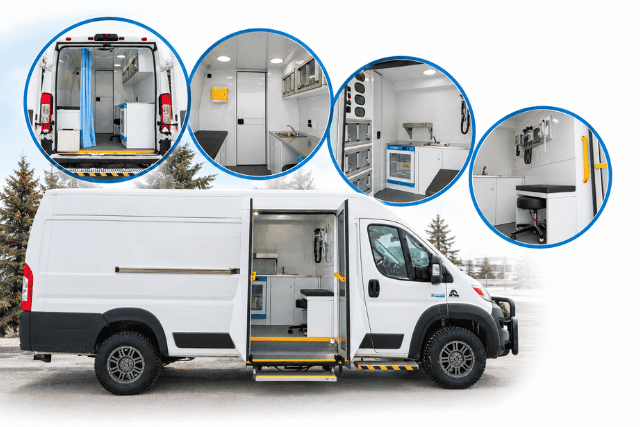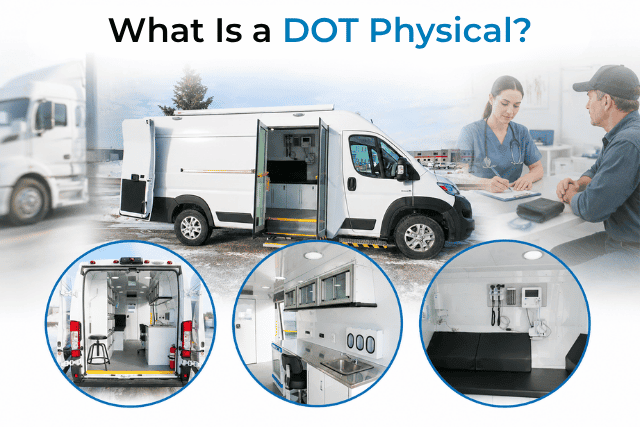
What is a DOT physical? If your organization wants to offer CDL driver exams, that question often comes up first. Demand is huge. The American Trucking Associations reports that trucks move about 72 percent of freight in the United States each year. That means millions of drivers must pass routine medical exams to keep working. Yet access to these exams is uneven.
Drivers in places like rural Texas, Montana, or parts of Appalachia may drive hours for a simple checkup. Long waits slow down fleets. Missed certifications pull drivers off the road. You may see this gap clearly if you work in occupational health, community clinics, or public health. A mobile clinic can bring DOT exams closer to fleets and workers. When access improves, drivers stay compliant, and communities keep moving.
At AVAN Mobility, we’ve spent more than ten years helping organizations reach people through mobile healthcare. We have built over 180 mobile medical units used across the United States. Teams like CalOptima and Pacific Clinics use mobile care to serve communities where traditional clinics struggle to reach. We hold Ford Pro Upfitter and Stellantis QPro certifications and work closely with healthcare providers, governments, and nonprofits. Your mission drives you. Ours is to support it. We share what we know here while recognizing that other manufacturers also serve this space.
In this guide, you will learn the basics your team needs before launching this service:
- What is a DOT physical?
- How organizations provide DOT physical exams using mobile clinics
What is a DOT physical?
So, what exactly is a DOT physical? A DOT physical is a medical exam required for many commercial drivers in the United States. The exam checks if a driver is healthy enough to safely operate a commercial vehicle. The exam follows rules set by the Federal Motor Carrier Safety Administration (FMCSA).
You may also hear it called a DOT physical exam or simply a DOT medical exam. The goal is simple. The exam helps confirm a driver can safely handle long hours on the road, large vehicles, and stressful conditions.
Drivers who pass the exam receive a Medical Examiner’s Certificate. This card shows they meet federal health standards to drive commercially.
Organizations often provide these exams through occupational health clinics, urgent care centers, and increasingly through mobile clinics that travel to fleets or job sites.
What is a non-DOT physical?
A non-DOT physical is a general medical exam that follows employer guidelines instead of federal transportation rules.
Why do DOT physicals exist?
The exam focuses on public safety. Commercial vehicles can weigh up to 80,000 pounds, so driver health matters.
A DOT physical helps identify conditions that may affect safe driving, such as:
- Vision problems: Drivers must meet minimum vision standards.
- Hearing loss: Drivers need to hear horns, sirens, and warnings.
- Heart conditions: Some issues can increase risk while driving.
- Diabetes management: Drivers must show the condition is controlled.
- Blood pressure: High blood pressure can affect certification.
During the visit, the provider checks several health markers to confirm the driver meets FMCSA standards.
What happens at a DOT physical, and what is included in a DOT physical
If you’re wondering what happens at a DOT physical or what a DOT physical consists of, the exam usually includes a few standard steps.
- Medical history review: The driver answers questions about past illnesses, surgeries, medications, and sleep issues.
- Physical exam: The provider checks heart rate, lungs, reflexes, and general physical health.
- Vision and hearing test: Drivers must meet federal minimum vision and hearing standards.
- Urinalysis: A urine test checks for underlying medical conditions such as diabetes.
Many organizations also ask practical questions such as:
- How long does a DOT physical take? Most exams take 30 to 45 minutes.
- Does a DOT physical include a drug test? A drug test is separate from the medical exam, though fleets often schedule them together.
- How long are DOT physicals good for? Most certifications last up to two years, though some drivers receive shorter approvals depending on health conditions.
Where do drivers get DOT physicals?
A common question is where can you get a DOT physical or where do you get a DOT physical. As mentioned a bit earlier, the exam must be performed by a medical professional listed on the FMCSA National Registry of Certified Medical Examiners.
Organizations typically offer these exams through:
- Occupational health clinics
- Urgent care centers
- Hospital outpatient programs
- Mobile clinics visiting fleet locations
Understanding these basics helps answer another question many organizations ask next. How much is a DOT physical, and how can you deliver these exams in a way that makes access easier for drivers?
What roadblocks do drivers face in getting DOT physicals?
Now that you’re more familiar with what a DOT physical is, that brings us to the next question you might have on your mind.
How do drivers actually get one when their schedules rarely slow down?
That challenge shows up across the country. Long-haul drivers might spend weeks moving freight between states. Local drivers for school districts, construction fleets, or delivery companies often start work before sunrise. Finding time for a medical exam during clinic hours can feel like solving a puzzle.
That’s why many organizations begin asking a bigger question. Where can you get a DOT physical that fits a driver’s schedule?
Traditional clinics often create barriers that drivers struggle to work around.
Some common ones include:
- Travel time: Drivers in rural states like Wyoming or South Dakota may have to drive for hours to reach a clinic.
- Lost work hours: A driver waiting for an appointment may miss a full shift.
- Fleet downtime: Companies cannot afford to have several drivers off the road at once.
- Limited clinic slots: Occupational health clinics often fill their DOT exam appointments quickly.
The exam itself is simple. Getting drivers to the exam is where the friction happens.
Even though DOT physical exams last 30 to 45 minutes, the full process can take half a day once travel and waiting rooms are factored in.
That gap is where many organizations begin looking at mobile health services.
Why can DOT physical access be hard for drivers on the road?
If you work with fleets, you’ve likely seen the challenge up close.
A driver whose DOT medical certificate is about to expire cannot operate a commercial vehicle until the exam is complete. When drivers scramble to find an appointment, operations slow down quickly.
Here are a few examples of situations that happen every day.
- Long-haul trucking routes: A driver hauling goods between Arizona and Illinois may have only one day home before the next run. Finding where you get a DOT physical in that short window becomes stressful.
- Rural municipal fleets: A county road department in Montana may have 15 drivers who need exams before the winter snow season. The closest clinic offering a DOT physical exam may be two hours away.
- School bus drivers: School districts across states like Ohio or North Carolina often need dozens of drivers cleared before the start of the school year. If appointments are scattered across multiple clinics, scheduling becomes a logistical headache.
In all these cases, the exam itself is not the problem.
The challenge is access.
That is why many health providers, public health programs, and occupational health teams are starting to ask a new question.
What if the clinic came to the drivers?
How can you bring DOT physical exams directly to drivers?
Mobile healthcare programs allow organizations to bring services directly to job sites, trucking terminals, and community hubs.
Instead of drivers searching for where they can get a DOT physical, the clinic arrives where drivers already are.
A mobile program can set up DOT exam days at locations such as:
- Trucking terminals
- Municipal fleet yards
- School transportation depots
- Construction company offices
- Distribution warehouses
This model can make a big difference in how drivers experience the exam process.
When drivers walk into a mobile clinic, the visit still includes everything required in your standard DOT physical.
A certified medical examiner can complete the full exam, which includes the same checks and tests we mentioned earlier.
In other words, the medical process stays the same. The location changes.
That simple shift can save drivers and organizations a lot of time.
Examples of mobile DOT physical programs
Seeing how this works in real life helps show the impact.
Let’s walk through a few hypothetical examples.
Example 1: A regional trucking company in Texas

A trucking company outside Dallas has 120 drivers. Each driver needs a valid DOT medical certificate.
Before switching to a mobile exam day, drivers had to travel to a clinic across town. Appointments were spread over several weeks. Drivers lost hours of work.
The company brought in a mobile clinic for two days.
Results looked like this:
- 40 exams per day completed on site
- No travel time for drivers
- Drivers back on the road within an hour
The company reduced scheduling headaches and kept freight moving.
Example 2: A school district in Michigan

A mid-sized school district had to clear 65 bus drivers before the start of the fall semester.
Local clinics offered limited DOT appointments. Many drivers were part-time and struggled to schedule visits.
The district hosted a mobile exam day at the transportation yard.
Drivers parked their buses, stepped into the mobile clinic, and completed the visit in about 30 minutes.
The district finished all exams in two days. Drivers avoided long travel, and the district started the school year fully staffed.
Example 3: A county public works department in Colorado

A county fleet department manages snow plows, dump trucks, and service vehicles.
Winter storms mean every driver must be certified and ready.
Instead of sending employees to multiple clinics across the county, the department scheduled a mobile DOT exam clinic in the fleet yard parking lot.
Drivers completed exams between shifts. Equipment never stopped moving.
The result was simple. The county saved time, and drivers avoided long trips across snowy mountain roads.
How do mobile clinics help close the gap?
For organizations considering offering DOT exams, the benefits often show up quickly.
Mobile programs help solve several problems at once.
- Convenience: Drivers complete exams during normal work hours.
- Efficiency: Fleets can schedule many exams in one location.
- Access: Rural communities gain access to services that may be far away.
- Cost savings: Less downtime and fewer lost work hours.
Organizations also gain flexibility.
Mobile health teams can rotate between locations throughout the year. That makes it easier to track how long DOT physicals are good for and schedule renewals before certifications expire.
It also helps answer another question organizations often ask early in planning.
How much is a DOT physical, and how much does a DOT physical cost when delivered this way?
We’ll cover that next, including typical pricing and what organizations should expect when planning a DOT exam program.
How much is a DOT physical, and what should organizations expect to pay?
Once you understand what a DOT physical is, another practical question comes up quickly. How much is a DOT physical?
Across the United States, the typical DOT physical cost ranges from $75 to $150 per exam. Prices vary depending on the provider, region, and whether additional services are included.
For example, exams in large cities like Chicago or Los Angeles may cost more than those in smaller communities.
Organizations planning to deliver exams through mobile clinics often look at the full picture.
Typical factors that influence how much a DOT physical costs include:
- Location: Travel distance for a mobile medical team.
- Number of drivers: Larger groups often lower the per-exam cost.
- Added services: Drug testing or lab work scheduled alongside the exam.
- Scheduling efficiency: Completing many exams in one visit reduces downtime.
For fleets and employers, the real cost often goes beyond the exam fee.
When drivers travel to clinics, companies also pay for:
- Lost driving hours
- Scheduling disruptions
- Transportation time
Bringing exams directly to drivers helps reduce those hidden costs. A mobile clinic can complete multiple DOT physical exams in a single day, keeping drivers on schedule and operations running smoothly.
Got any questions about DOT physicals and mobile clinics?
You likely came here because you wanted a clear answer to what a DOT physical is and how organizations like yours can offer these exams in a way that works for drivers. Access, scheduling, and travel barriers often make something simple feel harder than it should be.
After reading this guide, you now know the essentials about DOT physicals and mobile clinics.
At AVAN Mobility, we spend our days helping organizations turn ideas like this into real programs that serve people in meaningful ways. Over the past decade, we’ve partnered with healthcare providers, local governments, and nonprofits across the United States to design mobile clinics built around real-world needs.
Our team works closely with you to understand your goals, the communities you serve, and how a mobile clinic can fit into your operations. The result is a program that helps remove barriers to care while supporting the people who keep your communities moving. If you have questions about bringing DOT exams or other services on the road, click the button below to talk to a mobility expert.
If you are not ready to speak with a mobility expert yet, we have a few helpful resources you can explore next.
Recommended next reads
- Top 5 tips on how to start a mobile medical clinic: A simple walkthrough of helpful tips organizations like yours can take when launching a mobile health program.
- How much does a mobile medical unit cost in the U.S.? Learn what organizations typically budget when planning a mobile clinic vehicle.