Do you ever feel like your mission is stuck behind four walls while the people who need you most are miles away? It’s a tough spot to be in. You want to help, but about 25 million people in the U.S. can’t get to the doctor because they don’t have a ride. If you stay put in one spot, those folks might never see a doctor until it’s an emergency. That’s a scary thought. It makes you feel frustrated and maybe a little bit helpless.
You have the skills to save lives, but the “where” is getting in the way. You’re worried that building a new clinic will cost a fortune and still won’t solve the problem of getting to your patients. You want to feel empowered and connected to your community, not tied down by a lease.
At AVAN Mobility, we get it. We’ve been doing this for over 10 years and have built more than 150 mobile medical units to help leaders like you. We’ve worked with amazing groups like CalOptima and the Community Clinic of Southwest Missouri to bring care right to the sidewalk. We’re Ford Pro Upfitter and Stellantis QPro certified, so we know our stuff. We also know we aren’t the only ones making these vehicles, and we want to help you make the best choice for your program. Our goal is to support your mission of saving lives and removing barriers to health.
In this article, you’ll learn all about the price tags for both options. We’ll look at:
- The cost comparison between mobile medical vans and traditional medical facilities.
- Things to consider before you choose.
How do the costs of mobile medical vans compare to building a clinic?
When you’re looking at how to help your community, the price tag is usually the first thing on your mind. It’s a big decision that affects your budget for years. You want to make sure every dollar helps as many people as possible. Right now, you might be looking at two very different paths. One is a building that stays in one place, and the other is a mobile clinic that travels to the people. Both have their own sets of costs that can feel a bit overwhelming if you don’t break them down.
What is the upfront price for mobile medical vans?
If you decide to go with a mobile medical van, such as a mobile clinic, the initial cost is pretty straightforward. At AVAN Mobility, the Mobile Clinic Van typically costs between $170,000 to $290,000. This price covers the vehicle itself and the custom work inside to turn it into a clinical space.
Think of it like buying a specialized tool. You pay for it once, and it’s ready to hit the road. This price range is often a lot easier for non-profits to handle through grants or fundraising. It feels like a clear goal you can reach. Plus, because it’s a vehicle, you aren’t paying for land or a foundation. You’re just paying for the mobility and the medical setup inside. This choice empowers your team to start helping people much faster than waiting for a building to be finished.
How much does it cost to build traditional medical facilities?
Building or buying a permanent home for your medical services is a much bigger financial mountain to climb. In the U.S. today, the cost to build traditional medical facilities is rising. Experts suggest that medical office buildings can cost between $350 and $1,018 per square foot to build from the ground up.
Let’s say you want a small clinic that’s 2,000 square feet. That isn’t a huge building, but at $500 per square foot, you’re looking at $1 million just for the construction. If you’re in a busy city like New York or Boston, those prices can double. And that doesn’t even count the price of the land!
Here is a quick look at what you might expect to pay for a building in different regions in 2026:
| Region of the U.S. | Average construction cost per sq. ft. | Total for 2,000 sq. ft. clinic |
| Northeast (like Boston) | $350 – $870 | $700,000 – $1.7 million |
| South (like Dallas) | $350 – $800 | $700,000 – $1.6 million |
| West (like Seattle) | $380 – $850 | $760,000 – $1.7 million |
| Midwest (like Chicago) | $270 – $760 | $540,000 – $1.5 million |
As you can see, even a budget building in the South is going to cost more than double the price of a high-end mobile medical van. It’s a huge gap in the initial investment that can keep your program from ever getting off the ground.
What are the hidden costs of a permanent building?
The cost of traditional medical facilities doesn’t stop once the walls are up. There are a lot of extras that people sometimes forget about when they’re planning. These can eat into your budget and make it harder to spend money on actual patient care.
- Tenant improvements: If you lease a space instead of building it, you still have to fix it up. Medical build-outs can cost $150 to $250 per square foot just for things like specialized plumbing for sinks in every room and medical-grade air systems.
- Property taxes: Unlike a van, a building sits on land that the government taxes every year.
- Utilities: Keeping a 2,000-square-foot building heated in a Minnesota winter or cooled in an Arizona summer is expensive. You’re paying for electricity, water, and sewage every single month.
- Maintenance: Roofs leak, parking lots need paving, and pipes burst. You’ll need a budget for building repairs that a van owner just doesn’t have to worry about.
Does the choice of facility impact your daily budget?
Once you have your clinic set up, you have to keep it running. This is where the gap between the two options gets really interesting. Clinics and hospitals have very high fixed costs. This means you have to pay for the building and the staff, even if only two people show up for appointments.
With mobile medical vans, your costs are more flexible. If you don’t have a trip planned for a Tuesday, you aren’t spending money on fuel. It’s a lot more flexible for a growing program.
However, you do have to think about things like:
- Fuel and maintenance: Vans need oil changes and tires.
- Insurance: Insuring a medical vehicle is different than insuring a building.
- Storage: You’ll need a safe place to park the van when it’s not in use.
Even with these costs, studies show that the cost per patient visit in a mobile unit is often way lower than in fixed sites. In some cases, it’s about $243 per visit compared to over $1,000 in a traditional setting. That’s a lot of extra money you can use to buy medicine or help more people.
Why does the location of your patients matter for your budget?
Think about the people you serve. If they live in a rural part of Missouri or a crowded neighborhood in Los Angeles, getting to a clinic might be a huge barrier for them. When people can’t get to hospitals, they often wait until they are really sick and then go to the emergency room. This is the most expensive way to get care.
If you use a mobile medical unit, you’re closing that gap. You’re going to them. This saves the patient money on gas and bus fare, and it saves the healthcare system money by catching problems early. It’s not just about the cost of the van; it’s about the cost of the outcome. A van empowers you to reach the person who has been ignored, giving them the dignity of care right at their doorstep.
When you compare the two, a building is a huge, permanent commitment that keeps you in one spot. A van is a smaller, flexible investment that lets you follow the need wherever it goes. It’s about choosing between a fixed location and the freedom to serve your community wherever they are.
Should you choose a mobile medical van or a traditional medical facility?

Choosing between these two is a bit like comparing apples and oranges. If you’re even thinking about building a traditional medical facility, you probably already know you’re looking at a massive budget. It’s a huge choice that changes how you’ll work for decades. You have to keep a very clear mind about who you want to serve before you spend hundreds of thousands of dollars.
Are you planning to open a clinic in a busy city like Chicago, where there is tons of foot traffic? Or are you looking at a rural part of West Virginia where folks live miles apart? These details matter. One option keeps you in a fixed spot, while the other gives you wheels to find the people who need you. Let’s look at four big things you should think about before you sign any big contracts.
1. Who are your patients and where do they live?
This is the most important question. If you’re in a dense city, a building might make sense because people can walk to you. But if you’re trying to reach seniors or families in rural areas, they might have a really hard time getting to you. About 29% fewer doctors work in rural areas compared to big cities. This means people in the country are often left waiting.
If your patients don’t have a car or a bus route, your beautiful new building will just be a lonely place. A mobile clinic lets you go to their neighborhood or even their driveway. It removes the “how do I get there?” problem entirely. This creates a sense of empowerment for the patient. They feel cared for because you came to them.
2. How do you want to manage your space and time?
When you own a building, you pay for every square inch, even the hallway and the broom closet. You’re paying for lights and heat in the middle of the night when no one is there. That’s a lot of dead space that costs money but doesn’t help patients.
Here are a few things to keep in mind regarding your layout and timing:
- Utility costs: Keeping a 2,000-square-foot building heated in a cold climate or cooled in the heat is expensive. You’re paying for electricity and water every month.
- Speed to service: Building a clinic takes a long time because you need land and permits. Mobile medical vans are much faster and can be on the road in months.
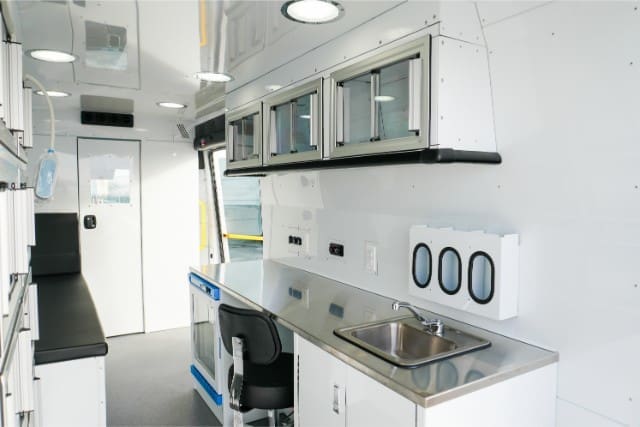
- Efficient design: Vans use every inch for care. You have your exam bed and sink tucked into a clever layout without paying for a lobby that sits empty.
- Community presence: A building stays in one spot forever. A van is the king of the pivot, letting you drive to where a flu outbreak is happening right now.
3. How much flexibility does your team really need?
Life changes, and so do neighborhoods. A part of town that’s busy today might be empty in ten years. If you’re in a building, you’re stuck. You’d have to sell the place and start all over.
Mobile units are great for testing your services in different spots to see where you’re needed. It’s like a “try before you buy” for your medical program. This flexibility reduces the risk of making a million-dollar mistake in the wrong location. It also allows you to be more human and relatable. Instead of waiting for people to find you, you’re out there building relationships where they live and work.
4. What kind of vibe do you want to create for patients?
Believe it or not, hospitals and big clinics can be scary for some people. They feel cold and formal. For folks who haven’t had good experiences with healthcare, walking through those big glass doors takes a lot of courage.
To make it easier for them, think about these factors:
- Personal connection: A van feels smaller and more personal. It’s less like a giant office and more like a friendly visit.
- Dignity of care: Bringing a doctor to someone’s neighborhood says their health is important. It breaks down the us vs. them feeling.
- Accessibility: For those with mobility issues, a van parked at their curb is much easier to visit than a hospital with a giant parking lot.
Using a mobile unit is about choosing between a fixed location and the freedom to serve your community wherever they are. It’s about giving people the power to take care of themselves without the stress of a long commute.
Questions about choosing the right path for your mission?

Did you land on this article because you felt the weight of this big decision and worry about spending your budget on a building that stays in one place? It’s a lot of pressure to choose between a permanent clinic and a vehicle while people in your community are still waiting for help.
After reading this article, you now have a better handle on these key points:
- Price differences: You learned that a mobile medical van costs between $170,000 to $290,000, while a traditional building can easily cost over $1 million.
- Flexibility and reach: You discovered how moving your services on wheels lets you bypass the barriers of dead space and fixed locations to meet people exactly where they are.
At AVAN Mobility, we believe that healthcare should be a bridge, not a barrier. We’ve spent over a decade perfecting the art of mobile care, and our team puts a lot of heart into every bolt and cabinet we install. We see ourselves as your partners in change, helping you take your vision out of a static office and into the heart of the neighborhoods that need it most. We’re proud to be leaders who focus on the people inside the van, not just the engine under the hood. If you have any questions about how to get started, click the button below to talk to a mobility expert.
If you aren’t quite ready to talk to a mobility expert yet, we have a few other resources you should check out to learn more.
Recommended next reads
- Top 5 tips on how to start a mobile medical clinic: Reading this will give you a clear roadmap so you don’t feel lost when you begin your mobile journey.
- Buying a mobile medical van-Your process with AVAN Mobility: This article shows you exactly what to expect when working with us, so you can feel confident in every step we take together.
- A guide on securing grants for mobile health clinics in the U.S.: This is a great next step because it helps you find the money you need to turn your dream of helping others into a reality.