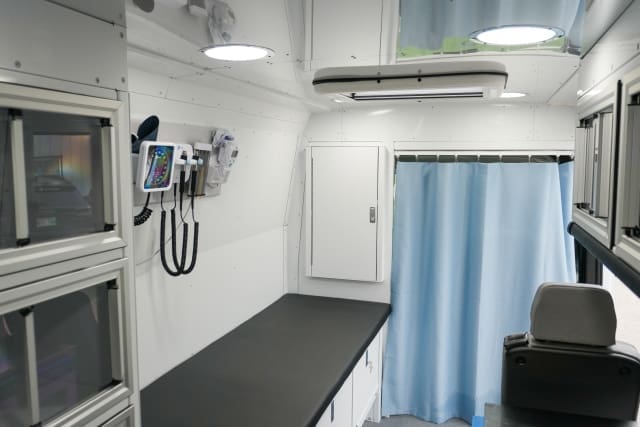
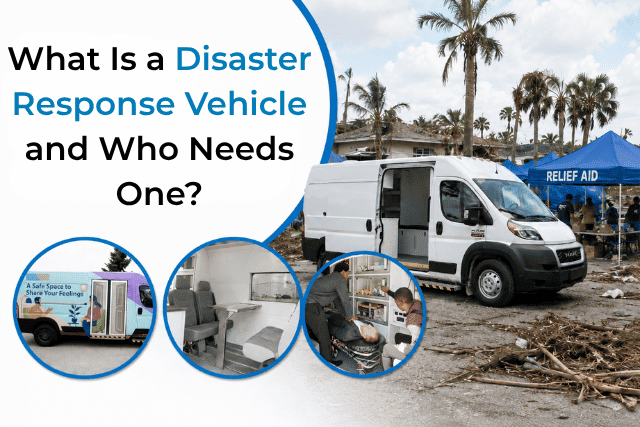
Did you know that almost 1 in 5 Vermonters live in a rural area with limited access to care? The Rural Health Transformation Fund in Vermont could help close that gap. If your organization serves places like the Northeast Kingdom, Bennington County, or small towns outside Rutland, you may know how hard it can be for patients to get care.
Some people drive over an hour for a basic check-up, dental visit, mental health support, or substance use treatment. Others skip care completely because of bad weather, no transportation, or long wait times. That gap can lead to more ER visits, worse health, and more pressure on your team.
At AVAN Mobility, we’ve spent over 10 years helping organizations remove barriers to healthcare and transportation. We’re trusted by healthcare networks, governments, and non-profits across the U.S., and we’re certified through the Ford Pro Upfitter program and Stellantis QPro. We’ve worked with organizations that need to reach people in remote, underserved areas, and we know every community has different needs. We also know we’re not the only manufacturer out there, which is why this article is focused on helping you make the right decision for your program.
In this article, you’ll learn:
- What the Rural Health Transformation Fund in Vermont is
- Which services and mobile programs can qualify
- What the grant covers and what it does not cover
- Which regions and populations Vermont wants to reach
- How to build a stronger application for funding
What is the Rural Health Transformation Fund in Vermont?
The Rural Health Transformation Fund in Vermont is a five-year funding opportunity designed to improve healthcare access across the state. Vermont received $195 million in the first year of the program. The state plans to use that money to strengthen rural health systems, improve shared technology, support the healthcare workforce, and help people get care faster and closer to home.
For many providers, this funding creates a chance to solve a problem that has been sitting on the back burner for years. You may already know your community needs better access to care, but finding money for a mobile clinic, outreach van, dental unit, or behavioral health vehicle can feel out of reach.
The Rural Health Transformation Fund in Vermont gives healthcare organizations a way to build programs that can travel between towns, partner with local agencies, and reach people where they already are. That could mean setting up outside a school in Lamoille County, visiting a recovery center in Windsor County, or bringing care to older adults in Addison County who have trouble getting to appointments.
The Vermont Department of Health Access says this funding can support mobile programs focused on:
- Health education
- Dental care
- Maternal and child health care
The state also wants applicants to show a clear gap in care for a certain population or region. That means programs that can prove a strong local need may have a better chance of receiving funding.
Can the Rural Health Transformation Fund in Vermont cover the cost of mobile care delivery?
One of the biggest questions organizations have is simple. Can the Rural Health Transformation Fund in Vermont help pay for a mobile clinic or outreach vehicle?
The answer is yes.
The Rural Health Transformation program is designed to help organizations build and operate mobile healthcare programs. That includes costs tied to getting a mobile clinic on the road and keeping it active in the community.
The grant can cover:
- Purchase of a mobile medical unit
- Outfitting and equipment inside the vehicle
- Fuel and tolls
- Health education materials
- Clinical supplies
- Privacy screens, folding tables, chairs, and paper products
- Community outreach and marketing
- Workforce training and education
- Hiring non-licensed support staff
- Research and program analysis
- Coordination of care and referrals between providers
For example, if your organization wants to launch a mental health outreach van in Rutland County, a maternal care unit in Bennington County, or a substance use treatment vehicle traveling between small towns in Essex County, the funds can be used for that. The state wants to see programs that bring care closer to people and remove barriers tied to transportation, distance, weather, and limited local resources.
What are the limitations of the Rural Health Transformation Fund in Vermont?
At the same time, there are some clear rules about what this funding cannot cover.
The grant cannot be used for:
- Costs that happened before the grant was awarded
- Matching funds for another grant program
- Existing salaries already funded somewhere else
- Building construction or expansion
- Major building renovations
- Cosmetic upgrades to facilities
- Broadband internet costs for households
- Certain telecommunications or video surveillance equipment
- Clinical services that can already be billed through insurance
- Clinician salaries tied to organizations with non-compete agreements
This is an important point for applicants. The state does not want organizations using the Rural Health Transformation Fund in Vermont to replace money they are already receiving. Instead, the grant is meant to help create something new, expand an existing program, or fill a gap that insurance does not currently cover.
For example, you may be able to use funding for a mobile clinic vehicle and care coordination staff, but you likely could not use it to pay for routine clinical visits that Medicaid or private insurance would already reimburse.
If you do plan to use grant dollars for direct healthcare services, Vermont says you must explain:
- Why those services are not already reimbursable
- How the service fills a gap in care
- How the service changes the current care model
- Why patients would otherwise go without care
CMS will make the final decision on whether those costs are allowed. That means your proposal needs to clearly connect the funding request to a real problem in your region and explain how your mobile program will solve it.
What areas does the Rural Health Transformation Fund in Vermont focus on?

The Rural Health Transformation Fund in Vermont is meant to support care in as many counties as possible. The Vermont Department of Health Access says it plans to award grants across multiple service areas and may give preference to programs that can serve more than one county.
The counties listed in the funding notice include:
- Addison
- Bennington
- Caledonia
- Chittenden
- Essex
- Franklin
- Grand Isle
- Lamoille
- Orange
- Orleans
- Rutland
- Washington
- Windham
- Windsor
Chittenden County is included, but the state says organizations applying to serve that area need to clearly explain how their program will still help rural Vermonters. That means the strongest applications will likely focus on smaller towns, isolated communities, and areas where people have fewer healthcare options.
For example, a mobile clinic that travels through Orleans, Essex, and Caledonia counties may stand out because it reaches several rural regions instead of staying in one town. The same could apply to a mental health or dental program that serves multiple counties in southern Vermont, like Bennington, Windham, and Windsor.
The fund is also meant to help Medicaid members and underserved groups
The state makes it clear that proposals must include a plan to serve Vermont Medicaid members. Applicants need to show how their program will improve care access and health outcomes for people who already face barriers to care.
The Rural Health Transformation program also encourages providers to focus on people who are often left behind in traditional healthcare systems, including:
- Children
- Pregnant people
- Veterans
- Older adults
- People experiencing a mental health or substance use crisis
- People who are uninsured or underinsured
- Families living in rural communities
- Historically marginalized or at-risk groups
- People who are unhoused or housing insecure
The state also wants programs to help people connect with insurance coverage when possible. Mobile clinics can serve uninsured and underinsured Vermonters, but providers are expected to help patients enroll through Vermont Health Connect if they qualify.
The fund favors programs that build strong local partnerships
Vermont wants applicants to work closely with local partners in each region they serve. That could include schools, shelters, food banks, housing groups, local health clinics, recovery centers, veterans groups, and aging services organizations.
The state also says programs should include patient-centered care, referrals, and care coordination. In simple terms, Vermont does not want mobile units to work alone. The goal is to connect people with the larger health system around them.
Programs with experience serving people in crisis, working in rural communities, and partnering with other organizations may have an advantage during the application process.
What should you know about application timelines?
If you are planning to apply for the Rural Health Transformation Fund in Vermont, the state lays out a clear timeline. Once you submit an application, you are agreeing to that schedule.
Here are the key dates listed in the notice of award:
- Application posted: March 30, 2026
- Deadline for questions: April 6, 2026, at 2:00 p.m. Eastern Time
- Application deadline: April 24, 2026, at 2:00 p.m. Eastern Time
- Anticipated selection notifications: May 8, 2026
- Commencement of grant agreement: No later than August 1, 2026
That timeline matters because Vermont is moving on a short runway. If your organization wants to apply, you don’t have much room to wait, circle back, and then panic a little. The question deadline comes first, then the application deadline follows soon after.
The Rural Health Transformation Fund in Vermont must be submitted exactly as instructed
The application must be submitted electronically by email. Vermont says faxed or hard copy submissions will not be accepted, and late applications will not be accepted either.
The state also says all questions must be submitted in writing to the contact listed in the notice. If you miss the question period, those questions are considered waived. On top of that, Vermont will post updates, notices, and addendums on the Vermont Business Registry website. The state says it will not reach out separately with those updates, so applicants are responsible for checking that page themselves.
The Rural Health Transformation Fund in Vermont includes a formal review and award process
After applications are submitted, a review team evaluates them based on the needs identified in the notice and the extent to which the proposed services will be achieved. The review team then sends recommendations to the Commissioner of the Department of Vermont Health Access for final review and determination.
If your organization is selected, Vermont will notify you in writing. If the selected applicant does not sign the agreement within 10 business days, the state may cancel that selection and award the grant to another applicant. Organizations must also provide a current W-9 and specify the address where payments should be sent.
The program starts in 2026, and year 1 funds must be spent by 2027
The grant period is expected to begin no later than August 1, 2026, and end on September 30, 2027. That gives awardees a 14-month period for Year 1. Vermont also says Year 1 funds must be fully spent by September 30, 2027.
The notice adds that Year 1 grants may be extended up to four one-year option periods, but that would require approval from both DVHA and CMS.
Ready to apply for the Vermont Rural Health Transformation Fund?

You came to this article because your community has gaps in care, long travel times, staffing shortages, or people who are slipping through the cracks. You also wanted to know if the Rural Health Transformation Fund in Vermont could help you bring care closer to the people who need it.
After reading this article, you now know:
- What the Rural Health Transformation Fund in Vermont is
- Which counties and populations Vermont wants to reach
- What the funding can and cannot pay for
- Key dates, deadlines, and reporting requirements
- What makes a strong application more competitive
- Why mobile healthcare can help close care gaps in rural Vermont
Our team at AVAN Mobility has spent more than a decade helping organizations build mobile healthcare programs that meet people where they are. We’ve helped organizations launch mobile clinics, counseling vans, outreach programs, and many other care models built around real community needs. We know we’re not the only option out there, but we do believe our experience, hands-on support, and long-term partnership approach can make the process feel much less overwhelming.
At the end of the day, this is about helping people in Vermont get care closer to home. If you have questions about what type of mobile unit could fit your program, click the button below to talk with a mobility expert.
Recommended next reads
- A guide on securing grants for mobile health clinics in the U.S.: This article will help you understand what other grant programs may be available if you want to combine funding sources or build a longer-term mobile care strategy.
- How much does a mobile medical unit cost in the U.S.: This article makes sense next because cost is usually the next question after funding, and it can help you plan a more realistic budget.
- Top 5 tips on how to start a mobile medical clinic: This article walks you through the early planning stages of building a mobile program, including staffing, routes, partnerships, and services.