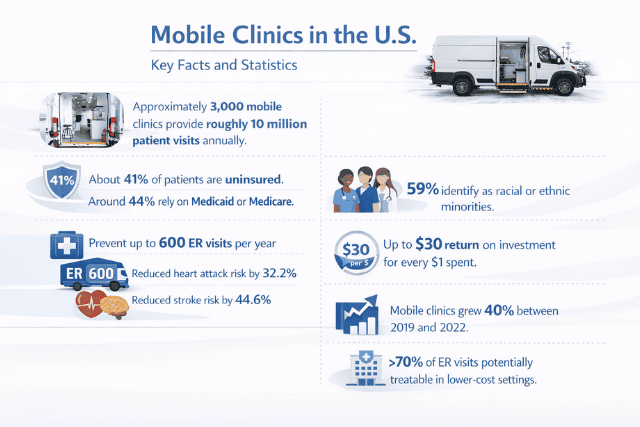
Have you watched access to care get harder in your community and wondered if a mobile clinic might be part of the solution? When almost one in four Americans live in primary care shortage areas, it’s hard not to feel that pressure in your own community. If you’re running a clinic in rural Texas or supporting outreach in Southern California, you’ve seen people miss care because the closest option is too far away. That gap leaves you frustrated, stretched, and wishing you had a better way to reach folks before health problems grow.
Ignoring the problem keeps people getting sicker and keeps your team in reaction mode. A mobile health clinic gives you a way forward. It lets you bring care to the places people already are, which helps you close the gap and support your community in a more personal and dignified way.
At AVAN Mobility, we’ve spent over ten years building more than 150 mobile medical units for groups like Pacific Clinics and CalOptima. We’re Ford QVM and Stellantis QPro certified, and our team builds with one goal in mind. We help you care for people and save lives. We’re here to guide you with clear, unbiased information so you can decide what works best for your program.
In this article, you’ll learn:
- What a mobile clinic is
- How mobile clinics are used
- Features of a mobile clinic
- Cost of a mobile clinic
- Who mobile clinics are right for
What is a mobile clinic?
A mobile clinic is a medical space built inside a vehicle, usually a van or a small specialty unit, that brings healthcare to people where they live, work, and gather. When you hear the term mobile health clinic, think of a clinic room on wheels. Inside, you’ll often find exam space, storage for supplies, seating, and the tools your team needs to provide care in a safe, private way. A mobile clinic gives you a flexible way to deliver medical services without asking people to travel long distances or wait for appointments they may never reach.
You’ve likely seen the impact gaps in access create across the U.S., especially in rural towns and underserved neighborhoods. You might work in Appalachia, the Central Valley, or small coastal communities in the Southeast, where long travel times keep people from getting the care they need. A mobile clinic helps you close that gap. It lets you flip the script, moving care toward the patient instead of the other way around.
A Mobile Clinic Van is also built to support your team in a more comfortable and organized way. Instead of trying to run pop-up care out of a borrowed room or a folding table, you get a consistent, safe, and private space that becomes part of your program. It’s a tool that lets your staff stay focused on people, not logistics.
How do healthcare teams across the U.S. use a mobile clinic?
Mobile clinics are used across the entire U.S., from big cities to small towns, because they adapt to the needs of different programs. Each community has its own challenges, so the way you use your unit might look different from someone else. Even so, there are common ways organizations use these vehicles to reduce barriers and reach more people.
Here are the most common uses:
- Primary care visits: Many teams use a mobile clinic for basic checkups, screenings, and ongoing care. It supports people who struggle to make regular appointments, especially in rural or low-income areas.
- Behavioral health and counseling: A mobile clinic gives counselors a private and calm space to meet people in their own neighborhoods. This is helpful in areas where mental health services are limited.
- Vaccinations and public health programs: Mobile clinics help counties, health networks, and community groups run vaccination days and outreach programs with better reach.
- Specialty care: Some regions use mobile clinics for prenatal care, chronic disease management, or other specialized services.
- Homeless outreach: Mobile clinics help outreach teams connect with unhoused residents by offering wound care, simple labs, checkups, and referrals.
- Pediatric healthcare: Many programs use mobile clinics to reach children in schools, community centers, and rural towns with limited pediatric providers.
- Chronic disease management: Mobile clinics help with diabetes checks, hypertension care, and follow-up visits.
- Medication assisted treatment (MAT): Mobile clinics provide a safe and controlled space for MAT programs supporting people with opioid use disorder.
- Mobile drug testing: Employers, schools, and community teams use mobile clinics to run rapid drug testing with privacy and consistency.
- Health education and prevention: Many programs hold health education sessions inside the mobile clinic, helping people learn about nutrition, chronic disease, mental health, and more.
Why are mobile clinics growing so fast in popularity?
Mobile clinics are becoming more common because they solve problems that traditional buildings can’t. In many U.S. regions, clinics can’t keep up with demand. Some towns have no local doctors at all. Transportation is a major barrier for millions of Americans, especially in rural counties where long drives or limited transit make medical appointments feel out of reach. A mobile clinic for sale gives organizations a practical solution that fits their community’s reality.
There’s also a financial reason. A Mobile Clinic Van costs less than building a new site and takes far less time to deploy. Many programs use mobile clinics to test new service areas before opening a permanent location. It’s a smart way to expand without taking on heavy infrastructure costs.
Another big reason is dignity. People appreciate care that feels closer, safer, and more personal. When you bring a mobile health clinic directly to a neighborhood, people feel seen and valued. That connection improves turnout, follow-up, and long-term health outcomes.
What makes a mobile clinic different from a traditional clinic?
A mobile clinic gives you flexibility. Instead of serving one neighborhood, you can serve several, and you can choose between rural and urban, or do both. Instead of guessing where people need you, you can go there and see the impact right away.
Some teams use one mobile clinic as their main service point, while others use several units to cover large regions.
For example:
- A county in Northern California might use a Mobile Clinic Van to reach mountain communities during the week.
- A health network in Texas might send its mobile clinic to migrant farmworker sites during harvest seasons.
- A community clinic in Florida might rotate through coastal towns that lose access to care during severe weather seasons.
Mobile clinics work because you get to design the service around the people you care about. For more information, check out our article comparing mobile clinics and fixed clinics.
A mobile clinic helps your team break down barriers that have been around for years. You get a flexible, safe, private medical space that helps you reach more people, reduce no-shows, and support healthier communities. It’s a way to shift from waiting to acting.
What features can you get in a Mobile Clinic Van?
A mobile health clinic comes with features that make care easier, safer, and more comfortable. These features also help your team deliver a wide range of services in one small space. Think of it like having a tiny clinic room that travels to the exact place people need you.
Below are the features you’ll find in a Mobile Clinic Van, along with how each one supports your work.
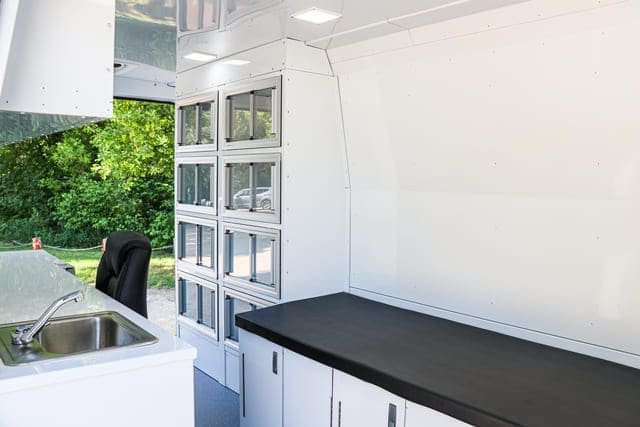
Standard features in a Mobile Clinic
Doctor’s office on wheels setup:
You get a private exam space that works like a small clinic room. Your team can do physicals, screenings, chronic care visits, and simple procedures in a calm and controlled environment.
Floor-to-ceiling cabinetry:
Storage matters in a small space. Full cabinetry keeps supplies organized and easy to reach. This helps with vaccines, testing kits, PPE, medications, charts, and more. It also keeps the unit clean and professional.

Patient bed with under-bed storage:
Many programs use the bed for exams, blood draws, prenatal checks, wound care, and behavioral health visits. The storage underneath gives you extra room for blankets, equipment, or specialty tools.

Sink and fridge options:
A sink helps with sanitation during exams, and a fridge keeps vaccines, medications, and testing supplies at proper temperature. This is important for programs offering pediatrics, prenatal care, STI testing, or chronic care.

Power supply:
The power system supports your lights, diagnostics, laptops, chargers, medical tools, and refrigeration. You get a steady supply even in remote areas.
Rear heat and air conditioning:
Comfort matters when you want people to trust your care. Heating and cooling keep the space usable in harsh climates. This matters in the Southwest during summer or northern states during winter.

Clean, comfortable environment:
A mobile clinic creates a space where people feel safe and respected. It helps your team connect with communities that may avoid traditional clinics due to transportation, stigma, or negative past experiences.
Optional equipment you can add
High-capacity heat and air system:
Helpful in regions with extreme temperatures. It keeps the Mobile Clinic Van comfortable for long clinics, public health events, and long-distance outreach days.
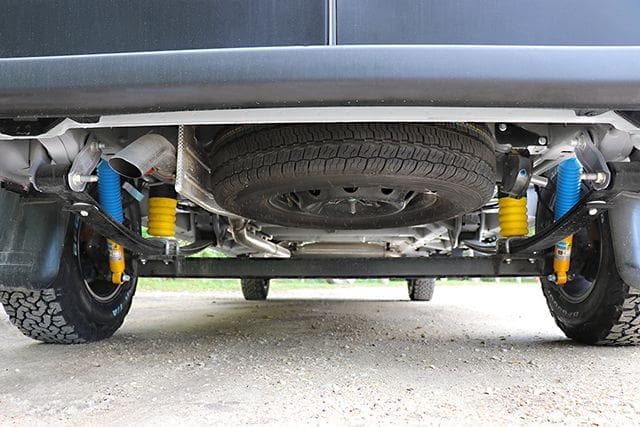
Trail Edition package:
Teams in northern states use this upgrade to stay safe on icy or rural roads.
Remote start:
This makes it easier for staff to warm or cool the clinic before opening the doors. It saves time in the morning and keeps the space ready for patients.
Advanced medical equipment:
Your program can add otoscopes, exam lights, fetal dopplers, point-of-care testing devices, wound care tools, or MAT-related equipment. This lets you match your services with the needs of your community.

Is a Mobile Clinic Van right for your organization?
A Mobile Clinic Van can be a great fit for many different programs across the U.S. You might wonder if it’s the right move for your team or if it will truly help the people you care about. The simple answer is this. If your work depends on reaching people who face barriers, a mobile clinic can make your job easier and your impact bigger. These units help teams shift from waiting for people to show up to meeting them right where they already are.
Below are the groups that use mobile clinics most and why they work so well for each one. As you read, think about the gaps you face every day and picture how a mobile clinic might help close them.
Native Reservations and Tribal Health Programs
Many Native communities face long travel times, few local providers, and weather that makes it hard to reach care. The Indian Health Service reports that more than 2.8 million Native people live in shortage areas. This means families often go without routine visits or specialty care.
A mobile clinic helps Tribal health teams reach people in a steady and familiar way. You can bring prenatal and postnatal visits, chronic disease checks, pediatric care, behavioral health support, and screenings straight into rural areas. You can also offer sexual health programs and MAT services in a space that feels more comfortable and culturally respectful.
A Mobile Clinic Van makes it easier for Elders and families to get care without long drives. It helps your team build trust because you show up in the places people call home.
Housing and homeless organizations
Housing and homeless groups often support people who don’t visit traditional clinics. Transportation is limited. Stigma gets in the way. Some people feel safer staying in the places they know. According to the National Alliance to End Homelessness, over 650,000 people experience homelessness in the U.S.
A mobile health clinic lets your team walk into encampments, shelters, and outreach sites with a private, clean, safe space. You can do wound care, blood pressure checks, testing, vaccinations, simple labs, mental health visits, and referrals. Many outreach teams also help clients with paperwork, housing steps, and follow-up care inside the mobile clinic.
The goal is simple. Bring care to people in a way that feels calm, safe, and human.
Behavioral health and mental wellness programs
Many people in the U.S. need mental health support, but they don’t always feel comfortable walking into a clinic. The National Institute of Mental Health says one in five adults lives with a mental illness. Many counties don’t have enough providers. Stigma, distance, and long waitlists make the problem even harder.
A Mobile Clinic Van gives behavioral health teams a private, quiet space where people feel safe to talk.
These units are used for:
- Counseling sessions
- Medication check-ins
- Crisis support
- MAT services
- School-based mental health programs
- Youth and teen support
This setup helps teams reach people who might never walk into a building.
NEMT providers and patient transport teams
If you run a non-emergency medical transport (NEMT) program, you know that some patients need more than a ride. They may need basic care, like wound checks or blood pressure monitoring, before or after an appointment. Some need a stretcher. Some need a private place to wait.
A mobile clinic gives your team a safe medical space to do things like exams, simple labs, first aid, and check-ins without using busy ERs. This is helpful in large states like Kansas, Montana, and Arizona, where long distances are common. You support your clients with more comfort and more control.
Industrial safety and workplace response teams
Industrial safety teams need to respond fast when something happens at a job site. This could be a factory, a field, a mine, a wind farm, or a construction zone. These places are often far from clinics.
A Mobile Clinic Van gives your team a steady workspace with supplies and equipment ready for on-site care. You can treat injuries, do drug testing, run simple tests, and complete evaluations without searching for a safe place to work. This helps workers feel supported and helps operations stay on track.
Other groups that use mobile clinics
Mobile clinics work for many other groups across the U.S., including:
- County health departments: For vaccines, screenings, and rural outreach
- School districts: For pediatric visits, mental health, and health education
- Hospitals and health networks: For expanding into new areas
- Nonprofits and faith-based groups: For community health days and outreach
- Public health teams: For testing and emergency response
If your program needs a better way to reach people, a mobile clinic may be the tool that helps you get there.
A Mobile Clinic Van fits organizations that want to meet people where they are and remove long-standing barriers. It’s helpful when your community deals with long travel times, provider shortages, stigma, or unstable housing. A mobile clinic gives your team a private, flexible, and respectful space to reach more people and support healthier lives.
Ready to see if a Mobile Clinic Van can close your care gap?
You came to this article because access in your community feels harder than it should be, and you’re searching for a way to reach people who keep missing care. A mobile clinic gives you a clear path forward by helping your team deliver support in the places people already feel safe.
At AVAN Mobility, we build Mobile Clinic Vans that help health teams like yours solve real access problems and save lives every day. We’ve shaped our designs through years of working with frontline staff, community leaders, and medical programs that understand the weight of these challenges.
Our focus is simple. We help you reach more people with care that feels personal, safe, and supportive. If you want clarity on your next steps or need help planning your first unit, click the button below to talk to a mobility expert. We’re here to help you move forward with confidence.
If you’re not ready to talk to a mobility expert yet, here are more resources to explore:
- Part 1: What is the purpose of a mobile clinic?
- Part 2: How do mobile clinics bridge the gap in rural and urban healthcare?
- Part 3: What are the different types of mobile clinics?
- Part 4: What customizations are possible with a mobile clinic?
- Part 5: What is the cost of a mobile clinic, and how do you get started?