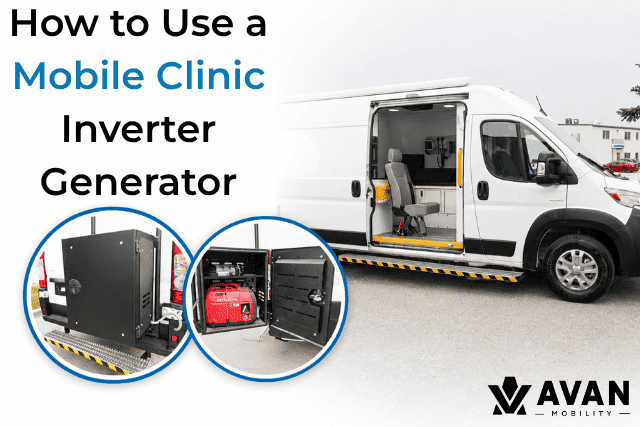
Mobile clinic inverter generator questions often hit at the worst moment. You’ve parked at a school in rural Arizona or a church lot in West Texas only to realize that there’s no shore power. Patients are already waiting. And you’re wondering if today’s care can safely move forward. That pressure is real. When power drops, care pauses. Refrigeration risks spike. EHR access disappears. Appointments get delayed.
Power outages affect millions of Americans each year, with rural regions hit harder. That’s a gap no mobile health clinic wants to face. You need quiet, steady power that lets you serve anywhere. The Honda EU2200i mobile clinic inverter generator can help you with that.
At AVAN Mobility, we’ve spent over 10 years helping healthcare teams close this gap. We’ve built more than 150 mobile medical units focused on reducing barriers to care and saving lives. We’ve supported organizations like CalOptima, the Community Clinic of Southwest Missouri, and Pacific Clinics across the country. We’re Ford Pro Upfitter certified and Stellantis QPro certified. Our experience comes from real deployments, real patients, and real challenges. We share what we know openly, with respect for the fact that we’re not the only manufacturer out there.
In this article, you’ll learn:
- Initial use instructions for your mobile clinic inverter generator
- How to operate your mobile clinic inverter generator
Initial instructions you need to know before using your mobile clinic inverter generator
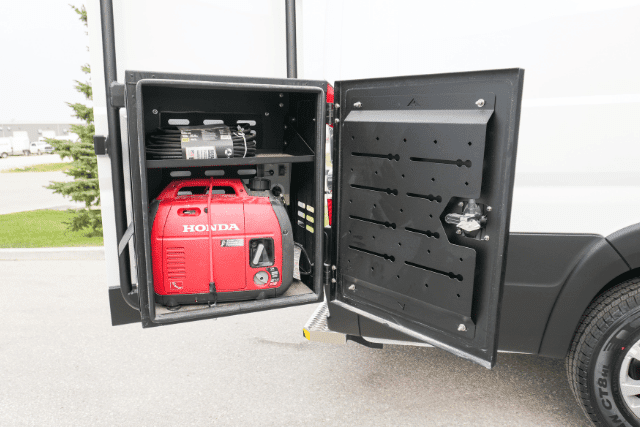
Before you use your mobile clinic inverter generator for the first time, there are two things you must do, in this exact order: Add oil, then add fuel. These steps are easy to overlook when you’re focused on patients, schedules, and setup, but they matter for safe and reliable operation.
Step 1: Add engine oil first (the generator ships with no oil)
Your mobile clinic inverter generator ships with no oil in the engine. If oil isn’t added first, the generator will not run and may shut itself down to protect the engine.
Follow these steps carefully:
1. Place the generator on level ground: Set it on a flat, stable surface so oil levels read correctly.
2. Remove the maintenance cover: Loosen the maintenance cover screw, then remove the cover completely.
3. Remove the oil filler cap: Turn the cap counterclockwise to take it off.
4. Add engine oil: Slowly pour oil into the filler neck until the oil reaches the upper limit of the filler opening.
5. Secure the oil filler cap: Screw the oil filler cap back on until it’s tight.
6. Reinstall the maintenance cover: Put the maintenance cover back in place and tighten the maintenance cover screw securely.
Important: Do not skip step six. The maintenance cover protects internal components and keeps the generator safe during transport and operation.
Oil guidelines to follow:
- Recommended oil: SAE 10W-30 for most U.S. climates.
- Oil type: 4-stroke automotive detergent oil.
- Maximum oil capacity: 14 oz (0.44 L).
Do not overfill. Adding too much oil can push excess oil into the air cleaner housing and air filter.
Step 2: Add fuel safely and correctly
Fueling your mobile clinic inverter generator should always be done with care.
Fueling rules to follow every time:
- Fuel outdoors only: Use a well-ventilated outdoor area.
- Stop and cool the engine first: Let the generator cool before handling fuel.
- Keep fuel away from sparks and heat: Stay clear of grills, pilot lights, and electrical equipment.
- Clean spills immediately: Gasoline is flammable and can damage surfaces.
Now follow these steps:
1. Remove the fuel filler cap.
2. Fill carefully: Add fuel slowly and stop before reaching the red upper level mark on the fuel strainer.
3. Tighten the fuel filler cap: After fueling, tighten the cap until it clicks.
Heads-up: Gasoline can damage paint and plastic. If fuel spills, wipe it up right away.
You can check fuel levels with the engine off. If fuel is low, wait until the generator cools before refilling.
Step 3: Set the fuel cap vent lever correctly
This small lever controls fuel flow and is a common source of startup issues.
Use it this way:
- OFF: For storage or transport
- ON: To run the generator
If the vent lever is left OFF, the generator will not start, no matter how many times you pull the starter.
Step 4: Move the generator before starting
After fueling, do not start the generator in the same spot.
Always move it at least 10 feet away from the fueling area before starting the engine. This reduces fire risk and keeps your setup safer.
Step 5: Expect extra pulls after first fueling
After the first fuel fill, or anytime the generator runs completely out of gas, it may take several pulls to start.
That’s normal.
This generator uses a vacuum-operated fuel pump, which can require extra pulls to move fuel into the carburetor.
Tip: Pull steadily and calmly. If it doesn’t start right away, give it a few more pulls.
Step 6: Follow the correct fuel recommendations
Using the right fuel protects performance and long-term reliability.
Fuel recommendations:
- Use regular unleaded gasoline: Octane rating of 86 or higher.
- Use fresh, clean fuel: Never use stale or contaminated gas.
- Avoid fuel mixed with oil.
- Limit ethanol and methanol:
- Up to 10% ethanol (E10)
- Up to 5% methanol, with corrosion inhibitors
Fuels with higher ethanol or methanol content can cause starting issues, reduce performance, and damage fuel system components.
Once these steps are complete, your mobile clinic inverter generator is properly set up for first use. Next, we’ll walk through how to start and run the generator safely during a clinic day, so your mobile health clinic stays powered when shore power isn’t available.
How do you use your mobile clinic inverter generator?

Once your mobile clinic inverter generator is set up with oil and fuel, using it day to day follows a clear and repeatable process. This section walks through how to operate the generator safely and correctly, based on the Honda EU2200i operating instructions.
Step 1: Prepare the generator before starting
Before you start the engine, take a moment to set up properly.
Placement and safety checks:
- Operate the generator outdoors only.
- Leave at least 3 feet of space on all sides for ventilation.
- Position the exhaust away from people and openings.
- Do not operate the generator inside the mobile clinic, inside compartments, or near enclosed spaces.
The generator is equipped with CO-MINDER, Honda’s carbon monoxide detection system. If CO-MINDER detects unsafe carbon monoxide levels, the engine will stop automatically. Proper placement helps prevent this.
Before starting:
- Make sure all appliances are unplugged from the AC outlets.
- Confirm the fuel cap vent lever is accessible.
- Check oil and fuel levels if needed.
Step 2: Start the generator
Starting steps are the same each time, with one difference depending on whether the engine is cold or warm.
Follow these steps in order:
1. Disconnect all electrical loads: Starting the generator with devices plugged in can cause overload protection to activate.
2. Turn the fuel cap vent lever to ON: This allows fuel to flow from the tank.
3. Set Eco Throttle to OFF: This helps the engine start and warm up smoothly.
4. Set the choke lever:
- Cold engine: Move the choke to CLOSED.
- Warm engine: Leave the choke OPEN.
5. Turn the engine switch to ON.
6. Pull the starter grip:
- Pull slowly until resistance is felt.
- Then pull briskly.
- Return the starter grip gently to avoid damage.
7. Gradually move the choke to OPEN as the engine warms up, if it was started with the choke closed.
8. Allow the generator to warm up: After a few minutes, you can turn Eco Throttle to ON if quieter operation or reduced fuel use is desired.
If the generator has just been fueled for the first time or has run completely out of fuel, it may take several pulls to start. This is normal.
Step 3: Supply power to your mobile clinic
Once the generator is running steadily, you can begin powering equipment.
To use AC power:
1. Confirm the generator is operating normally: The output indicator should be on, showing that power is available.
2. Plug equipment into the AC receptacle
3. Turn on the connected device.
Some devices draw more power when starting. If the overload indicator comes on briefly and then turns off, that can be normal. If the overload indicator stays on and power stops:
- Turn the generator off.
- Disconnect all connected equipment.
- Reduce the load or identify the problem.
- Restart the generator.
- Reconnect devices one at a time.
Step 4: Use Eco Throttle during operation
Eco Throttle adjusts engine speed automatically based on electrical demand.
How to use it:
- Eco Throttle OFF: Recommended during startup and when using devices with higher starting loads.
- Eco Throttle ON: Useful for steady operation, lighter loads, and reduced noise.
Many mobile health clinics start with Eco Throttle OFF, then switch it ON once the equipment is running smoothly.
Step 5: Stop the generator properly
When you’re done using the generator, shut it down in this order.
Normal shutdown steps:
1. Turn off or unplug all connected appliances.
2. Turn the engine switch to OFF.
3. Allow the generator to cool.
4. Turn the fuel cap vent lever to OFF after the engine has stopped and cooled.
Fuel-off option: If the generator will be stored for a period of time, you can move the engine switch to the fuel-off position and let the engine run until it stops. This reduces fuel remaining in the carburetor.
Step 6: If CO-MINDER stops the engine
If CO-MINDER shuts the generator down:
- Move the generator to an area with fresh air.
- Make sure no other engines or exhaust sources are nearby.
- Wait about 30 seconds.
- Press the CO-MINDER reset button.
- Restart the generator following the normal starting steps.
If the CO-MINDER activates again, check placement and ventilation before restarting.
Step 7: Daily habits that help keep things running smoothly
A few simple habits make clinic days easier:
- Start the generator with nothing plugged in.
- Plug in equipment one device at a time.
- Let the generator warm up before heavier loads.
- Watch the indicator lights during operation.
- Shut down fully before transporting or storing.
When operated as outlined above, your mobile clinic inverter generator provides steady, reliable power so your mobile health clinic can stay focused on care, even when shore power isn’t available.
Got any questions about using your mobile clinic inverter generator?
You came to this article because running a mobile clinic without shore power feels risky. You needed clear, practical steps so power issues don’t interrupt care or put patients and staff in a tough spot.
After reading, you now know how to safely start, run, and shut down a mobile clinic inverter generator.
At AVAN Mobility, we focus on the details that matter once your clinic is on the road. Over the years, we’ve worked alongside healthcare teams across the U.S. who operate in parking lots, rural towns, urban cores, and emergency response settings. That experience shapes how we build, how we educate, and how we support organizations long after delivery. We believe reliable power is part of dignified care. If you have questions about your setup or what comes next, click the button below to talk to a mobility expert who understands your mission.
If you’re not ready to talk to a mobility expert yet, here are a few resources worth checking out next.
Recommended next reads
- Mobile clinic equipment list: What can be installed in a Mobile Clinic Van? Reading this will give you a better idea of what type of equipment you can use in your mobile clinic.
- How to run a mobile clinic on an external power source: This builds on what you learned here and helps you understand what shore power is about.
- Buying a mobile medical van: Your process with AVAN Mobility: This walks you through what the purchasing journey looks like when you’re ready to take the next step.
FAQ about your mobile clinic inverter generator
Q: How do you use a mobile clinic generator from arrival to shutdown?
A: Start by checking the user guide, then confirm fuel and oil levels, start the generator, let it warm up, connect the unit if needed, and run the clinic. To shut down, power off equipment, unplug cords if applicable, and turn off the generator.
Q: What should staff check before turning the generator on?
A: Check that fuel and oil levels are adequate and clean, confirm there is no electrical load connected, and make sure the area is dry and free from dust, snow, or other contamination risks.
Q: What equipment should never be turned on at the same time?
A: Avoid starting multiple motor-based devices like fridges or compressors at once because they draw high startup current. Power loads should be turned on one at a time after the generator is running.
Q: What safety rules matter most while the generator is running?
A: Keep clear of hot surfaces, place the generator in a well-ventilated area, and keep it dry to prevent electrical issues. Hearing protection is recommended if staff work nearby for long periods.
Q: What common mistakes do teams make when using a generator for the first time?
A: Teams often skip the warm-up period, overload the generator, start too many appliances at once, forget to energize outlets, or aim the exhaust in the wrong direction.
Q: How long can a generator run during a typical clinic day?
A: Most generators can run continuously as long as fuel is supplied. On a single tank, the runtime is often around two to three hours with heavier use.
Q: Why does generator power behave differently than grid power?
A: Generator power can fluctuate more than utility power, which may affect sensitive appliances. This is why some devices, like microwaves, may not operate reliably on smaller generators.