If you’re searching for troubleshooting tips for your mobile clinic inverter generator, something probably didn’t go as planned today. Maybe the lights flickered during an exam. Maybe the fridge holding vaccines went quiet. In that moment, it’s about the people sitting in front of you, waiting for care. When power drops in a mobile clinic, especially in places like rural California, the Arizona desert, or a humid summer in Florida, the stress hits quickly. Delayed visits, lost trust, and canceled care are real risks.
Most mobile clinic generator troubleshooting issues come down to a few common causes. Fuel flow, oil levels, overloads, or safety shutoffs can stop your generator without warning. You want steady power, calm staff, and a clinic day that stays on track. Knowing how to troubleshoot your mobile clinic generator helps close that gap and keeps care moving where it matters most.
At AVAN Mobility, we’ve spent over 10 years manufacturing more than 150 mobile medical units built to remove barriers to healthcare and save lives. We’ve supported organizations like CalOptima, the Community Clinic of Southwest Missouri, Siskiyou County, and Pacific Clinics. We’ll stay practical and unbiased here, because we know we’re not the only option out there.
In this article, you’ll learn how to troubleshoot your mobile clinic inverter generator so you can continue your day saving lives without the hassle of unreliable power.
20 troubleshooting tips for your mobile clinic generator
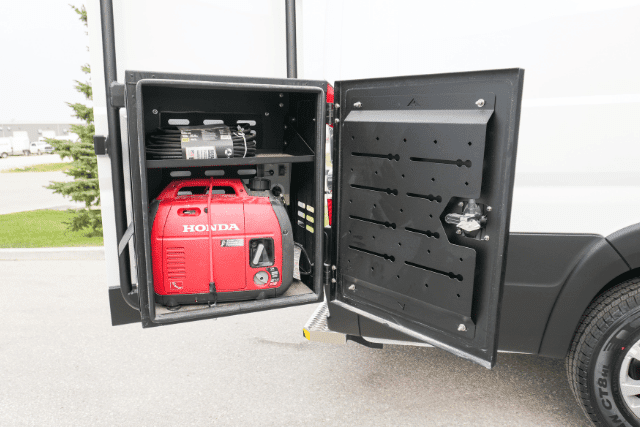
Your mobile clinic is equipped with a Honda EU2200i inverter generator. When your mobile clinic inverter generator won’t turn on, the pressure feels instant. Patients are waiting, staff are looking to you, and the day’s schedule hangs in the balance. The good news is that most starting issues come from a short, fixable list. These first nine troubleshooting tips for your mobile clinic inverter generator address situations when your generator won’t turn on.
1. Is the fuel filler cap vent lever turned off?
One of the most overlooked reasons an engine won’t start is the fuel filler cap vent lever being set to OFF. This lever controls airflow into the fuel tank. When it’s closed, fuel can’t flow properly to the engine, even if the tank is full.
This happens often after transport. Teams shut the vent while driving between sites in places like California or Missouri, then forget to reopen it during setup.
Troubleshooting tip:
- Locate the fuel cap on top of the generator.
- Find the vent lever built into the cap.
- Turn the lever fully to the ON position.
Once the vent is open, try starting the generator again. This simple step solves more starting issues than people expect and helps keep clinic days on track.
2. Is the engine switch set to off?
It sounds basic, but in busy clinic setups, the engine switch gets missed. If the switch is set to OFF, the generator will never start, no matter how many times you pull the cord.
This often happens during fast setups, especially when staff are juggling cords, signage, and patient flow all at once.
Troubleshooting tip:
- Check the engine switch on the control panel.
- Turn it firmly to the ON position.
- Pull the starter grip again.
This is one of the first steps in how to troubleshoot your mobile clinic generator, and it’s worth checking every time before moving on to deeper fixes.
3. Did the generator run out of fuel?
Mobile clinic generators burn fuel faster (a tank will last 2-3 hours with heavy usage) when you’re working long days, using air conditioning in hot states like Texas or Arizona, or constantly using medical equipment.
When the tank runs dry, the engine simply has nothing to work with.
Troubleshooting tip:
- Visually check the fuel level in the tank.
- Add fresh gasoline if the level is low or empty.
- Secure the fuel cap and try starting again.
Keeping fuel topped off prevents surprise shutdowns and keeps care moving without interruptions.
4. Is old or bad fuel the culprit?
Gasoline breaks down over time. If your generator sat unused between deployments or during off-seasons, old fuel can clog internal parts and stop the engine from starting.
Common signs include rough pulls or an engine that cranks without firing.
Troubleshooting tip:
- Drain the fuel tank and carburetor.
- Dispose of old fuel safely.
- Refill with fresh gasoline.
Fresh fuel often restores reliable starts and reduces stress on busy outreach days.
5. Did low oil trigger an automatic shutoff during mobile clinic generator use?

Your generator protects itself. When oil drops too low, an automatic safety system stops the engine to prevent damage. This can look like a mystery shutdown if you’re not expecting it.
Troubleshooting tip:
- Turn the engine switch to OFF.
- Add the recommended engine oil.
- Turn the switch back to ON.
- Restart the generator.
This built-in protection helps extend the life of your equipment and keeps it ready for future clinics.
6. Is a faulty spark plug stopping your mobile clinic inverter generator from starting?
Spark plugs wear out, collect carbon, or lose proper spacing over time. When that happens, fuel won’t ignite correctly.
Troubleshooting tip:
- Remove the spark plug.
- Inspect it for wear, dirt, or damage.
- Clean it, re-gap it, or replace it if needed.
- Reinstall and restart.
This is a common step in how to troubleshoot your mobile clinic generator, especially for units used frequently.
7. Is a flooded engine interfering with mobile clinic generator performance?
Pulling the starter too many times can flood the engine. When excess fuel wets the spark plug, ignition stops completely.
Troubleshooting tip:
- Remove the spark plug.
- Dry it fully with a clean cloth.
- Reinstall the plug.
- Try starting again with fewer pulls.
Taking a short pause here can make all the difference.
8. Are internal fuel or ignition problems beyond basic troubleshooting tips for your mobile clinic inverter generator causing the issues?
Sometimes the issue goes deeper than a quick fix. Restricted fuel strainers, carburetor issues, ignition failures, or stuck valves can all prevent starting.
Troubleshooting tip:
- Stop further attempts to start the generator.
- Contact an authorized service provider.
Knowing when to stop troubleshooting protects your equipment and prevents lost clinic days.
9. Did the carbon monoxide safety system shut down your mobile clinic generator?
Your generator monitors carbon monoxide levels for safety. If levels rise, the engine shuts off automatically to protect people nearby.
Troubleshooting tip:
- Move the generator to a well-ventilated outdoor area.
- Press the CO reset button.
- Restart the engine.
This system helps protect your staff, patients, and the communities you serve.
The next three troubleshooting tips are useful to follow if your generator’s engine feels like it’s lacking power.
10. Is a clogged air filter causing mobile clinic generator issues?

Your generator needs clean air to run properly. When the air filter gets dirty or clogged, airflow drops, and the engine can’t breathe. The result is weak performance, uneven power, or equipment that struggles to stay on.
This shows up often after dusty deployments, like clinics set up near farm roads in Iowa or desert areas in Arizona.
Troubleshooting tip:
- Locate the air filter housing.
- Remove the filter and inspect it closely.
- Clean it if lightly dirty or replace it if clogged.
Once airflow improves, the engine usually regains strength. Clean air supports steady power and keeps your clinic running smoothly.
11. Is bad or old fuel limiting power?
Even if your generator starts, old or degraded fuel can reduce engine performance. Gasoline breaks down over time, especially when a unit sits between deployments. That stale fuel burns poorly and limits output.
This is common for mobile clinics that operate seasonally or rotate vehicles across regions.
Troubleshooting tip:
- Drain the fuel tank and carburetor.
- Dispose of old gasoline safely.
- Refill with fresh fuel before restarting.
Fresh fuel often restores normal power levels and reduces hesitation under load. This step is a core part of how to troubleshoot your mobile clinic generator when the power feels weak.
12. Are internal engine issues the cause?
If air and fuel checks don’t solve the problem, the issue may be internal. Restricted fuel strainers, carburetor problems, ignition faults, or stuck valves can all reduce power even when the engine runs.
These problems usually aren’t visible from the outside.
Troubleshooting tip:
- Stop further troubleshooting attempts.
- Take the generator to an authorized service provider.
Knowing when to pause and bring in a professional protects your equipment and helps avoid losing a full day of care.
The next five troubleshooting tips for your mobile clinic inverter generator walk you through the most common reasons power isn’t reaching your equipment.
13. Is the output indicator off and the overload alarm on?
When the output indicator is off and the overload alarm is on, the generator is protecting itself. This usually means the electrical load is too high for what the generator can safely supply.
This can happen when multiple systems start at once, like HVAC, exam lighting, and refrigeration.
Troubleshooting tip:
- Turn off and unplug all connected equipment.
- Restart the engine.
- Check the cooling air inlet.
- Plug devices back in slowly, starting with essential equipment.
Reducing the load often restores power quickly and keeps the clinic running
.
14. Is the overload alarm indicator blinking during mobile clinic generator troubleshooting?
A blinking overload alarm points to a more serious internal issue. Unlike a steady overload, this signal doesn’t clear with a simple restart.
Repeated attempts to reset it can make things worse.
Troubleshooting tip:
- Turn the generator off.
- Do not continue troubleshooting on-site.
- Contact an authorized service provider.
Knowing when to pause helps protect your generator and avoid longer downtime.
15. Did the AC circuit protector trip and stop power to your clinic outlets?
The AC circuit protector works like a breaker. When it trips, the generator keeps running but sends no power to the outlets.
This often happens after a sudden surge in demand.
Troubleshooting tip:
- Check the connected electrical load.
- Locate the AC circuit protector.
- Reset the protector.
Once reset, power usually returns within minutes.
16. Is a faulty power tool or appliance causing mobile clinic generator problems?
Sometimes the generator is fine, but one device isn’t. A damaged appliance or power cord can interrupt power flow and trigger protective systems.
Troubleshooting tip:
- Unplug all devices.
- Restart the generator.
- Plug devices in one at a time to identify the problem.
- Repair or replace the faulty equipment.
This protects both your generator and your clinic systems.
17. Is a faulty generator the reason there’s no power at the AC receptacles?
If none of the previous steps restore power, the issue may be internal to the generator itself. Electrical components can fail over time, especially with heavy use.
Troubleshooting tip:
- Stop troubleshooting in the field.
- Take the generator to an authorized service provider.
This helps prevent further damage and gets your clinic back in service sooner.
18. Did the engine stop automatically with the CO alarm flashing?
If your generator shuts off on its own and the CO alarm starts flashing, this isn’t a mechanical failure. It’s a safety feature doing its job. The generator detected elevated carbon monoxide levels around it and stopped the engine to protect people nearby. This can feel alarming in the moment, especially when you’re mid-clinic, but it’s meant to prevent serious harm.
This often happens when the generator is placed too close to buildings, vans, walls, or other structures that trap exhaust. Even outdoor setups can trigger this in calm weather or tight parking areas.
Troubleshooting tip:
- Move the generator to a well-ventilated outdoor location.
- Keep it far from doors, windows, vents, and the mobile clinic itself.
- Make sure the exhaust is directed away from people and structures.
- Restart the generator once the area is clear.
This step protects your staff, your patients, and the trust you work hard to build in every community you serve.
19. Did the engine stop automatically with the fault or CO sensor life indicator flashing?
When your engine shuts off, and the fault or CO sensor life indicator starts flashing, the generator is telling you something different than a normal CO alert. This signal points to the CO monitoring system itself. It may have reached the end of its service life or detected a fault that prevents it from working properly. To stay safe, the generator shuts down automatically.
This can feel confusing because the generator may be outdoors and well placed. Still, the system won’t allow operation if it can’t reliably monitor carbon monoxide levels.
Troubleshooting tip:
- Turn the generator off and do not attempt repeated restarts.
- Note the flashing fault or CO life indicator.
- Take the generator to an authorized service provider for inspection or sensor replacement.
This safeguard exists to protect lives. Addressing it quickly helps restore reliable power and lets your clinic continue serving communities with confidence and care.
20. Is the fault or CO sensor flashing while the engine is running?
If your generator keeps running but the fault or CO sensor life indicator is flashing, this is an early warning, not an immediate shutdown. The engine may still supply power, but the generator is telling you that the CO monitoring system is no longer working as intended. That means it may not be able to detect dangerous carbon monoxide levels accurately.
This often shows up after long-term use or extended run hours, especially for mobile clinics that operate frequently across different regions.
Troubleshooting tip:
- Continue operating only if absolutely necessary to finish immediate care.
- Schedule service with an authorized provider as soon as possible.
- Have the CO sensor inspected and replaced if required.
This warning exists to protect lives. Addressing it early helps avoid sudden shutdowns later and keeps your clinic operating safely while you continue bringing care to the communities that rely on you.
Got any questions about troubleshooting your mobile clinic inverter generator?
You came to this article because power issues put care at risk. When your generator fails, clinic days stall, stress rises, and the people counting on you feel it. You needed clear, practical answers to keep your mobile clinic moving forward with confidence.
Here’s what you gained by reading this guide:
- Clarity: How to troubleshoot your mobile clinic inverter generator step by step.
- Confidence: What to fix on-site versus when to call for service.
At AVAN Mobility, we design mobile medical units with real-world operations in mind. Our teams work alongside healthcare organizations across the U.S. to build vehicles that perform in heat, cold, dust, and long clinic days. We focus on reliability, serviceability, and long-term support because a mobile clinic is a promise to the communities you serve. If you have questions about power systems, layouts, or long-term reliability, click the button below to talk to a mobility expert who understands your mission.
If you’re not ready to talk to a mobility expert yet, here are a few resources worth exploring next.
Recommended next reads
- How to run a mobile clinic on an external power source: Learn all about shore power in your mobile clinic.
- A guide on warranty coverage for mobile health vans: Understand what protection matters most when equipment downtime impacts patient care.
- Buying a mobile medical van: Your process with AVAN Mobility: See what the full journey looks like when you’re ready to move from planning to action.