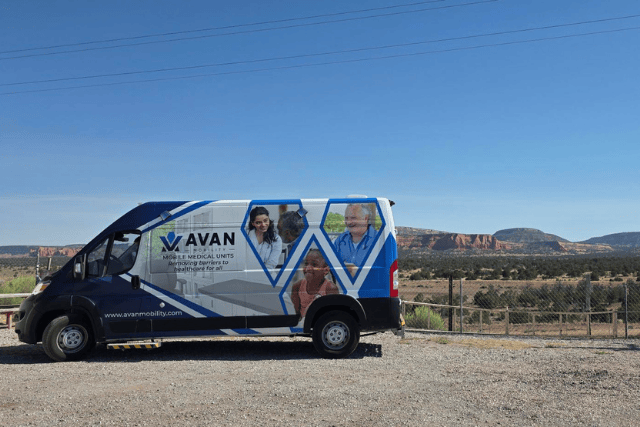
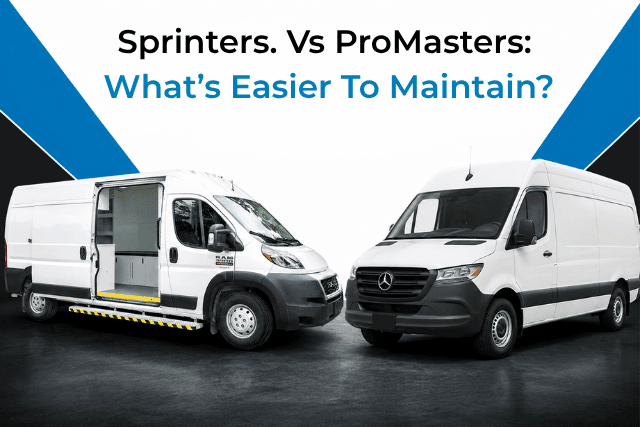
Could mobile triage help your team reach patients faster without placing more pressure on ambulances and emergency rooms? That question carries weight when people in your service area face long travel times or delayed care. A national study found that 4.5 million Americans lived more than 25 minutes from an ambulance station. For healthcare leaders, the gap is clear. Your team needs a safe place to assess patients, direct them to care, and support faster decisions. Leaving that gap open can lead to delayed treatment, worn-down staff, and patients losing trust.
At AVAN Mobility, we’ve spent more than 10 years helping healthcare teams bring care closer to their communities. We’ve manufactured over 180 mobile medical units designed to remove barriers and help save lives. Our team has supported organizations such as Bethesda, and we hold Ford Pro Upfitter and Stellantis QPro certifications. We listen first because your routes, patients, and goals shape the right solution. We also know other manufacturers offer strong options, so our goal is to give you clear, honest information.
In this article, you’ll learn:
- Capabilities: How a mobile clinic can support EMS and mobile triage.
- Differences: How a mobile clinic differs from an ambulance or EMS vehicle.
- Limits: What services, equipment, and rules your program should consider.
Let’s start with the question your team needs answered first.
Can a mobile clinic support EMS and mobile triage?
Yes, a mobile clinic can support EMS and mobile triage when it’s built around your care program. It can give your team a clean, private space to assess patients, provide basic care, and decide what should happen next. Its role depends on your staff, local rules, and medical direction.
For many healthcare groups, the goal isn’t to replace an ambulance. The goal is to fill the space between a patient asking for help and receiving the right care.
You may already see this gap in your community. Ambulance crews may respond to calls that don’t require a trip to the emergency room. Rural patients may live hours from a hospital. Large events may also lack a safe and private place for emergency triage.
A mobile medical clinic can give your team that space. Based on your program, staff may use it to:
- Assess patients: Check symptoms, vital signs, and immediate risks.
- Provide basic care: Treat minor injuries, monitor health concerns, or complete approved testing.
- Support mobile triage: Sort patients based on how urgent their condition is.
- Connect with providers: Use telehealth tools to speak with doctors or specialists.
- Refer patients: Direct people to an emergency room, clinic, or community service.
This can help patients get answers sooner. It may also help EMS crews stay available for serious calls.
How can a mobile clinic work with local EMS teams?
A mobile clinic vehicle can work beside an EMS vehicle as part of a larger care system. This often happens through mobile integrated healthcare or community paramedicine programs.
These programs may bring care to patients before their health concern becomes an emergency. They can also support people who call 911 often because they lack access to regular care.
Picture a rural county in California. Paramedics keep visiting the same patients for ongoing health issues. Many of those patients need support, but they may not need emergency transport.
A mobile health clinic could visit the area each week. Staff could check blood pressure, review medications, assess minor symptoms, and arrange follow-up care. Patients get support closer to home, while local ambulances stay ready for urgent calls.
A mobile triage unit may also help at:
- Community events: Give staff a private place to assess injuries or illness.
- Emergency shelters: Support basic care and patient referrals.
- Cooling centers: Check people for heat-related health concerns.
- Disaster sites: Help organize field triage away from unsafe or crowded areas.
- Temporary clinics: Add care space during outbreaks or local emergencies.
The mobile medical vehicle provides the space, but your care model defines what happens inside it. Your staff, training, medical oversight, and local rules all shape its use.
A mobile medical van can play a useful role in EMS and mobile triage. But it doesn’t automatically become an ambulance once you add medical equipment. Next, we’ll explain how a mobile clinic differs from an ambulance and where each vehicle fits.
How does a mobile clinic compare with an ambulance?
A mobile clinic and an ambulance can both support patient care, but they serve different roles. A mobile clinic gives your team space for assessment, treatment, and mobile triage. An ambulance responds to emergencies and transports patients who may need care on the way to a hospital.
The easiest way to compare them is to look at the patient’s condition and what happens next.
A mobile medical clinic may fit when a patient is stable and your team needs a safe place to assess them. An ambulance is needed when a patient may require urgent transport, life-support equipment, or emergency care during the trip.
| Area | Mobile clinic | Ambulance |
| Main purpose | On-site assessment, treatment, outreach, and mobile triage. | Emergency response, patient care, and transport. |
| Typical patient | Stable or non-critical. | May be unstable, seriously ill, or badly injured. |
| Transportation | Brings a clinical space to the patient. | Brings the patient to an emergency department. |
| Interior | May include an exam bed, cabinets, desk space, a sink, and a medical fridge. | Built for emergency care while the vehicle is moving. |
| Common use | Community paramedicine, rural care, events, testing, and field triage. | 911 calls, major injuries, severe illness, and emergency transport. |
| Emergency status | Doesn’t automatically qualify as an ambulance. | Licensed and operated under state and local EMS rules. |
When can a mobile clinic support EMS?
A mobile health clinic can support EMS when your program gives it a clear purpose. It may serve as a triage unit at a public event, a temporary clinic during an emergency, or a care space in a rural community.
Imagine your county is hosting a summer festival. One visitor feels dizzy, while another has a small cut. Your team could assess both people inside the mobile triage unit.
The person with the cut may receive basic care and return to the event. The person feeling dizzy may need an ambulance. Your staff can share the vital signs and other details gathered during the first assessment.
In this case, the mobile clinic supports emergency triage. It helps your team decide which level of care is right. It doesn’t replace the ambulance when emergency transportation is required.
A mobile clinic may support EMS through:
- Patient assessment: Checking symptoms, vital signs, and immediate health risks.
- Basic treatment: Providing approved care for stable patients.
- Telehealth support: Connecting staff with a doctor or specialist.
- Patient sorting: Directing people to emergency, urgent, or routine care.
- Community paramedicine: Providing planned care outside a hospital or office.
- Emergency staging: Giving staff a clean workspace near a response site.
When is a mobile clinic not the right vehicle?
A mobile clinic shouldn’t transport unstable patients who need emergency care on the way to a hospital. It also shouldn’t be presented as an ambulance unless it meets the required state and local rules.
A different mobile medical vehicle may fit when your program includes non-emergency patient transport. For example, a mobile response unit may include stretcher securements, attendant seating, and medical storage. Still, that type of medical response vehicle isn’t automatically a certified ambulance.
The main question is simple. Does your team need to bring care to a stable patient, or transport a patient during an emergency?
A mobile medical van can support the first need through EMS outreach, mobile integrated healthcare, and mobile triage. An ambulance remains the right choice for emergency transport and care during the trip.
Now that the difference is clear, the next section will look at the mobile triage services your team may be able to provide inside a mobile clinic.
What mobile triage services can a mobile clinic provide?

A mobile clinic can support many mobile triage services for stable patients. Your team may assess symptoms, check vital signs, provide approved care, and decide where each person should go next. The exact services will depend on your staff, medical direction, equipment, local laws, and care plan.
At its core, mobile triage helps your team answer three questions:
- How urgent is the patient’s condition?
- What care can your team provide at the site?
- Does the patient need a clinic, emergency department, or ambulance?
A mobile medical clinic gives your staff a private and controlled space to work through those questions. This can be useful at community events, rural outreach stops, shelters, public health sites, and temporary response locations.
Your team may use the mobile clinic for:
- Basic assessments: Check symptoms, temperature, blood pressure, heart rate, and oxygen levels.
- Minor injury care: Clean and dress wounds or provide other approved first aid.
- Health screenings: Complete basic testing based on your program and clinical scope.
- Patient monitoring: Watch a stable patient while staff decide on the next step.
- Care referrals: Connect patients with primary care, urgent care, behavioral health, or emergency services.
- Telehealth visits: Speak with a doctor or specialist from the mobile clinic.
- Patient education: Explain medications, warning signs, and follow-up steps.
These services can help your team sort patients before a small health concern becomes more serious. They also give people a calm place to speak openly. That privacy can make a real difference when someone feels scared, embarrassed, or unsure about asking for help.
How can mobile triage guide the patient’s next step?
Mobile triage doesn’t mean treating every patient inside the vehicle. Sometimes, the most valuable service is knowing when someone needs a higher level of care.
The CDC describes field triage as the process used to assess an injured patient and choose the right destination. Your process may look different, but the main idea is similar. Your team gathers information, checks for warning signs, and decides what should happen next.
Imagine your mobile clinic is supporting a community event in Arizona. A visitor enters the unit with shortness of breath. Your team checks their oxygen level, heart rate, symptoms, and medical history.
The results may show that the person needs an ambulance. Your staff can call EMS, monitor the patient, and share the assessment details when paramedics arrive.
Another visitor may have mild dehydration. After an assessment, your team may provide approved care and explain the warning signs that mean they should seek more help.
In both cases, the mobile triage unit helps the patient reach the right care path. One person receives emergency support. The other receives care without an unnecessary hospital visit.
What types of patients may be suited for mobile triage?
A mobile clinic is usually best suited for patients who are stable enough to be assessed outside an ambulance or emergency department.
This may include people with:
- Minor cuts or burns: Injuries that may need cleaning, dressing, or basic care.
- Mild dehydration: Symptoms that can be assessed before deciding on the next step.
- Cold or flu symptoms: Stable patients who need screening or guidance.
- Medication concerns: Patients who need a review, education, or referral.
- Ongoing health conditions: People who need checks for blood pressure, blood sugar, or other approved measures.
- Behavioral health concerns: Stable patients who need privacy, assessment, and connection to care.
- Heat-related symptoms: People who may need monitoring, cooling, or referral.
A mobile health clinic gives your team a place to assess these concerns without sending every patient straight to the emergency room. It also helps patients feel seen and heard, which can be just as important as the clinical check.
The next step is matching those services with the right equipment. In the next section, we’ll look at what a mobile clinic may need to support safe and practical mobile triage.
What equipment might a mobile clinic need for mobile triage?
A mobile clinic used for mobile triage needs equipment for patient assessments, safe care, storage, privacy, and reliable power. Your final setup should match the services your team plans to provide. A public event triage unit may look different from a mobile health clinic serving rural patients each week.
Start by listing the tasks your staff will complete inside the vehicle. That list will help you separate useful equipment from items that take up space without supporting daily care.
Common assessment tools may include:
- Blood pressure monitor: Helps staff check for readings that may need follow-up or emergency care.
- Thermometer: Supports quick screening for fever and illness.
- Pulse oximeter: Measures oxygen levels and may help identify breathing concerns.
- Diagnostic set: May include an otoscope and ophthalmoscope for basic ear and eye checks.
- Stethoscope: Supports heart, lung, and blood pressure assessments.
- Glucose testing supplies: May be useful when low or high blood sugar is a concern.
- First aid supplies: Support wound cleaning, bandaging, and other approved basic care.
Your clinical leaders should decide which tools fit your staff’s scope of practice. Local rules, medical direction, and program policies will also shape that list.
What built-in features can support safe mobile triage?
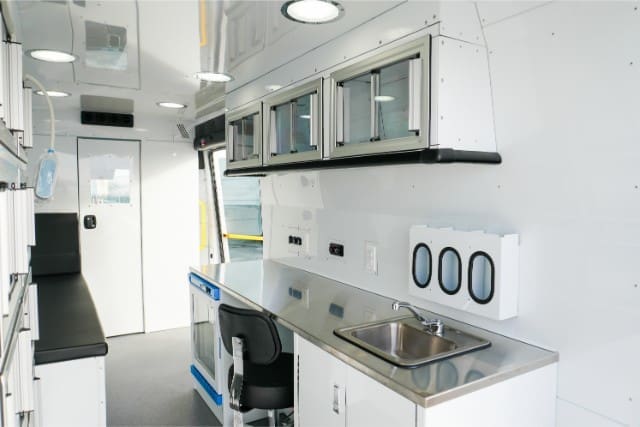
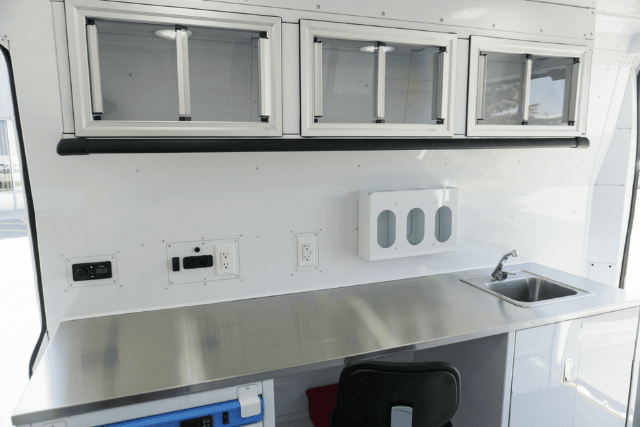
The equipment inside a mobile medical clinic needs a practical place to be used and stored. Common built-in features may include an exam bed, medical cabinets, office space, bright lighting, rear heating and air conditioning, and wipe-clean surfaces.
An exam bed gives your team a stable place to assess a patient. Under-bed storage can hold supplies while keeping the walkway clear. That’s important inside a smaller mobile clinic vehicle, where one box left on the floor can quickly become everyone’s least favorite coworker.
Other helpful features may include:
- Medical storage cabinets: Keep supplies organized and secured while the vehicle is moving.
- Wipe-clean surfaces: Support cleaning between patients.
- Durable flooring: Provides a surface suited to regular clinical use.
- Privacy curtain: Creates separation during exams and personal conversations.
- Desk space: Gives staff room for records, referrals, and telehealth equipment.
- Interior lighting: Helps clinicians complete assessments in a clear workspace.
- Heating and air conditioning: Keeps the patient area comfortable in different U.S. climates.
A mobile triage unit serving Arizona may need strong cooling. A program operating through winter in Minnesota may place more weight on reliable rear heat. The right setup should reflect where and how you’ll use the vehicle.
What utility systems may a mobile triage unit need?
Medical tools are useful only when your team can power, clean, and store them properly. A mobile clinic may include standard outlets, 12-volt plugs, USB ports, and added power near the work area.
Depending on your care model, you may also consider:
- Sink and water supply: Supports handwashing and basic cleaning.
- Medical fridge: Stores approved medications, vaccines, or temperature-sensitive supplies.
- Inverter system: Converts vehicle power for common medical and office devices.
- Shore power connection: Lets the unit connect to an outside power source while parked.
- Secure equipment mounts: Help protect devices during travel.
- Internet connection: Supports telehealth, patient records, and referrals.
- Awning: Creates a covered outdoor area for check-in or waiting.
- Waste storage: Keeps used supplies separate until they can be removed safely.
The best mobile medical van isn’t the one with the longest equipment list. It’s the one that helps your team assess patients, protect their dignity, and make clear care decisions without crowding the workspace.
Ready to plan your mobile triage program?
You came here because your team needs a better way to assess patients, support EMS, and bring care closer to the community. You also needed to know where a mobile clinic fits without confusing it with an ambulance.
Here’s what you learned:
- EMS support: A mobile clinic can provide a private space for mobile triage, assessment, and approved care.
- Clear roles: Mobile clinics bring care to stable patients, while ambulances provide emergency treatment and transportation.
- Practical setup: The right equipment depends on your services, staff, location, and clinical plan.
The next step is turning those ideas into a mobile clinic that works in the real world. At AVAN Mobility, our in-house engineering and manufacturing teams build complete mobile medical units around each program’s daily needs. We guide organizations from early research and vehicle design through production, delivery, and long-term service. That full process helps your team move forward with fewer surprises and a clearer path from idea to impact.
Your mobile triage program should help patients feel safe, respected, and connected to the right care. That human outcome is what keeps us pushing mobile healthcare forward. If you have questions, click the button below to talk to a mobility expert.
If you’re not ready to speak with a mobility expert, these resources can help you take the next step.
Recommended next reads
- How to choose a mobile medical van: Learn a step-by-step approach to choosing a mobile medical van.
- Mobile clinic equipment list: What can be installed in a mobile clinic van? See which clinical, storage, power, and comfort features can support your mobile triage services.
- Buying a mobile medical van: Your process with AVAN Mobility: Review what happens from your first conversation through design, production, and delivery, so you know what to expect.