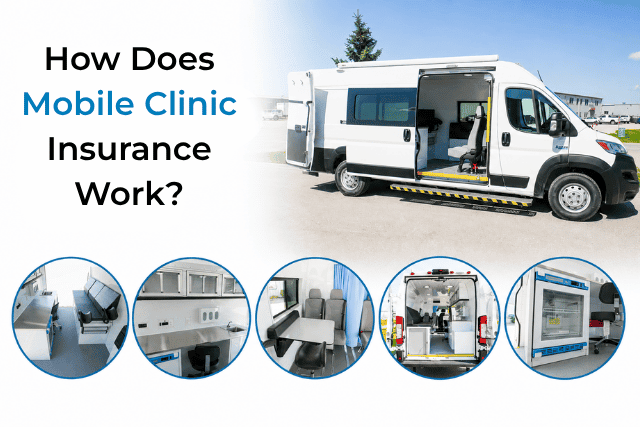
If mobile clinic insurance feels like one more complicated box to check before launching your program, you are not alone. Your clinic travels on public roads, carries valuable medical equipment, and serves patients after it parks. A gap in coverage could leave your organization exposed after a collision, equipment damage, theft, or an incident at a service site. You want confidence that your program can keep moving, so your team can focus on reaching people who face barriers to care.
At AVAN Mobility, we have spent over 10 years helping healthcare teams turn mobile care plans into working programs. We have manufactured more than 180 mobile medical units and worked with organizations such as CalOptima and Bethesda Community Clinic across the U.S. Our Ford Pro Upfitter and Stellantis QPro certifications further reflect our experience with these specialized vehicles.
To add an insurance expert’s perspective, the information in this article is based on an interview with Melissa Thumb of Thum Insurance Agency, LLC. Thum Insurance Agency, LLC, is one of the nation’s largest niche specialists in personal and commercial insurance. Its customized policies for mobile health units and mobile specialty units give the agency direct experience with the risks these programs face.
In this article, you’ll learn:
- Coverage: What mobile medical unit insurance may include.
- Cost: What can affect your premium.
- Equipment: How medical equipment may be covered.
- Risks: Which mistakes can create coverage gaps.
- Claims: What happens when you need to use your policy.
*Keep in mind, coverage varies by provider, state, vehicle, and organization. Use this guide to understand the basics and prepare better questions for a qualified insurance professional.
Is mobile clinic insurance considered commercial vehicle insurance?
Yes. For insurance purposes, a mobile health clinic is treated as a commercial vehicle. That means your coverage has to account for what can happen while you’re driving and what can happen once you’re parked and serving patients. Both sides of that risk need protection.
Think about a mobile clinic traveling from a health center in Missouri to a rural community 80 miles away. The risks on the highway are very different from the risks once the unit is parked and patients start walking through the door.
That’s why mobile clinic insurance usually needs several layers of coverage working together:
- Auto liability: This helps cover liability tied to operating your mobile clinic on the road.
- Physical damage: This protects the vehicle and equipment if it’s damaged in a covered event
- General liability: This helps address certain bodily injury or property damage claims connected to your operations at a service location.
The key point is that mobile medical unit insurance doesn’t stop being important when you put the vehicle in park.
Your unit may spend hours traveling between communities, then spend the rest of the day operating like a small healthcare space. If your mobile medical vehicle insurance only addresses one side of that equation, you could leave a gap in your protection.
For organizations planning a mobile healthcare program, that distinction affects the type of coverage you’ll need before the first patient ever steps inside.
What types of coverage can mobile clinic insurance include?

A well-built mobile clinic insurance program may include several coverage layers because your risks don’t all come from the same place. Your organization has a vehicle on the road, equipment that moves with it, employees doing their jobs, and patients entering the unit. Each layer helps address a different type of exposure.
1. Auto liability
Auto liability provides liability coverage for vehicles used by your business.
For a mobile clinic, this is the coverage tied most closely to your time on the road. Your unit may travel across a city, between counties, or into rural communities to reach patients.
Travel creates the same basic liability exposure that other business vehicles face.
Think of it this way: once your clinic leaves the parking lot, it’s operating as a commercial vehicle. Auto liability is the coverage layer that responds to that part of your operation.
2. Physical damage/inland marine
Inland marine coverage is designed to protect property that doesn’t stay in one fixed place. It is designed for exposures that can’t reasonably be confined to one location.
That fits a mobile clinic pretty well.
Your unit moves from location to location, and the property inside it moves too. Standard property coverage is often built around a fixed building or address. A mobile medical unit doesn’t exactly cooperate with that setup.
This can be an important part of mobile medical unit insurance because your organization may have valuable property traveling with the vehicle every day.
3. Roadside assistance
Roadside assistance helps when your mobile clinic has trouble getting where it needs to go.
The coverage described by Thum Insurance includes:
- Emergency roadside service: Help when the unit has a roadside problem.
- 24/7 towing: Towing support when the vehicle can’t continue operating.
- Roadside assistance: Access to support when something interrupts your trip.
This coverage may sound simple, but it can be important for a program built around showing up.
If your clinic is scheduled to serve a community two hours away and the vehicle can’t make the trip, that affects more than your transportation plan. It can affect patient access, too.
4. General liability
General liability protects business organizations against certain liability claims tied to their operations.
That can include claims involving:
- Bodily injury
- Property damage
- Premises and operations
- Products and completed operations
- Advertising injury
- Personal injury liability
This coverage becomes especially relevant once your mobile clinic reaches a service location.
Your vehicle may be parked, but your organization is still operating. Staff may be working inside the unit, patients may be entering and leaving, and your team may be interacting with the public.
General liability helps address that side of the risk.

5. Cyber and data breach
Cyber liability and electronic data insurance help protect organizations that rely on electronically stored information.
For a healthcare organization, that can be an important conversation to have.
The coverage described here can include:
- Privacy liability
- Identity theft liability
- Network security liability
Many healthcare teams use digital systems as part of their daily work. If your mobile clinic relies on electronically stored information, cyber coverage may be another layer to discuss when building your insurance program.
6. Workers’ compensation
Workers’ compensation helps address work-related injuries involving employees.
The policy described by Thum Insurance includes two key parts.
- Part one: This covers an employer’s statutory responsibilities under workers’ compensation laws.
- Part two: This covers certain employer liability tied to work-related employee injuries that fall outside the workers’ compensation statute.
In simpler terms, this coverage focuses on your staff.
Your mobile clinic may be built around patient care, but your employees are the people making that care possible. Their work can include driving, setting up the clinic, helping patients, and working inside the unit.
Workers’ compensation helps address the employee side of your organization’s risk.
7. Directors and officers, EPLI, property, and business personal property
These additional coverage needs depend more on your organization and how it operates.
Thum Insurance identifies several policies that may apply:
- Directors and officers coverage
- Employment practices liability insurance, often called EPLI
- Property insurance
- Business personal property coverage
These aren’t automatically the same for every mobile clinic program.
For example, a nonprofit may have different organizational risks than a health system. An organization with a permanent office may also have property exposures that a fully mobile operation doesn’t have.
That’s why mobile medical vehicle insurance should be looked at in the context of your full organization, not only the vehicle.
The goal is to understand the risks across your program and match the right coverage layers to them.
How much does mobile clinic insurance cost?

There isn’t one average cost for mobile clinic insurance. Your price can change based on the insurer, the state you operate in, and how you use your unit. That can make budgeting feel a little fuzzy at first, but the main cost factors are fairly straightforward.
For example, a mobile clinic that stays within one city may be priced differently from one that travels across several rural counties every week.
What factors can affect your premium?
- State: Insurance rates and rating factors can vary across the U.S.
- Operating radius: The farther your unit travels, the more road exposure it may have.
- Vehicle use: Insurers may look at how often the clinic moves and how it’s used.
- Drivers: Qualified drivers are an important part of the insurance review.
- Vehicle value: The total value of the mobile clinic can affect the cost.
- Equipment value: Medical equipment inside the unit can also affect the amount being insured.
That’s why comparing your quote with another organization’s mobile medical unit insurance cost may not tell you much.
A nonprofit running one unit around Cleveland could have a very different premium from a healthcare system traveling across large parts of Arizona.
The best way to get a useful mobile medical vehicle insurance estimate is to have your program details ready. Your operating area, drivers, vehicle value, equipment value, and planned use will give the insurer a much clearer picture of your risk.
Does the type of mobile clinic affect insurance?

With Thum Insurance, the type of clinical service usually doesn’t change how the unit is classified. A mobile mammography unit, dental clinic, and behavioral health van are all treated as health units. What can change is how each one travels and operates day to day.
For example, a mobile mammography unit may stay at one location for a longer period. A dental clinic or behavioral health van may travel to several communities throughout the week.
That difference can affect the unit’s operating radius, which can be part of the insurance rating process.
In simple terms, the service itself may not be the biggest factor. The way your program uses the vehicle can have more impact.
Think about questions like:
- How often does the unit move?
- How far does it travel each week?
- Does it stay parked at one site for several days?
- Does it travel between multiple counties or communities?
This means two organizations offering different healthcare services could still have similar mobile clinic insurance needs if their vehicles operate in similar ways.
At the same time, two similar clinics could have different mobile medical unit insurance costs if one travels much farther than the other.
The key is to look at how your program actually operates, not just the type of care happening inside the vehicle.
What does the mobile clinic insurance underwriting process look like?
The underwriting process is how the insurer gets to know your mobile clinic and how you plan to use it. They’ll want details about the vehicle, the equipment inside it, your drivers, and when the unit is expected to arrive.
With Thum Insurance, you can fill out an application online or schedule a phone call and go through the information with them.
To make the process easier, it helps to have these items ready:
- Bill of sale: This shows the details and value of the mobile clinic.
- Equipment list: Keep an up-to-date list of the medical equipment inside the unit.
- Driver information: Have details ready for anyone who may drive the vehicle.
- Delivery date: Know when your mobile clinic is expected to arrive.
- Photos of the unit: Pictures help show exactly what’s being insured.
Having this information ready can save you from scrambling for paperwork later.
For example, if your delivery date is coming up and you still need to track down driver details or equipment values, your insurance process can become one more thing holding up your launch.
A little preparation goes a long way here. The more complete your information is from the start, the easier it is to move through the mobile medical unit insurance process and get your program closer to serving patients.
How does mobile clinic liability coverage work on the road and at a service site?

Your mobile clinic faces different risks depending on what it’s doing. It may be driving between communities, parked at a health center, or serving patients at an outreach site. Auto liability and physical damage coverage can protect the named insured across these situations.
For example, your team could drive the unit to a community event in the morning and spend the rest of the day parked while seeing patients.
The location changes, but the mobile clinic is still part of your organization’s insured operation.
In the coverage described here:
- On the road: Auto liability and physical damage apply to the named insured while the unit is being driven.
- While parked: Coverage can continue when the mobile clinic is parked.
- At a service location: The named insured remains covered while the unit is at a facility and your team is working with patients.
The important phrase here is named insured. That’s the person or organization listed on the insurance policy.
So, when you’re setting up mobile clinic insurance, make sure you understand exactly who is listed on the policy and how the coverage applies during each part of your normal operation.
Your clinic may change locations throughout the day. Your insurance needs to account for that mobile way of working.
How is medical equipment covered by mobile clinic insurance?
Medical equipment can be a big part of your mobile clinic’s value, so it needs to be clearly listed and accounted for. In the Thum Insurance package, medical equipment is included within the overall physical damage coverage rather than treated as an afterthought.
Each piece of equipment is itemized with details such as:
- Year: When the equipment was made.
- Make: The manufacturer.
- Model: The specific equipment model.
- Value: The amount assigned to the equipment.
- Serial number: The unique number tied to that item.
That detailed inventory helps show exactly what equipment is being insured inside the mobile clinic.
For example, if your unit carries diagnostic equipment, exam tools, or other high-value medical devices, those items should be documented before the clinic starts operating.
This is also why keeping your equipment list current is so important.
If your organization adds new equipment later, your mobile clinic insurance records should be updated, too. A clean, accurate inventory makes it much easier to understand what’s covered and what value is attached to each item.
For organizations investing in a mobile medical unit, the vehicle and the equipment inside it are both major assets. Your mobile medical unit insurance should reflect that full picture.
Do mobile clinic insurance requirements vary by state?
Yes. Driver and licensing requirements can vary from state to state, so it’s important to check the rules where your mobile clinic will operate.
A good place to start is the USAGov state motor vehicle services directory. It connects you to the correct DMV or motor vehicle agency for your state.
If your mobile clinic will cross state lines, check the requirements for each state in your regular service area.
The goal is simple: make sure your drivers meet the local requirements before they operate the unit. That helps prevent licensing issues from becoming an avoidable problem later.
What can leave your mobile clinic underinsured?

Some of the biggest mobile clinic insurance gaps come from simple updates that never make it to the insurer. A new driver starts using the unit, new equipment gets added, or the inventory list falls out of date. Those small oversights can create bigger problems later.
Common issues include:
- Unreported drivers: Don’t let someone operate the unit before they’ve been reported to the insurance company.
- New equipment: If you add medical equipment, report it so your policy records stay current.
- Outdated inventory: Keep a clear list of the equipment carried inside the mobile clinic.
- Fraudulent activity: An insurance company may cancel a policy if it finds fraud or other serious policy issues.
The problem with these gaps is that they may stay hidden until something goes wrong.
For example, your team might add a new piece of medical equipment and forget to update the inventory. Months later, a claim could raise questions about what was actually listed on the policy.
A good habit is to treat your mobile medical unit insurance as something that needs regular updates.
If your drivers, equipment, or operations change, let your insurance provider know. Keeping those records current can help your organization avoid preventable surprises when you need the coverage most.
What happens when you need to file a mobile clinic insurance claim?
If something goes wrong, the first step is to report it to your insurance company. The insured can contact the insurer directly 24/7 and explain what happened.
The process starts with a few simple steps:
- Report the incident: Contact the insurance company as soon as possible.
- Explain what happened: Share the details of the situation with the insurer.
- Ask for guidance: If you work with Thum Insurance, you can also contact their team to review the potential claim.
No organization wants to think about filing a claim, but knowing who to call ahead of time can make a stressful situation easier to manage.
Keep your insurance contact information somewhere your team can access quickly. That way, if something happens on the road or while your mobile clinic is operating at a service site, you’re not searching for a phone number when you should be focused on the situation in front of you.
Ready to plan your mobile clinic next steps?
You came here because mobile clinic insurance felt like a big unknown in an already complex project. You wanted to know what needs coverage, what affects the cost, and what could leave your organization exposed once your clinic hits the road.
Now you know the basics:
- Coverage: Your insurance may need to account for the vehicle, operations, employees, equipment, and other risks.
- Cost: Your state, travel radius, drivers, vehicle use, and equipment value can affect your premium.
- Preparation: Keeping driver and equipment information current can help prevent coverage gaps.
- Claims: Knowing who to contact before something happens can make the claims process easier to handle.
At AVAN Mobility, we start by learning how your organization plans to use its unit before talking about the vehicle itself. That conversation carries through design, production, delivery, and support after your clinic is on the road. Our goal is to help you think through the full program, because the vehicle has to work in the real world long after it leaves our facility. At the end of the day, we’re here to help you remove barriers to care and build something that makes a real difference in people’s lives. If you have questions, click the button below to talk to a mobility expert.
If you’re not ready to talk with a mobility expert yet, that’s okay. Here are three resources that can help you take the next step.
Recommended next reads
- How much does a mobile medical unit cost in the U.S.? Now that you understand insurance, see what goes into the larger cost of buying a mobile medical unit so you can start building a realistic budget.
- Payment options for mobile medical vans: Once you have a better idea of cost, learn about the payment options available when you’re figuring out how your organization could fund the purchase.
- Buying a mobile medical van: Your process with AVAN Mobility: Ready to see what happens after the research stage? This guide walks you through the buying process so you know what to expect from the first conversation onward.