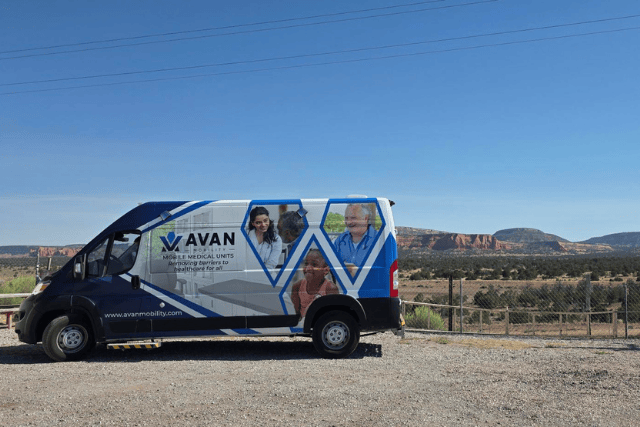
What happens when a patient needs healthcare but has no reliable way to reach it? For millions of Americans, that question is more than hypothetical. Research estimates that about 5.8 million people in the U.S. delay medical care each year because of transportation barriers. Those barriers include having no vehicle, unreliable transportation, high travel costs, and limited options for getting to appointments. For Dr. Lee Jacobs, Medical Director at Bethesda Community Clinic, the consequences show up in the patients his team sees across northwest Atlanta.
Dr. Jacobs has spent 16 years with Bethesda Community Clinic. Today, its mobile medical units bring primary care to people facing homelessness, limited insurance, no insurance, and transportation barriers. His perspective adds something numbers alone cannot show: what delayed healthcare looks like when a patient finally sits across from a physician. Bethesda’s broader journey into mobile care is explored in their Community Clinic story. Here, we’re focusing on what Dr. Jacobs has learned from treating people in the community.
In our conversation, Dr. Jacobs explains:
- What he sees when people have gone without regular medical care
- Why mental health and loneliness have become major concerns
- How transportation affects access to primary care
- Why he believes healthcare teams sometimes have to go to the patient
His message is straightforward: access changes when healthcare starts meeting people where they already are.
Who does Dr. Jacobs and Bethesda Community Clinic serve?
Bethesda Community Clinic brings mobile primary care across northwest Atlanta. Dr. Lee Jacobs says the team sees people who are homeless, people with poor or no insurance, and people with no reliable ride to a clinic. For many patients, getting to care is a problem before the visit even starts.
“We’re mobile because a lot of people don’t have transportation here in north Atlanta.”
That line sums up Bethesda’s approach. The team does not wait for every patient to reach a fixed clinic. It takes care into the community instead. This helps Bethesda reach people who might put off a checkup, treatment, or follow-up visit.
Dr. Jacobs also points to homelessness as a major issue in Atlanta. AVAN has covered how Atlanta outreach teams bring services to people across the city. Bethesda follows the same basic idea: go where people already are.
The people Bethesda serves don’t all face the same barrier. Some lack transportation. Some have little or no insurance. Others don’t have stable housing. Those problems can also happen at the same time.
For Bethesda, mobile medical units help close that gap. They bring primary care closer to people who might have a hard time reaching it on their own.
What happens when patients go without routine healthcare?
When people go without regular healthcare, small problems can grow into serious ones. Dr. Jacobs says Bethesda often sees patients with very high blood pressure and severe diabetes. In many cases, the issue is not that the condition appeared overnight. It is that the person went too long without care.
“The majority of people we care for have bad diabetes, have bad blood pressure. The numbers you never see in a general medical office, they’re so high because people have not had care.”
For Dr. Jacobs, those numbers show what delayed access can look like in real life. A person may miss routine checkups, medication reviews, or follow-up visits. Without those touchpoints, a health problem can keep getting worse before someone has a chance to treat it.
This is one reason mobile care can support a more proactive approach to health. Instead of waiting for every patient to reach a clinic, a mobile team can bring basic care closer to the community. That can include blood pressure checks, diabetes care, medication support, and referrals for more treatment.
Dr. Jacobs’ point is not that a mobile unit replaces every hospital or clinic. It gives healthcare teams another way to reach people earlier.
For organizations planning a mobile program, that distinction is important. The goal is not simply to add another place for appointments. It’s to reduce the gap between when a health problem starts and when a patient gets care.

Why does Dr. Jacobs say mental health is one of the biggest needs?
Dr. Jacobs says mental health is one of the biggest needs he sees through Bethesda’s mobile healthcare work. Patients may come in for physical concerns, but depression, loneliness, sleep problems, and trouble finding work can also affect their health. For some people, those challenges are happening at the same time.
“However, the biggest need is mental health, okay? People are generally very depressed or very alone. Not just the homeless, but other people too. Loneliness is epidemic around here.”
That part of the interview shows why healthcare access can’t stop at blood pressure checks or diabetes care. A patient may also need someone to listen, help with medication, or connect them with counseling.
Bethesda provides both medicine and counseling as part of its work. Dr. Jacobs says patients have been very appreciative of that support. His comments also show why a mobile healthcare program should think about the full range of needs it may meet in the community.
For some organizations, that could mean adding behavioral health services to a medical outreach program. Others may choose a vehicle built around private counseling. If that’s a service you’re exploring, our guide to mobile mental health clinics explains how those programs work.
The key point from Dr. Jacobs is that physical and mental health don’t always arrive as separate problems. When a team goes into the community, it may find both sitting across from them at the same visit.
Why does transportation make mobile healthcare so important?
Transportation can decide if a person gets care at all. Dr. Jacobs says many Bethesda patients don’t have a reliable way to reach a clinic. For those patients, bringing care into the community removes a major barrier before treatment begins.
“I would think that the only way to really provide comprehensive health to the people that need it, people without transportation, is to go where they are.”
That view lines up with U.S. research. A study in JAMA Network Open found that almost 6 million people delay medical care each year because of transportation problems. Common barriers include no private vehicle, unreliable rides, high travel costs, and poor road access.
For a healthcare program, that raises a simple question: are people missing care because the service isn’t there, or because they can’t reach it?
Mobile healthcare changes that starting point. A team can bring care closer to shelters, community centers, neighborhoods, and other places patients already visit.
Dr. Jacobs’ point is practical. If transportation keeps patients from getting through the clinic door, asking them to travel farther won’t solve the problem. Sometimes, the better answer is to move the care.
What would Dr. Jacobs tell an organization considering mobile healthcare?
If you’re thinking about mobile healthcare, Dr. Jacobs’ advice starts with one simple question: who can’t reach your current services? For Bethesda, transportation is a major barrier. Going mobile gives the team another way to reach people who might otherwise miss care.
“I would think that the only way to really provide comprehensive health to the people that need it, people without transportation, is to go where they are.”
That doesn’t mean every healthcare program should buy a mobile unit. It means you should look closely at the gap between your services and the people you’re trying to reach.
Ask questions like:
- Who is missing appointments
- Where transportation creates a barrier
- What services people struggle to reach
- Where patients already gather in the community
Those answers can help you decide if a mobile program fits your goals.
Dr. Jacobs’ point is practical. If people can’t get to your clinic, adding more appointments at the same location won’t fix the access problem. A mobile medical unit gives your team another option. It lets you bring care closer to shelters, community spaces, neighborhoods, and other places people already use.
The right setup will depend on your services, staff, and community.
But the first step is the same: understand the barrier before choosing the vehicle.

What role do volunteers play in Bethesda’s work?
Volunteers are a big part of how Bethesda Community Clinic serves its community. Dr. Jacobs says the clinic depends on volunteers, and he sees their work as one of the strongest parts of the program. For him, the mobile unit works because people are willing to show up and care for others.
“The number of volunteers is huge. We run by volunteers.”
That point is easy to miss when people talk about mobile healthcare. The vehicle helps bring care into the community, but the people inside it are what make the service possible.
Dr. Jacobs also talks about the work volunteers do outside the spotlight:
“You don’t hear about it in the news. You only hear bad stuff. But the number of people doing wonderful work out of the hospitals, providing free care, and out of the mobile units, it has been just a tremendous blessing to so many people.”
For healthcare leaders, there’s a useful lesson here. A mobile program needs more than the right vehicle. It also needs people who believe in the mission, understand the community, and are ready to build trust.
Bethesda’s story shows how much the human side can shape a program. The van helps open the door, but the team is what keeps the work going.
What can Dr. Jacobs’ experience teach your mobile healthcare program?
Dr. Jacobs’ experience shows why mobile healthcare starts with understanding the barriers people face. Transportation, delayed care, mental health, and unstable housing can all make it harder for someone to see a provider. A mobile program gives healthcare teams another way to close that gap.
His interview points to a few important lessons:
- Start with the barriers your patients face
- Bring care closer when transportation gets in the way
- Think about physical and mental health together
- Build the program around the people you serve
At AVAN Mobility, we build mobile medical vehicles for organizations that want to take healthcare into their communities. The vehicle is one part of that work. Your staff, services, partnerships, and understanding of the community shape what happens once the doors open.
If your organization is considering a mobile healthcare program, click the button below to talk to a mobility expert. We’d be happy to learn about the people you serve, the barriers they face, and what you’re trying to accomplish.
If you’re still researching, these resources can help you take the next step.
What should you read next?
- How much does a mobile medical unit cost in the U.S.?: Learn what affects the cost of a mobile medical unit and what to include in your budget
- 10 steps to starting a mobile medical clinic: Walk through the main steps involved in planning and launching a mobile healthcare program
- Mobile medical vans vs. mobile medical trailers: Compare the space, mobility, setup, and operating needs of two common mobile clinic options