Has your organization been thinking about buying a mobile medical RV and wondering if it’s really worth it? This mobile medical RV review breaks it all down.
Across the U.S., more than 100 million people live in areas with limited access to healthcare, and many organizations are trying to close that gap. Maybe you’re part of a local health department, nonprofit, or hospital system that’s stretched thin. You know what it feels like to have a mission bigger than your resources.
The risk of choosing the wrong type of vehicle, or sticking with no mobile option at all, can mean more missed care and more people falling through the cracks. A mobile medical RV sounds like freedom, but is it really the right tool for your program in 2026?
At AVAN Mobility, we’ve spent over 10 years designing and building more than 150 mobile medical units across the country. Your mission drives you, and ours is to support it. We listen first, build second, and create vehicles that help you reach more people safely and with dignity. And while we know we’re not the only manufacturer out there, our experience helps us share what truly works and what to watch out for.
Here’s what you’ll learn in this article:
- A clear look at how mobile medical RVs perform in real-world healthcare settings
- When a mobile medical RV works best, and when it falls short
- What key features and costs to consider before investing in one
How do mobile medical RVs perform in real-world healthcare settings?
When people picture mobile healthcare, the mobile medical RV often comes to mind. It feels like the ultimate setup: A full clinic that moves wherever care is needed. In this mobile medical RV review, we’ll take an honest look at how these units perform across the U.S. in real situations.
The big picture
Across states like Texas, Montana, and Kansas, where patients often live far from hospitals, mobile RV medics have stepped in to close some of the distance. These vehicles can handle basic care such as health screenings, checkups, and vaccinations. Some even have small lab setups for testing.
They do best when used for short-term programs or outreach routes that move from one town to another. For example, a county health team in Wyoming might spend three days in one area, then drive to the next. Because RVs have built-in power, water, and storage, they can run independently for several days at a time. That can be helpful for rural teams with limited staff or budgets.
What do mobile healthcare teams like about them?
Every program is different, but some of the same positives that come up when other organizations talk about using mobile medical RVs include:
- All-in-one setup: Built-in plumbing, power, and storage make it easy to get started providing healthcare.
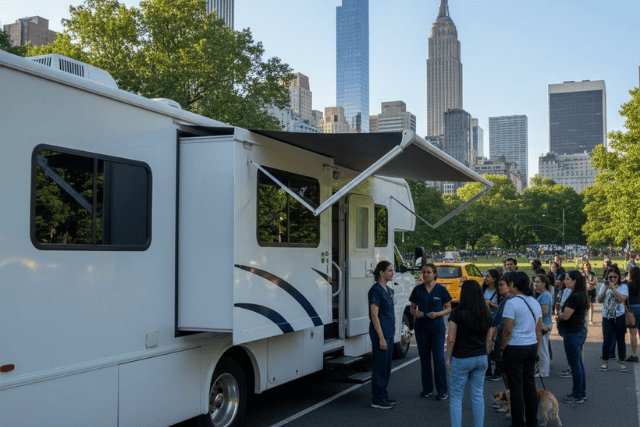
- High visibility: A large RV parked downtown or at a fairground draws attention and helps people recognize it as a health resource.
- Comfortable interiors: RVs can offer roomy layouts with good air conditioning, seating, and privacy for both patients and staff.
What might programs realize after a few months of using a mobile medical RV?
Once the initial excitement of a mobile medical RV wears off, teams often start to see the real challenges. These vehicles are large, sometimes longer than 35 feet, and that makes them tough to drive or park in tight spaces. In small towns, narrow streets can make it almost impossible to reach certain locations. In cities, parking permits and height limits can create major headaches.
Maintenance can also be demanding. RV systems, such as plumbing, air conditioning, and generators, require regular maintenance. Repairs can be time-consuming and costly, especially if parts need to be ordered. Over time, organizations might begin to think, “It’s great when it’s on the road, but when it’s in the shop, everything stops.”
Where do mobile medical RVs make a real difference?
When they’re running well, mobile medical RVs can support communities in meaningful ways. In remote parts of Alaska, they can be used for preventive health checks. During hurricane season along the Gulf Coast, they’ve acted as temporary triage centers. These examples show their potential, but they also highlight how location and conditions matter a lot.
Bottom line: Mobile medical RVs can perform well when used for large-scale or short-term outreach. They bring comfort and a sense of visibility, but their size, upkeep, and cost can make them less practical for smaller or long-term community programs.
When does a mobile medical RV work best, and when does it fall short?

If you’ve ever stepped inside a mobile medical RV, you know how impressive they look. There’s room for staff, patients, and equipment, and it feels like a real clinic that just happens to have wheels. But as many outreach programs have learned, that size can be both a blessing and a curse. In this part of our mobile medical RV review, let’s talk about where these vehicles perform well and where they often create more challenges than they solve.
When does a mobile medical RV work best?
A mobile medical RV can shine in specific, controlled situations. They’re ideal for larger programs that have consistent funding, wide-open parking spaces, and scheduled routes.
1. Large-scale outreach programs
Picture this: A hospital network in central Florida uses a mobile medical RV to serve three nearby towns. Each week, the team parks at fairgrounds or public lots with plenty of space. They handle immunizations, screenings, and simple treatments. For them, the RV works because their locations are predictable and accessible.
2. Disaster relief and emergencies
Imagine a hurricane has hit the Gulf Coast, and a hospital’s power is out. A mobile medical RV can roll in, providing a climate-controlled, sterile space for wound care and checkups. With its own generator and water tanks, it becomes a mobile command post when infrastructure is down.
3. Specialty care programs
Some programs use mobile medical RVs for services that need larger spaces, like mammography or dental clinics. The extra room allows for multiple exam areas and heavy equipment.
These setups make sense when routes are clear, parking is easy, and the team has the budget and staff to manage the vehicle.
When does a mobile medical RV fall short?
Now for the part that many programs only realize after purchase. While space feels like freedom at first, it can also slow you down. Let’s take a look at five ways where they fall short.
1. Size and access problems
Mobile medical RVs can reach 35 feet or longer. That’s great for multiple rooms, but try navigating that in tight spaces or steep terrain.
- Rural access: Picture your program in the hills of West Virginia, trying to reach a remote community. The road twists through sharp turns and steep inclines. Your 35-foot RV can’t make the climb. You park miles away, and your staff hauls equipment by hand.
- Urban parking: In crowded cities like Los Angeles or Boston, parking becomes a daily headache. The RV might circle blocks searching for a legal space, while smaller vans could pull right in.
2. High operating demands
A mobile medical RV’s complex systems can make upkeep expensive and time-consuming.
- Maintenance costs: Plumbing, HVAC, and generators all need regular servicing.
- Fuel use: These vehicles drink fuel, which quickly adds up for long outreach routes.
- Driver requirements: Some programs need a commercial driver’s license (CDL) operator, which limits staffing flexibility.
Imagine this: your team in Nevada is setting up for a weekend event, but the generator fails. The nearest mechanic is hours away. Without power, the clinic shuts down, leaving patients waiting.
3. Storage and weather challenges
When not in use, RVs take up a lot of space. Many organizations don’t have indoor storage, so the vehicle sits outside.
- Weather exposure: Sunlight, snow, and humidity can wear down seals, siding, and graphics.
- Limited flexibility: Because it’s large, it’s harder to move or redeploy quickly when plans change.
4. Speed and scheduling issues
Mobile medical RVs are heavy and take time to set up, which makes multiple stops per day difficult. If your outreach model depends on shorter, more frequent visits, that big vehicle slows your team down.
Picture a mental health outreach program in downtown Seattle. They want to park near high-traffic areas where people gather, but the RV can’t fit. They end up several blocks away, walking supplies back and forth. That distance limits how many people they can reach in a shift.
5. Terrain and road restrictions
Rural regions often have dirt roads with steep drop-offs or soft shoulders. An RV might struggle or get stuck, while other vehicles, such as mobile vans, handle those routes with ease.
The double-edged sword of size
As you can see, the same thing that makes a mobile medical RV appealing, its size, can also hold you back.
Here’s a quick look at how that tradeoff plays out:
| Advantage | Hidden challenge |
| Room for multiple exam areas | Difficult to park or drive in tight areas |
| Can fit large equipment and staff | Requires higher maintenance and fuel costs |
| Feels professional and comfortable | Too heavy for many rural or urban routes |
Mobile medical RVs perform best in stable, well-funded programs with predictable routes and wide-open spaces. But for teams working in tighter, more unpredictable environments, that same size becomes a major obstacle.
Next, let’s move into what really matters when making this kind of investment: The key features and costs you need to know before buying.
What features and costs should you consider before investing in a mobile medical RV?
Before your organization makes the leap into buying a mobile medical RV, it’s important to understand what you’re really investing in. These vehicles can be incredible tools for healthcare outreach, but they’re also complex machines with big price tags and long-term upkeep costs. In this part of our mobile medical RV review, we’ll break down the features that matter most, what drives the price, and how to decide what fits your program’s goals.
What can you expect to pay for a mobile medical RV?
A mobile medical RV typically costs between $250,000 and $1,000,000 or more, depending on size, floor plan, and customization level. Smaller, single-room RVs might fall toward the lower end of that range, while large, fully equipped models with multiple exam rooms and advanced systems can easily top a million dollars.
Here’s a simple cost overview:
| RV type | Estimated cost range (USD) | Typical use case |
| Basic mobile medical RV | $250,000–$400,000 | Single exam room, basic outreach |
| Mid-level medical RV | $400,000–$700,000 | Primary care or screening programs |
| High-end or specialty RV | $700,000–$1,000,000+ | Dental, imaging, or multi-room setups |
These numbers don’t include insurance, driver training, or storage costs, which can add thousands of dollars a year. Programs operating in multiple locations or extreme climates should also budget for higher maintenance expenses.
6 key features to think about
Every mobile medical RV can be customized differently, but several core features tend to drive both cost and functionality.
1. Interior layout
Think carefully about how your staff will use the space. More rooms mean more flexibility, but also more maintenance and less maneuverability. Programs that only need one or two stations might be better off avoiding multi-room builds that drive up cost and weight.
2. Climate control and insulation
RVs serving hot or cold regions need upgraded HVAC and insulation systems. Imagine working a summer day in Texas without proper cooling; the vehicle can become uncomfortable fast. These systems are essential but add to the total price.
3. Medical-grade equipment
Outfitting an RV for true medical use requires specialized gear. Refrigerators for vaccines, exam tables, sinks with hot water, and onboard diagnostic tools can add tens of thousands to the price. The more equipment installed, the heavier and more expensive the vehicle becomes.
4. Power and water systems
Many mobile medical RVs have generators, freshwater tanks, and wastewater systems for independent operation. These systems give flexibility but also require regular cleaning and maintenance. Replacing or servicing them can be costly and time-consuming.
5. Accessibility and patient flow
Consider how patients enter and move through the vehicle. Features like wheelchair lifts or ramps are crucial for accessibility, but they add weight and cost. A poor layout can slow visits and frustrate staff.
6. Technology and connectivity
If your program relies on telehealth or digital records, onboard Wi-Fi and secure data systems are worth investing in. They help keep your operations smooth, but can add $10,000 or more to your build.
The hidden costs to remember
Buying the vehicle is just the beginning. Long-term ownership costs often surprise new program directors.
- Fuel and mileage: Mobile medical RVs can get as little as 6–8 miles per gallon, so travel-heavy programs will spend more on fuel than they expect.
- Maintenance: Oil changes, tires, and generator service add up quickly. Some parts need specialized technicians, especially for custom medical builds. With a mobile medical RV, expect to pay around three times more in annual maintenance fees compared to van setups.
- Insurance: Comprehensive coverage is mandatory, and medical vehicles cost more to insure than standard vans.
- Storage and utilities: If you don’t have indoor storage, you’ll need a facility to protect the vehicle from the weather. Outdoor exposure shortens its lifespan and can lead to expensive repairs.
Imagine your outreach program based in rural Oklahoma buys a $600,000 RV for mobile health visits. The first year runs smoothly, but by year two, rising diesel prices and frequent generator maintenance start eating into your operating budget. The RV still serves its purpose, but each trip costs more than expected, forcing your team to limit travel days.
Bottom line: A mobile medical RV can look like a one-time purchase, but it’s more like buying a rolling healthcare facility. Between the upfront investment, customization, and ongoing costs, these vehicles require serious financial planning. The features are impressive, but they come with tradeoffs that every organization needs to weigh before signing the check.
Got any questions about mobile medical RVs?
You came to this mobile medical RV review because you’re trying to make a big decision. You want to reach more people with healthcare, but you don’t want to make a costly choice that drains your budget or slows your team down. You’ve seen the gaps: Patients waiting too long, clinics too far apart, and outreach programs limited by distance.
After reading this article, you now understand:
- Where mobile medical RVs fit best: Larger programs with stable routes and big parking spaces.
- Where they struggle: Tight city streets, rural roads, and high maintenance demands.
- What to plan for: Costs ranging from $250,000 to $1,000,000 or more, plus long-term upkeep and fuel.
At AVAN Mobility, we’ve been working for over a decade to help healthcare providers like you bring care directly to communities across the U.S. We specialize in mobile medical vans built for real-world access and reliability. Every vehicle is designed around your mission, your patients, and your environment. Our goal is to remove barriers to healthcare and help you serve more people safely and efficiently. If you’re ready to explore your options, click below to talk with a mobility expert who can help you find the right fit.
If you’re not ready to chat yet, these articles can guide your next step:
- Pros and Cons of Mobile Medical Vans vs. RV Clinics: Compare both setups and see which works better for your goals.
- How Much Does a Mobile Medical Unit Cost in the U.S.? Understand what drives pricing and what fits your budget.
- Buying a Mobile Medical Van: Your Process with AVAN Mobility: Learn how to go from idea to delivery with expert support.