Did you know nearly 60 million Americans live in areas with healthcare worker shortages? When your mobile clinic space arrives, one of the first things on your mind is getting power running fast and safely. If the power setup feels confusing, it can delay appointments, slow down your team, and leave patients waiting outside. That can feel stressful, especially when you’re trying to bring care to rural towns, busy cities, or communities recovering after storms or disasters. You want your mobile clinics ready to help people right away, not sitting idle because someone cannot find the right switch or shore power connection.
At AVAN Mobility, we’ve spent more than 10 years helping healthcare organizations across the U.S. remove barriers to care. We’ve built more than 180 mobile medical units in the past three years and have worked with organizations like CalOptima and the Community Clinic of Southwest Missouri. AVAN Mobility is trusted by healthcare networks, governments, and nonprofits across the country. Our Ford Pro Upfitter and Stellantis QPro certifications reflect that experience. There are other manufacturers out there, too, but we’ve learned a lot from helping teams launch life-saving mobile health clinics in real communities.
In this article, you’ll learn all about the six steps involved in powering up your mobile clinic space.
What are the six steps to powering your mobile clinic space?
Powering up your mobile clinic space can feel intimidating the first time. There are a few switches, outlets, and systems working together behind the scenes. The good news is that most mobile clinics follow a simple process, and once you’ve done it a few times, it becomes second nature.
1. Ensure the engine is running and the generator is turned on
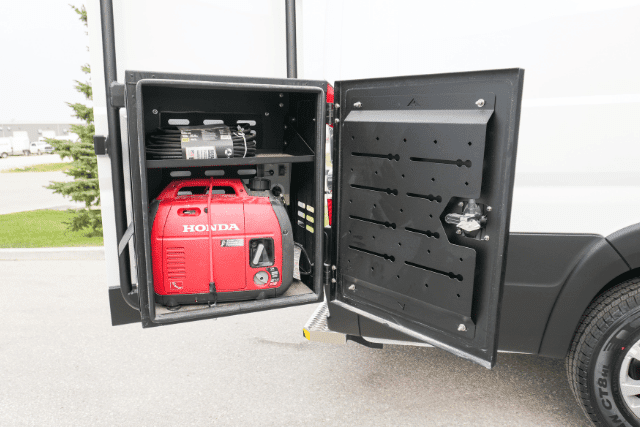
Before anything else, your mobile clinic space needs a power source. In many mobile health clinic setups, that means having the engine running and the onboard generator turned on.
This step is easy to overlook, especially if your team is busy setting up supplies, greeting patients, or getting laptops and medical tools ready. It happens more often than you might think. It’s a bit like searching for your sunglasses while they’re sitting on top of your head.
If the engine is off or the generator is not running, parts of your mobile medical clinic may not work properly.
That can include:
- Interior lights
- Roof air conditioning
- Outlets
- Refrigerators
- Medical equipment
- Computers and printers
In some mobile outreach clinics or mobile vaccine clinic programs, teams arrive on site early in the morning. Maybe you’re parked at a school in Texas or a rural church in Kentucky. You unlock the doors, flip on the lights, and nothing happens. Often, the issue is as simple as forgetting to start the engine or generator.
Tip: Let the engine run for a few moments before turning on major equipment inside your mobile clinic van. That gives the power system time to stabilize.
Once you’ve confirmed the engine and generator are on, you’re ready for the next step.
2. Ensure the standby power is plugged in

Many mobile clinics use standby power when parked at a facility, garage, clinic, or office. This gives your mobile clinic space power without needing to run the engine or generator the whole time.
Standby power usually comes from an exterior power cord plugged into a building outlet or dedicated shore power connection. If your mobile medical clinic has been sitting overnight, there’s a good chance it was left plugged in to keep batteries charged and systems ready to go.
Before you begin your day, take a quick look at the standby power connection.
Check for:
- The power cord plugged firmly into the outlet
- No loose or damaged connections
- Power running from the building to the mobile clinic van
- Any exterior breakers that may have tripped
If standby power is disconnected, parts of your mobile health clinic may not work as expected when you’re parked. Your lights, fridge, battery chargers, and outlets may stop working. That can become a bigger problem if you are storing vaccines, powering laptops, or preparing for a full day of patient visits.
For example, if your mobile vaccine clinic is parked overnight outside a community health center in Ohio during the winter, unplugged standby power could lead to drained batteries or refrigeration issues by morning.
Tip: Make checking the standby power cord part of your opening routine. It takes less than a minute and can save you from a long day of troubleshooting.
Once standby power is connected, you can move on to checking the breakers inside your mobile clinic space.
3. Check to make sure the batteries are fully charged
Your mobile clinic space depends on its battery system for many of its everyday functions. Even if the engine is running or standby power is plugged in, low batteries can still cause problems inside your mobile medical clinic.
Many mobile clinics use batteries to help power:
- Interior lighting
- Refrigerators
- Water pumps
- Medical devices
- Computers and charging stations
If the batteries are low, you may notice dim lights, weak air conditioning, slower equipment, or systems shutting off earlier than expected. That’s the last thing you want when patients are waiting outside your mobile health clinic.
Tip: Before you start your day, check the battery monitor panel inside your mobile clinic van. Most systems will show a battery percentage, voltage reading, or indicator light.
This is especially important if your mobile outreach clinic is going to a remote area where power sources may be limited. For example, if you’re bringing a mobile pediatric clinic into a rural part of Montana or setting up a mobile vaccine clinic after a storm in Florida, you may be relying on battery power for much of the day.
If your batteries are low, let the vehicle stay plugged into standby power or run the generator longer before leaving.
Checking the batteries may seem like a small step, but it can make a big difference in keeping your mobile clinic space running smoothly from the first patient to the last.
4. Ensure the main inverter knob is in the ON position

Your mobile clinic space may have power available, but that power still needs a way to move through the vehicle. That’s where the inverter comes in.
The inverter helps convert battery power into usable power for outlets, appliances, and equipment inside your mobile medical clinic. If the main inverter knob is turned off, many parts of your mobile clinic van may stay dark or inactive, even if the engine is running and the batteries are fully charged.
Before starting your day, take a quick look and make sure the inverter is switched to ON.
If the inverter is off, you may notice:
- Outlets are not working
- Medical devices are not charging
- Computers and printers stay off
- Interior lights do not turn on
- Refrigerators lose power
This can be frustrating, especially if your mobile outreach clinic is already parked and your team is ready to start seeing patients. It can feel like you’ve done everything right, but one simple switch is keeping the whole mobile health clinic from working.
For example, a mobile clinic serving families in rural Arizona may arrive on site with fully charged batteries and standby power disconnected for travel. If the inverter is off, the care team may not be able to use their laptops, vaccine fridge, or exam lights until someone turns it back on.
It’s a small step, but one that can save you a lot of time and stress.
5. Confirm all breakers are on
Breakers help protect your mobile medical clinic from electrical overload. If too much power runs through one area at once, a breaker may trip and shut that section off. This protects your equipment, outlets, and wiring.
Inside many mobile clinics, you’ll find a breaker panel similar to what you would see in a house or office.
Take a few moments to confirm that all breakers are in the ON position.
Common breakers inside a mobile clinic control:
- Interior lights
- Air conditioning
- Outlets
- Refrigerator power
- Water pumps
- Medical equipment
- Battery chargers
If one breaker is flipped off or sitting in the middle position, that part of your mobile health clinic may stop working.
For example, your mobile vaccine clinic may have lights working, but the refrigerator may have no power because its breaker tripped overnight. Or your mobile pediatric clinic may have working outlets in one exam room but not another.
Tip: If you find a tripped breaker, switch it fully off first, then back on. If it trips again right away, stop there and contact your service team before using that system again.
Sometimes the fix is simple. One flipped breaker can make it seem like your whole mobile clinic space has lost power.
6. Check that all fuses are okay
Fuses protect smaller electrical parts inside your mobile medical clinic. If there is a sudden power surge or electrical issue, a fuse can blow to protect the system. When that happens, one feature may stop working even though the rest of the mobile clinic van still has power.
A blown fuse can affect things like:
- Interior lights
- Fans
- Water pumps
- Refrigerator controls
- USB ports
- Power steps
- Small medical devices
Most mobile clinics have a fuse panel labeled with each system. You can usually spot a blown fuse by looking for a broken metal strip inside it or dark marks on the plastic.
Tip: It’s helpful to keep spare fuses in your mobile health clinic so your team can replace one quickly if needed.
For example, if your mobile outreach clinic arrives at a community center in Tennessee and the water pump will not turn on, it may be something as simple as a blown fuse. Replacing it could have the sink working again in a few minutes.
If you replace a fuse and it blows again right away, stop using that system and contact your service team. That may be a sign of a bigger electrical problem.
After checking your fuses, your mobile clinic space should be powered up and ready to help patients.
Got any questions about keeping your mobile clinic space running smoothly?

You came to this article because you wanted a simple answer. When your mobile clinic space will not power up, it can delay care, frustrate your team, and create stress before the day even starts.
Now you know the six basic steps to get your mobile clinic van powered on:
- Start the engine and generator
- Check standby power
- Confirm the batteries are charged
- Turn the inverter on
- Check the breakers
- Inspect the fuses
Once you know what to look for, powering your mobile health clinic becomes much easier. A few quick checks can save time, avoid missed appointments, and keep your mobile medical clinic ready to help people.
At AVAN Mobility, we spend a lot of time helping organizations prepare for the real day-to-day side of running mobile clinics. That means talking through power systems, maintenance, weather, patient flow, and what happens after delivery day. We know that even small questions can feel big when you’re responsible for a mobile outreach clinic, mobile pediatric clinic, or mobile vaccine clinic. Our team listens first, explains things clearly, and helps you feel confident long before your vehicle hits the road.
At the end of the day, your focus is caring for people. Our focus is on helping you do that with fewer barriers and less stress. If you have questions, click the button below to talk to a mobility expert.
If you’re not ready to talk yet, here are a few more resources that can help.
Recommended next reads
- How to run a mobile clinic on an external power source: This article helps you understand how shore power and external hookups work when your mobile clinic is parked.
- 5 causes of battery drainage in mobile medical vehicles: This article explains why batteries lose power and what you can do to avoid problems before they happen.
- What are the biggest challenges after buying a mobile clinic for sale? This article covers the common issues organizations face after delivery, so you can feel more prepared.