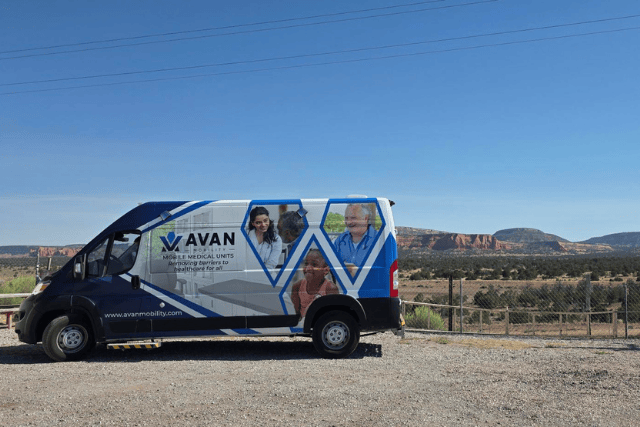
When you start looking for a mobile clinic van for sale, it usually means something isn’t working anymore. Patients are missing visits. Care teams are stretched thin. Fixed clinics can’t reach everyone who needs help. According to the Health Resources and Services Administration, nearly 75 million Americans live in primary care shortage areas, places where basic care is hard to access
That gap lands squarely on your organization’s shoulders. When care stays out of reach, trust fades, health issues grow, and communities feel left behind. Success begins when care shows up closer to home, and people feel seen again. That’s where a mobile clinic van can change the story.
At AVAN Mobility, we’ve spent more than 10 years building medical vehicles that reduce barriers to healthcare and help save lives. We’ve manufactured over 150 mobile medical units used across the U.S. by organizations like yours and CalOptima. With Ford Pro Upfitter and Stellantis QPro certifications, our work is built for real-world conditions. We also respect that we’re not the only option out there, and informed choices matter.
In this article, you’ll learn how to define success after investing in a mobile clinic van for sale.
Before we start, check out the mobile clinic van success story below!
Let’s break down what success really looks like once care goes mobile.
How do you determine success after investing in a mobile clinic van for sale?
When your organization first started looking at a mobile clinic van for sale, it likely stemmed from a clear gap you couldn’t ignore. Your fixed site wasn’t reaching everyone. Appointment no-shows were climbing. Transportation kept coming up in patient surveys. Maybe your funding required you to serve a certain number of people, and the math wasn’t adding up.
Success starts when those gaps finally begin to close. And the clearest way to see that success is through the numbers behind your mission.
What gaps were you trying to close with a mobile clinic van for sale?
Before you ever priced out mobile medical vehicles from different manufacturers, you probably had a short list of problems that felt urgent.
- Access: Patients lived too far away or couldn’t get to your clinic.
- Capacity: Your clinic had limited hours or space.
- Equity: Certain zip codes kept falling through the cracks.
- Outcomes: Preventive care happened too late, if at all.
A mobile medical clinic for sale doesn’t erase every challenge overnight. But success looks like steady, measurable progress where progress felt impossible before.
Why success with a mobile clinic van is about math, not guesswork
A lot of organizations worry they’ll buy a mobile medical van for sale and hope it works out. The reality is much more practical. Mobile healthcare vehicles let you plan care like a budget instead of a gamble.
Let’s break down the math.
Imagine a community health organization in rural Missouri.
- Fixed clinic capacity: 20 patients per day
- Average no-show rate: 25 percent
- Actual daily visits: 15 patients
Over a year, that looks like this:
| Metric | Annual total |
| Scheduled visits | 5,200 |
| Missed visits | 1,300 |
| Completed visits | 3,900 |
Those missed visits represent delayed care, lost funding, and unmet community needs.
Now imagine adding one mobile clinic van to that same program.
An example of success with a mobile clinic van for sale
Your team deploys a mobile health vehicle three days a week.
- Visits per day: 18
- Days per week: 3
- Weeks per year: 48
That equals:
18 x 3 x 48 = 2,592 patient visits per year
Here’s where success starts to show up:
- Lower no-shows: Mobile clinics park where people already are. Schools. Churches. Community centers. No-show rates often drop below 10 percent.
- Earlier care: Vaccines, screenings, and checkups happen before problems grow.
- Better reach: You serve patients who never made it to your building.
Now, combine fixed and mobile care.
| Care type | Annual visits |
| Fixed clinic | 3,900 |
| Mobile clinic | 2,592 |
| Total impact | 6,492 |
That’s a 66% increase in care delivery without building a new facility.
Success looks like math finally working in your favor.
How do mobile medical vehicles improve cost per patient?

Leadership teams often ask if a mobile clinic for sale really makes financial sense. Success here shows up as cost efficiency.
Mobile clinics can reduce emergency room use and save healthcare systems millions annually through preventive care
Let’s simplify the math.
- Assume your annual cost to operate your mobile clinic: $350,000
- Annual patient visits: 2,592
That’s about $135 per visit.
Compare that to emergency care.
Average ER visit cost: $1,200 or more
If your mobile medical vehicles prevent even 300 ER visits per year, that’s:
300 x $1,200 = $360,000 saved
Your mobile medical unit for sale pays for itself in prevention alone.
What does success look like for vaccine and screening programs?
Many organizations search for medical vehicles for sale because outreach goals feel out of reach.
Let’s say your public health department needs to deliver:
- 4,000 flu vaccines per year
- Across 10 underserved communities
A fixed clinic may handle 40 vaccines per day.
A mobile medical unit for sale can deliver:
- 60 vaccines per day
- With setup in high-traffic locations
If the van runs two days per week:
60 x 2 x 40 weeks = 4,800 vaccines
That’s success you can report to funders with confidence.
- Higher completion rates: People show up when care shows up nearby.
- Stronger trust: Familiar locations reduce fear and confusion.
- Better data: Outreach numbers become predictable.
How does success show up for care teams?
Success isn’t only about patients. It’s also about your staff.
With mobile medical vehicles for sale, teams often report:
- Less burnout: Fewer missed appointments.
- More purpose: Care feels proactive instead of reactive.
- Better scheduling: Outreach days are planned, not chaotic.
When teams see their work reaching people who were previously missed, morale improves. That matters more than spreadsheets alone.
Measuring success beyond year one
Success with a mobile clinic van for sale grows over time.
Year one is about deployment and learning routes.
Year two is where momentum builds.
- Expanded routes: New neighborhoods request visits.
- Stronger partnerships: Schools and employers ask for return visits.
- Better outcomes: Chronic conditions are caught earlier.
Organizations that track these numbers see long-term value.
| Metric | Year 1 | Year 2 |
| Annual visits | 2,500 | 3,200 |
| No-show rate | 12% | 8% |
| Preventive visits | 1,400 | 2,100 |
That upward trend defines success.
What about used mobile clinics for sale?
Some teams consider a used mobile clinic for sale or a used mobile medical clinic for sale. Success still comes down to math.
The questions stay the same:
- Can it reach the people you’re missing?
- Can it operate reliably?
- Does it meet clinical needs?
Lower upfront cost can help some programs launch sooner. Long-term success still depends on uptime, layout, and community trust.
When do you know a mobile clinic van is working?
Success feels clear when these things happen:
- Demand grows faster than expected
- Patients ask when you’ll be back
- Funders renew support with confidence
- Your data finally matches your mission
A mobile clinic van for sale turns into a reliable way to deliver dignity, care, and connection.
And when the math supports the mission, success isn’t a guess. It’s measurable, repeatable, and real.
Next, we’ll look at how communities themselves define success once a mobile clinic becomes part of their routine.
How do communities define success after a mobile clinic van for sale hits the road?
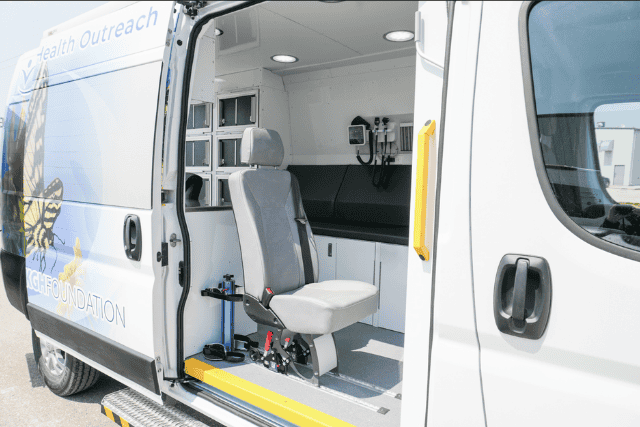
Once your mobile clinic van for sale is deployed, something important happens that numbers alone can’t fully explain. Communities start responding. And their response becomes one of the clearest signals of success.
At first, people may approach cautiously. A new mobile medical vehicle parked outside a school or church raises questions. Then something shifts. Familiar faces show up. Word spreads. The van stops feeling temporary and starts feeling dependable.
That’s when you know the gap you set out to close is actually closing.
Why is community trust a core measure of success?
For many patients, especially in underserved U.S. regions, healthcare hasn’t always felt accessible or welcoming. A community mobile medical clinic succeeds when it changes that experience.
You’ll hear success in comments like:
- “I didn’t think this was for people like me.”
- “I wouldn’t have gone if it wasn’t right here.”
- “Can you come back next month?”
Those moments matter because trust drives outcomes.
A mobile clinic van shortens the emotional distance between care and the people who need it.
What does success look like in rural communities?
In rural areas, success often starts with distance.
Imagine a county in Northern California where patients drive over two hours to reach a clinic. Gas costs rise. Time off work adds stress. Appointments get skipped.
Now, a mobile medical van parks at a community center twice a month.
Success shows up as:
- Shorter travel time: Walkable access replaces long drives.
- Higher attendance: Missed visits drop fast.
- Earlier care: Screenings happen before symptoms worsen.
Over time, the community begins planning around the mobile clinic schedule. That’s a sign the van has become part of daily life, not a special event.
What does success look like in urban neighborhoods?
In cities, the gap often isn’t distance. It’s time, trust, or overcrowded systems.
A mobile healthcare vehicle operating in Los Angeles or Chicago might serve:
- Shift workers with limited clinic hours
- Parents balancing childcare and jobs
- Patients who avoid hospitals due to past experiences
Here, success looks like efficiency and comfort.
- Faster visits: Less waiting, more care.
- Better follow-through: Patients return because the experience felt respectful.
- Stronger engagement: Health education actually sticks.
Urban teams often see mobile visits become a preferred option, not a backup.
How do repeat visits signal long-term success?
One-time turnout feels good. Repeat visits show lasting impact.
When a mobile clinic keeps returning to the same locations, you’ll start tracking patterns.
- Vaccines completed on schedule
- Chronic care check-ins maintained
- Prenatal visits happening earlier
Let’s look at a simple example:
| Visit type | First visit | Follow-up rate |
| Blood pressure checks | 400 | 68% |
| Diabetes screenings | 320 | 72% |
| Prenatal visits | 180 | 81% |
Those follow-ups reflect trust. Trust reflects success.
Why do community partnerships multiply success?
Another strong indicator of success is who starts calling you.
After deploying a mobile medical unit, organizations often hear from:
- School districts
- Faith groups
- Employers
- Housing authorities
Each request means the community sees value.
- Shared locations: Reduce setup costs.
- Consistent schedules: Improve turnout.
- Local champions: Build credibility faster.
A mobile clinic becomes a connector. It links care with places people already trust.
How does success feel from the patient’s side?
Patients often describe mobile care differently from clinic care.
They say it feels:
- Easier: Less planning required and very simple.
- Safer: Familiar surroundings help.
- More human: Conversations feel less rushed.
That emotional shift matters. When people feel respected, they come back.
A mobile medical program that improves dignity often improves outcomes, too.
How do you measure community success over time?
As months pass, success becomes easier to track.
You’ll see:
- Growing waitlists at mobile stops
- Requests for new routes
- Better community health metrics
Here’s how some organizations track progress:
| Indicator | Month 3 | Month 12 |
| Average daily visits | 12 | 20 |
| Community locations | 4 | 9 |
| Repeat patients | 45% | 68% |
Those numbers tell a clear story.
Curious about measuring success with your future mobile clinic van?
You came to this article because access gaps felt too big to ignore. Missed appointments, long travel times, and unmet care goals made it clear that the current setup wasn’t working.
Here’s what you’ve seen success can look like after investing in a mobile clinic van for sale:
- Clear math: More visits, fewer no-shows, and predictable outreach numbers.
- Real impact: Communities engage, trust grows, and preventive care happens sooner.
- Lasting value: Mobile medical vehicles turn short-term fixes into long-term care access.
At AVAN Mobility, we’ve spent the past decade helping organizations like yours across the U.S. turn care goals into reality through thoughtfully designed mobile medical vehicles. Our teams work closely with healthcare leaders, operators, and funders to plan vehicles that fit real-world workflows, budgets, and communities.
That hands-on experience shapes every conversation we have. At the end of the day, we believe access to care should feel human, dignified, and dependable. If you have questions about what success could look like for your program, click the button below to talk to a mobility expert.