Did you know the U.S. mobile health market is expected to keep growing as more healthcare providers look for ways to reach people closer to home? A mobile health unit can be a smart investment, but it’s normal to wonder what happens if your program changes or you don’t use the vehicle as much as you first planned.
- Maybe your grant funding shifted.
- Maybe patient demand ended up being lower than expected.
- Maybe your outreach program moved into a permanent building.
Whatever the reason, it can feel stressful to think about a vehicle sitting unused while budgets stay tight and leadership teams ask hard questions. You want to know that your investment still has value and that you’re not stuck with something that no longer fits your needs.
At AVAN Mobility, we’ve spent more than 10 years helping healthcare organizations, nonprofits, and government teams across the U.S. remove barriers to care with mobile health clinic vehicles built around real community needs. We’ve manufactured more than 180 mobile medical units and have worked with organizations like Pacific Clinics and Community Clinic of Southwest Missouri. We’re also a certified Ford Pro upfitter and Stellantis partner. We know there are other manufacturers out there, but we believe experience matters when you are planning for the long term.
In this article, you’ll learn three ways how you can repurpose your mobile health unit at the end of its life.
What usually happens to a mobile health unit at the end of its life?
A mobile health unit is a big purchase. For many healthcare organizations, it can cost hundreds of thousands of dollars once you factor in the vehicle, medical equipment, staffing, insurance, and upkeep.
That’s why it is normal to feel anxious about what happens at the end of its life.
You might worry about your mobile health clinic sitting unused in a parking lot. You may picture it collecting dust while your team wonders whether the money could have been spent elsewhere. That feeling is even stronger if you worked hard to get grant funding, donations, or support from local leaders to buy the mobile health vehicle in the first place.
The good news is that an older mobile health van can still have value.
In many cases:
- The chassis may still run well
- The electrical system may still work
- The lighting, outlets, and insulation may still be in good shape
- The vehicle may still have years of life left for a different purpose
Ambulances are a little different. Many ambulance boxes can be removed and placed onto a new chassis when the original truck wears out. That can make it easier to keep on the road for a longer time.
Most mobile healthcare unit layouts don’t work that way. The interior is built directly into the van itself. That means you can’t just lift the back onto a brand-new chassis.
Still, that doesn’t mean your mobile health unit has reached the end of the road. There are a few smart ways to repurpose it, and some of them may surprise you.
How do you repurpose an old mobile health unit?
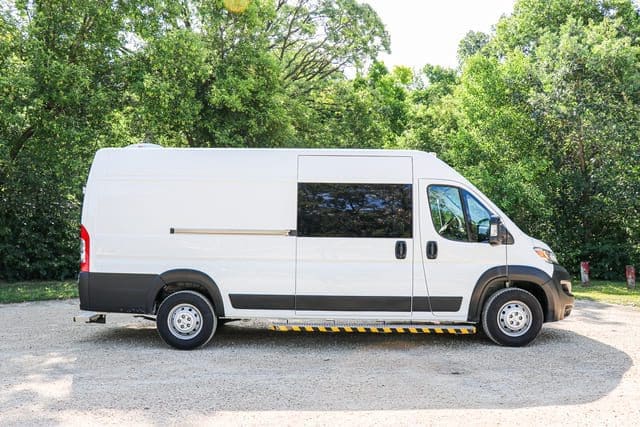
An old mobile health unit may no longer fit your original program, but that doesn’t mean it has reached the end of the road. In many cases, the vehicle still has years of life left in it.
One of the easiest ways to repurpose a mobile health clinic is to remove the medical cabinets and equipment and turn it into a contractor van or service vehicle.
1. Can you turn a mobile health unit into a contractor van?
Yes, and it is often easier than people expect.
A mobile health van already has many of the things contractors, maintenance teams, electricians, and facility crews need every day. Once the exam table, cabinets, sink, and medical supplies come out, you’re often left with a clean, bright van that is ready for a new purpose.
Many mobile healthcare unit vehicles already come with:
- Power outlets throughout the van
- Durable flooring
- Climate control
- Extra insulation
- High roofs that give people room to stand up
- Wall panels that are easy to clean
- Built-in storage areas
That’s a big improvement over a regular cargo van with bare metal walls, little lighting, and very few outlets.
A repurposed mobile health vehicle can work well for:
- Facilities and maintenance teams
- Electricians and plumbers
- School districts
- Parks and recreation departments
- Nonprofits with outreach programs
- Emergency response teams
- Construction and contractor crews
What could this look like in real life?
Imagine a community health group in rural Texas that used a mobile health unit for vaccine clinics during the pandemic.
A few years later, those clinics are no longer needed as often. The mobile health van still runs well, but now it sits parked most of the week.
Instead of selling it for a low price, the organization decides to remove the medical equipment and give it a new role.
The van becomes a service vehicle for its facilities team.
Now it can help with:
- Carrying tools and repair supplies
- Moving equipment between buildings
- Setting up health fairs and community events
- Hauling tents, tables, and signs
- Supporting emergency response during storms
- Transporting staff to outreach events
That same mobile health unit still helps people. It just does it in a different way.
Why can this save your organization money?
Buying a new contractor van can be expensive. A basic cargo van still needs shelves, lights, power outlets, flooring, and storage to make it useful.
Your mobile health clinic may already have many of those features built in.
That means you may be able to save thousands of dollars by repurposing the vehicle instead of replacing it.
There is also something reassuring about keeping the van in service. Your team already knows how it drives, how it is laid out, and how it fits into your day-to-day work.
Sometimes a mobile health vehicle stops being a clinic, but it still keeps supporting your mission.
2. Can you repurpose a mobile health unit into an outreach or support vehicle?
Yes, and this is often one of the best long-term uses for an older mobile health unit.
Ambulances usually “mile out” faster than mobile health vehicles do. They spend years driving at high speeds, running 24 hours a day, and responding to emergencies in all kinds of weather. That puts a lot of wear on the chassis, suspension, brakes, and engine.
A mobile health unit usually has a different life.
Most mobile health clinic vehicles travel shorter distances, stay parked during appointments, and are driven more gently. That means your mobile health van may still have a lot of usable life left, even after it no longer works as a full clinic.
How can a mobile health vehicle support outreach programs?
Many organizations repurpose an older mobile healthcare unit into a non-clinical outreach vehicle.
That could include:
- Community education events
- Housing and homeless outreach
- Enrollment for Medicaid or local programs
- Food bank and clothing drives
- School visits
- Mental health check-ins
- Transportation for staff and supplies
For example, a healthcare organization in California may stop using its mobile health unit for primary care visits after opening a permanent clinic location.
Instead of getting rid of the vehicle, the team could use it as an outreach van for community events across the county.
The inside could still include:
- Storage cabinets
- A desk or workspace
- Charging stations for laptops and phones
- Internet access for online applications
That same mobile health vehicle can still help people sign up for healthcare, find housing resources, or connect with mental health support.
In states like California, Oregon, and Washington, outreach teams often travel long distances between towns. A mobile health van can give staff a warm, safe place to meet with people privately during cold weather or rain.
It may no longer function as a clinic, but it can still remove barriers and help people feel seen, heard, and supported.
For many organizations, that is still a very valuable use.
3. Can you turn a mobile health unit into a training or telehealth space?

Yes, and this can be one of the most useful long-term options for an older mobile health unit.
Many organizations outgrow the original purpose of their mobile health clinic, but they still need space for staff training, virtual care, education, or private meetings.
A mobile health van can be a great fit for that.
How can a mobile health vehicle support training or telehealth?
Most mobile healthcare unit vehicles already have many of the features you need for these types of programs.
That can include:
- Quiet, private space
- Climate control
- Lighting
- Internet access
- Power outlets
- Seating areas
- Desks or counters
- Storage space for supplies and technology
For example, imagine a behavioral health organization in Colorado that used a mobile health unit for in-person counseling visits.
Later, the organization opens a larger clinic building and no longer needs the van for direct patient care.
Instead of selling the vehicle right away, they turn it into a mobile telehealth and training space.
Now the same mobile health vehicle can be used for:
- Virtual therapy appointments
- Staff onboarding and training
- Community education sessions
- Private meetings with patients or families
- Internet access in rural areas
- Support during emergencies or temporary clinic closures
This can work especially well in rural parts of the U.S., where internet access may be limited, and patients may live far from the nearest clinic.
A mobile health unit can give your team a quiet place to connect with patients through telehealth, even if there is no nearby office building available.
That means the investment keeps working for your organization long after the original program changes.
What if none of these mobile health unit repurposing options appeals to you?
That is completely fair.
Sometimes your organization may not need another contractor van, outreach vehicle, or training space. Your team may simply be ready to move on from the mobile health unit and focus on a new vehicle or a different program.
The good news is that a mobile health clinic can still hold value long after your original use for it ends.
Can you sell or trade in a mobile health unit for future value?
In many cases, yes.
A mobile health unit may no longer fit your current goals, but another organization may see it as the perfect starting point.
Many nonprofits, school districts, tribal health organizations, and smaller healthcare providers want a mobile health vehicle but cannot afford a brand-new one. A used mobile health van can give them a lower-cost way to launch a program faster.
Many used mobile healthcare unit vehicles still have value because they often include:
- Lower mileage than an ambulance
- Built-in lighting and power systems
- Climate control and insulation
- Storage cabinets, fridge, and sink
- Durable flooring and wall panels
For example, a health department in Arizona may no longer need a mobile health unit for vaccine clinics, while a nonprofit in New Mexico may need a lower-cost mobile health van for mental health outreach.
That same vehicle can start a whole new chapter with another organization.
This can also help make the original investment feel easier to justify. You are not stuck with a vehicle forever. Your mobile health clinic can support your organization for years, then continue helping someone else long after your program changes.
Got any questions about your mobile health unit investment?

You came to this article because you were worried about buying a mobile health unit and then not using it as much as you expected. That is a real concern, especially when budgets are tight and every dollar matters.
After reading this article, you now know that a mobile health unit can still have value long after its original purpose changes.
- You can turn a mobile health van into a contractor or maintenance vehicle.
- You can repurpose a mobile health clinic for outreach or support programs.
- You can sell or trade in a mobile healthcare unit to support a future purchase.
At AVAN Mobility, we have spent more than a decade helping organizations across the U.S. find the right mobile health vehicle for their goals, budget, and community. We have worked with healthcare providers, nonprofits, tribal organizations, behavioral health teams, and local governments in all kinds of environments, from crowded cities to rural counties. Our team listens first, builds second, and stays involved long after delivery day. At the end of the day, we want you to feel confident that your investment can keep supporting people for years to come.
If you have questions about mobile health units, mobile health vans, or what might make the most sense for your organization, click the button below to talk to a mobility expert.
Recommended next reads
If you’re not ready to talk to a mobility expert yet, here are a few other articles that can help you take the next step.
- The dollars and sense of mobile medical vehicle investments: This article can help you understand the long-term value and return you may get from a mobile health unit investment.
- Top 5 pitfalls to avoid when purchasing a mobile health clinic: This article covers common mistakes buyers make and how you can avoid expensive surprises later.
- 5 signs it’s time to consider a mobile clinic replacement: This article can help you understand when it makes sense to repair, repurpose, or replace your current vehicle.