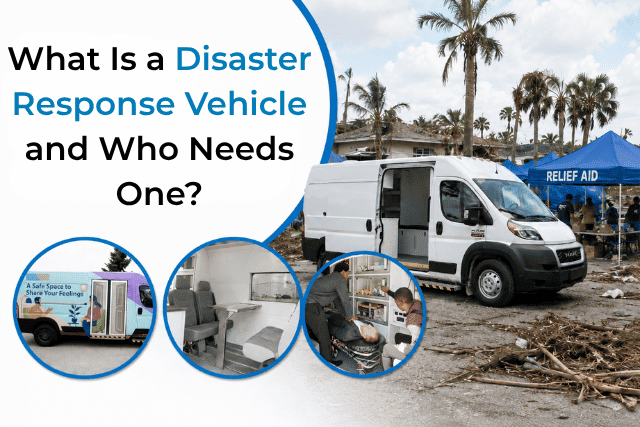
What happens when a hurricane, wildfire, flood, or power outage cuts your team off from the people who depend on you? A disaster response vehicle can close that gap by giving you a mobile place to coordinate care, carry supplies, and keep services moving. In 2024, the United States faced 27 weather and climate disasters that each caused at least $1 billion in damage. When roads close, buildings lose power, or clinics become unsafe, delays can leave families without care and response teams without a base. You want a way to stay ready, reach areas, and support people with dignity.
For more than 10 years, AVAN Mobility has helped U.S. organizations turn ambitious care programs into practical mobile solutions. We’ve built over 180 mobile medical units that help teams reach people when distance, damaged facilities, or limited access stand in the way. Organizations such as CalOptima and Siskiyou County have trusted our experience. Our Ford Pro Upfitter and Stellantis QPro certifications support that work.
As you read this article, you’ll learn:
- What a disaster response vehicle does
- Which organizations may need one
- What vehicle types and equipment are available
- How these units differ from ambulances and command vehicles
- What to consider before buying or seeking funding
What does a disaster response vehicle do?
A disaster response vehicle gives your team a safe, mobile place to work when normal services are disrupted. It can carry staff, equipment, technology, and supplies into affected areas. It may also support care, communication, planning, outreach, or recovery work when local buildings are damaged, closed, or too far away.
How does a disaster response vehicle bring services closer?
Disasters can create distance in a matter of minutes. A flood may close the only road to a clinic. A wildfire may force families into a temporary shelter. A hurricane may leave a neighborhood without power, clean water, or phone service.
Your team may still be ready to help, but readiness means little if you can’t reach people or set up a working space. A disaster response vehicle helps close that gap.
Depending on its layout, the vehicle can bring:
- Healthcare services: Staff can provide assessments, basic treatment, testing, or follow-up care.
- Essential supplies: Teams can transport food, water, medication, hygiene products, and emergency equipment.
- A private workspace: People can speak with healthcare workers, counselors, or case managers in a calm and protected space.
- Community support: Staff can help people complete forms, connect with services, or understand their next steps.
Think about a rural county in Northern California after a wildfire. The nearest clinic may still be open, but smoke, road closures, and long travel times can keep residents away. A mobile emergency response vehicle can bring staff and basic services closer while the area begins to recover.
How does a disaster response vehicle support teams in the field?
A response team needs more than transportation. Your staff may need room to meet, charge devices, store equipment, review maps, and share updates. Trying to manage all of that from a folding table or the front seat of a pickup can get messy fast.
A disaster response vehicle can act as a temporary field office. It gives your team one place to organize information and make decisions.
This may include:
- Workstations: Staff can use laptops, monitors, radios, and other communication tools.
- Power systems: Generators, batteries, or shore power can support equipment when the local grid is down.
- Climate control: Heating and air conditioning give staff a safer place to work during extreme weather.
- Secure storage: Supplies and sensitive equipment stay organized and protected.
- Lighting: Interior and exterior lighting can support longer operating hours.
- Connectivity: Satellite or cellular systems can help teams communicate when local networks fail.
Some emergency response vehicles focus on command and coordination. Others focus on care, supplies, or outreach. The job of the vehicle depends on the gap your team must solve.
How does a disaster response vehicle help during different emergencies?
The same vehicle may support several types of events, but its role can change with each one.
During a hurricane in Florida, it may serve as a mobile base for healthcare staff near an evacuation shelter. After a tornado in Oklahoma, it could help coordinate outreach across damaged neighborhoods. During a winter storm in the Midwest, it may bring supplies and support to communities cut off by snow or power loss.
A disaster response vehicle may help your organization:
- Continue services when a building closes
- Move staff and equipment between response sites
- Create a stable base near an affected community
- Support people who can’t travel to a fixed location
- Improve communication between teams
- Protect staff, records, and equipment from the weather
- Adjust services as local conditions change
The biggest benefit is flexibility. You can bring the right people, tools, and support closer to the problem instead of waiting for the problem to come to you.
But owning one only makes sense when its purpose matches your role. The next step is understanding which organizations face the kinds of service gaps a disaster response vehicle is built to solve.
Which organizations need a disaster response vehicle, and what type should they choose?
A disaster response vehicle can help any organization that must keep care, support, transportation, or coordination moving during an emergency. The right vehicle depends on the people you serve and the gap the disaster creates. A hurricane may call for medical care today, mental health support tomorrow, and patient transportation the day after that.
That’s why one disaster response vehicle may not fit every situation. Your mission during the emergency should guide the type of vehicle you choose.
How can healthcare organizations use a disaster response vehicle?
Hospitals, health systems, community clinics, and public health departments may need to provide care outside their usual buildings. Storm damage, power loss, road closures, and crowded emergency rooms can all limit access.
Imagine a hurricane has moved through coastal Florida. A family has been staying in a crowded shelter for two days. Their child has a worsening cough, but the nearest clinic is closed. The parents are worried, tired, and unsure where to go.
In this case, a Mobile Clinic Van could serve as the right disaster response vehicle. It gives healthcare workers a private, climate-controlled space to examine patients and provide basic care near the affected community.
A mobile clinic may include:
- An exam area: Healthcare staff can assess injuries, breathing concerns, infections, and other non-emergency conditions.
- Medical storage: Supplies, medications, and equipment can stay organized and protected.
- A sink and work surfaces: Staff can support safer exams and basic treatment.
- Power and refrigeration: Medical devices and temperature-sensitive supplies can remain available.
- Wheelchair access: People with mobility needs can receive care with greater dignity.
A mobile medical unit won’t replace a hospital or emergency room. It can help reduce pressure on those services and give people a clear place to turn.
How can behavioral health organizations respond after a disaster?
Physical injuries often receive the first attention. Emotional harm may appear later and last much longer.
Families may lose homes, routines, jobs, pets, or loved ones. First responders may work long shifts while carrying their own stress. Children may become scared when the wind picks up or rain starts again.
That same Florida hurricane could create a very different need a week later. Picture a mother sitting in a shelter with two children. Her home is gone, and she hasn’t had a private moment to process what happened. Speaking openly in a crowded gym doesn’t feel possible.
A Mobile Counseling Van can give behavioral health teams a quiet place for private conversations, wellness checks, grief support, and follow-up care.
This type of emergency response vehicle may include:
- Comfortable seating: The space can feel calm and welcoming instead of clinical.
- Privacy features: Sound control and window coverings can protect personal conversations.
- Internet access: Staff can connect people with remote providers or support programs.
- Secure storage: Records and sensitive materials can stay protected.
- Wheelchair accessibility: More people can enter and use the space safely.
Sometimes the most helpful response is giving someone a quiet room, a safe seat, and time to speak without being overheard.
How can nonprofits and outreach programs support displaced residents?
Nonprofits, faith-based groups, housing programs, food banks, harm reduction teams, and social service agencies often step into gaps after a disaster.
People may need food, clothing, hygiene supplies, housing support, or help replacing important documents. Many also need someone who can explain what happens next.
A Mobile Outreach Van can combine transportation, storage, and flexible service space. Teams can bring supplies and information to shelters, parking lots, rural towns, or damaged neighborhoods.
A mobile outreach van may help your team provide:
- Food and water: Supplies can reach people who can’t travel to a distribution center.
- Hygiene products: Families can receive practical items in a respectful setting.
- Housing support: Staff can explain shelter, hotel, and temporary housing options.
- Service referrals: Residents can connect with healthcare, benefits, transportation, and recovery programs.
- Basic outreach services: Teams can conduct wellness checks and identify people who may need more support.
Imagine an older adult living alone after a tornado in Oklahoma. Their car is damaged, their power is out, and they don’t know where supplies are being handed out. A mobile outreach team can come to their neighborhood instead of expecting them to find help on their own.
This type of mobile emergency response vehicle works well when your main role is connection, support, and problem-solving.
How can patient transportation organizations support non-emergency transfers?
Some people may be stable but unable to sit upright during transportation. Others may need to leave a damaged care home, nursing facility, or community clinic and travel to a hospital.
In those cases, a Mobile Response Van may be a better fit.
A mobile response van can provide stretcher transportation for patients who don’t need an ambulance but can’t travel safely in a standard vehicle. It may include stretcher securement, attendant seating, medical storage, power, heating, and air conditioning.
For example, a nursing home in Louisiana may need to move a resident after flooding damages part of the building. The person is medically stable but cannot sit upright for a long drive. A mobile response van can provide a safer and more comfortable transfer to another care site.
This type of emergency response van may suit:
- Hospitals and health systems
- Long-term care providers
- Patient transfer organizations
- Tribal health programs
- Rural healthcare organizations
- Non-EMS medical transportation services
A mobile response van is different from an ambulance. Patients who need critical care, life support, or emergency monitoring should still travel by emergency medical services.
How can emergency management agencies coordinate a wider response?
City, county, state, and tribal emergency management agencies may need a vehicle focused on planning and communication instead of direct care.
A mobile command vehicle or incident command vehicle can act as a field office near the disaster area. It may include radios, computers, mapping tools, displays, workstations, and meeting space.
Fire departments, police departments, utility providers, and public works teams may use this type of emergency management vehicle to:
- Track road closures
- Coordinate crews
- Share updates between agencies
- Direct supplies and equipment
- Support public communication
- Plan response and recovery work
A county emergency team in California may need a mobile command vehicle during a wildfire. At the same time, the local health department may need a mobile clinic nearby. Both are disaster response vehicles, but they solve very different problems.
The best place to start is with the job your team must perform. A healthcare program may need an exam room. A counseling team may need privacy. An outreach group may need storage and flexibility. A transportation provider may need stretcher capacity. An emergency management agency may need communications and command space.
Your disaster response vehicle should fit your role on the hardest day while staying flexible enough to support the recovery that follows.
How does a disaster response vehicle differ from an ambulance or command vehicle?
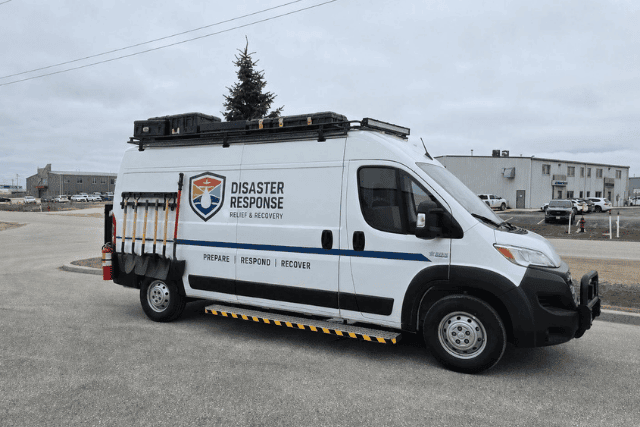
A disaster response vehicle supports care, outreach, transportation, or recovery during an emergency. An ambulance focuses on urgent medical treatment and transport. A mobile command vehicle helps leaders manage people, information, and resources. They may work side by side, but each one has a different job.
Disaster response vehicles vs. ambulance
An ambulance is built for medical emergencies. Paramedics use it to treat and transport patients who may need urgent monitoring, medication, oxygen, or life-saving care.
A disaster response vehicle usually serves a wider role. Depending on its design, it may provide basic healthcare, counseling, supplies, outreach, or non-emergency transportation.
Imagine a tornado damages several neighborhoods in Kansas. A resident with chest pain needs an ambulance. Another person needs a wound checked and a prescription replaced. They may receive help in a mobile medical unit instead.
The main difference comes down to urgency:
| Vehicle | Main role |
| Ambulance | Provides emergency treatment and urgent patient transport. |
| Disaster response vehicle | Brings planned care, services, supplies, or support closer to affected people. |
| Mobile response van | Transports stable patients who don’t require emergency medical care. |
A mobile clinic vehicle should never be presented as a replacement for emergency medical services. Its value comes from helping people before, after, or outside an urgent medical event.
Disaster response vehicles vs. command vehicles
A mobile command vehicle is designed to help leaders coordinate a response. It may include radios, computers, maps, monitors, meeting space, and communication equipment.
An incident command vehicle could help a county team track wildfire zones in California. Staff inside may direct crews, share updates, and manage road closures. Meanwhile, a nearby disaster response vehicle may provide healthcare or outreach to evacuated residents.
Both vehicles support the same emergency, but they serve different people.
- Command vehicles: Support decision-makers, agency leaders, and response coordinators.
- Medical units: Support patients who need exams, treatment, or health screenings.
- Outreach units: Support residents who need supplies, referrals, or help finding services.
- Counseling units: Support people facing grief, fear, stress, or trauma.
- Response vans: Support stable patients who need stretcher transportation.
Some emergency response vehicles can combine limited command, communication, and service functions. Still, trying to make one vehicle handle every possible role can lead to a poor layout and wasted space.
Your best choice starts with one clear question: What must your team be able to do when its usual buildings, tools, or transportation options are no longer available?
What should you consider before buying or seeking funding for a disaster response vehicle?
Before buying a disaster response vehicle, you need a clear picture of the problem it must solve. Funding may help cover the cost, but a grant won’t fix a weak plan. Start with your people, your service gaps, and the conditions your team may face during a real emergency.
What job must your disaster response vehicle perform?
It’s easy to start with equipment lists and vehicle sizes. Start with the mission instead.
Ask what could stop your organization from serving people during a disaster. Your clinic may lose power. A bridge may close. A shelter may become overcrowded. Your staff may have supplies, but nowhere private to meet with residents.
Use questions like these to shape the project:
- Who will you serve?: Think about age, mobility, health needs, language, and where people live.
- What services will you provide?: Define if your team will offer care, counseling, outreach, transportation, or command support.
- Where will you operate?: Consider rural roads, city streets, shelters, parking lots, and areas affected by severe weather.
- How long will you deploy?: A four-hour event creates different needs than a week-long response.
- What could fail?: Plan for power outages, weak cell service, extreme temperatures, and limited access to water.
A Florida health department preparing for hurricanes may need a mobile medical unit with power, refrigeration, and an exam area. A county team in California may need an incident command vehicle with radios and workstations. Both choices begin with a clear service gap.
What vehicle features will support your team?
Once you know the job, you can build a practical feature list. Separate true needs from nice-to-have items. Otherwise, your emergency response vehicle may become expensive without becoming more useful.
Consider:
- Vehicle size and parking space
- Passenger and staff capacity
- Wheelchair access
- Exam, counseling, or work areas
- Heating and air conditioning
- Lighting inside and outside
- Stretcher securement or flexible seating
- Cleaning and infection-control needs
Your team should also think about daily use. Who will drive it? Where will it be stored? Who will maintain the equipment? A vehicle that looks impressive in a proposal but is too large for your staff to operate will create a fresh problem.
What should you ask a disaster response vehicle manufacturer?
Compare several qualified emergency response vehicle manufacturers before making a decision. A strong manufacturer should ask about your program before recommending a layout.
Questions may include:
- Have you built vehicles for similar organizations?
- How do you design around our workflow?
- Which items are standard and which are optional?
- What testing and certifications apply?
- What training comes with the vehicle?
- How are warranty and service concerns handled?
- What costs may appear after delivery?
Clear answers help you compare more than the purchase price. They also show what ownership may feel like after the keys change hands.
What should you know before applying for funding?
Many organizations search for grants for emergency response vehicles before they have a complete plan. A stronger application explains the gap, the people affected, and the result the vehicle will support.
Your funding case should describe:
- The current barrier facing your community
- The number and location of people you serve
- The disasters or disruptions your area faces
- The services the vehicle will provide
- How the unit fits your emergency plan
- The partners involved in the program
- How you’ll staff, store, and maintain it
- How you’ll track results
Never assume a grant covers vehicles, conversion work, equipment, training, or delivery. Read the eligibility rules closely and ask the funding body when the wording is unclear.
The best disaster response vehicle project starts long before you request a quote. When you define the gap first, you’re in a better position to choose the right vehicle, build a stronger funding case, and give your team a tool they can depend on when plans fall apart.
Ready to plan your disaster response vehicle?
There’s a good chance you came here because your organization needs to keep serving people when clinics close, roads become unsafe, or local systems break down. The risk is clear: without a mobile plan, people may lose access to care, support, transportation, or trusted information when delays can cause real harm.
After reading this article, you now know that:
- A disaster response vehicle can support healthcare, counseling, outreach, transportation, or emergency coordination.
- The right vehicle depends on the service gap created by the disaster.
- Your mission, staff, operating area, equipment, and funding plan should guide your purchase.
At AVAN Mobility, our work starts with your service plan, not a preset floor plan. We look at how your staff will work, where the vehicle will travel, and which barriers could limit your response. That practical approach helps organizations turn a complex idea into a vehicle that supports real people in real conditions. We lead with listening because the best solutions begin with understanding your community, so click the button below to talk with a mobility expert if you have questions.
If you’re not ready to speak with a mobility expert, these resources can help you take the next step with more confidence.
Recommended next reads
- How to choose a mobile medical van: Read this to get a better idea of how to choose the right mobile medical van.
- A guide on securing grants for mobile health clinics in the U.S.: This article can help you build a stronger funding case around your community’s needs, expected results, and project plan.
- Buying a mobile medical van: Your process with AVAN Mobility: Use this guide to understand what happens from your first conversation through design, production, delivery, and training.


